Chapter introductions
And it came to pass after this, that Absalom the son of David had a fair sister, whose name was Tamar; and Amnon the son of David loved her.
John Wesley on 2 Samuel 13:1
V. 1. A sister-His sister by father and mother.
Adam Clarke on 2 Samuel 13:1
Verse 1. Whose name was Tamar] Tamar was the daughter of David and Maacah, daughter of the king of Geshur, and the uterine sister of Absalom. Amnon was David’s eldest son by Ahinoam. She was therefore sister to Amnon only by the father’s side, i.e., half-sister; but whole sister to Absalom.
Joseph Benson on 2 Samuel 13:1
Verse 1. Absalom, the son of David, had a fair sister — His sister by both father and mother. For they were both born of Maacah, the daughter of Talmai, king of Geshur. Now began another part of Nathan’s prophecy, I will raise up evil against thee out of thine own house, to be awfully fulfilled On David; and the sad scene of domestic troubles to be opened which were to befall his family. And it is probable he had not been long returned to Jerusalem, from the taking of Rabbah, before they began to take place and multiply upon him.
Daniel Whedon on 2 Samuel 13:1–19
AMNON’S INCEST, 1-19.
The charm and power of David’s name in Israel must have been largely broken as his sins in the matter of Uriah the Hittite became known to his family and among the people. His own deep penitence and humiliation before God speedily brought him mercy and pardon, but the silent influence of royal example left its evil leaven to work in the court and in the nation. And the institution of polygamy, fostered in the royal household, was the fruitful source of feuds and crimes. Its necessary tendency was to favour dissoluteness of life among the members of the king’s household, and also to occasion numberless bickerings and fearful struggles over the matter of succession to the throne. All this is abundantly shown in the following history, and especially in the sins and ruin of Amnon and Absalom.
1. It came to pass after this — Probably not long after the events of the last chapter. The divine judgments upon David’s house followed hard after his sin. Tamar — Sister of Absalom, and half sister of Amnon. Compare the marginal references.
And Amnon was so vexed, that he fell sick for his sister Tamar; for she was a virgin; and Amnon thought it hard for him to do anything to her.
John Wesley on 2 Samuel 13:2
V. 2. A virgin-And therefore diligently kept, so he could not get private converse with her.
Adam Clarke on 2 Samuel 13:2
Verse 2. Amnon was so vexed-for she was a virgin] It has been well remarked that “the passion of love is nowhere so wasting and vexatious, as where it is unlawful. A quick sense of guilt, especially where it is enormous, as in the present instance, strikes the soul with horror; and the impossibility of an innocent gratification loads that horror with desperation: a conflict too cruel and too dreadful for human bearing.”-Delaney.
Joseph Benson on 2 Samuel 13:2
Verse 2. Amnon fell sick for his sister Tamar — He fell deeply in love with her, and being conscious that his passion was very criminal, he concealed it for some time, but at the expense of his health, being racked by the violence of a strong desire, and the terror of indulging it. Thus fleshly lusts are their own punishment, and not only war against the soul, but the body too, and are the rottenness of the bones. See what a hard master sinners serve, and how heavy a yoke sin is! For she was a virgin — And therefore under a strict guard, so that it was difficult for him to get private converse with her, or to enjoy her company. Amnon thought it hard to do any thing unto her — Thought it criminal, as indeed it was in a high degree, to betray that virtue and honour of which, as a brother, he ought to be the protector. His conscience at first startled and shrunk back from the commission of so great a sin, and he could not think of it without horror. But what wickedness is so vile as not to gain entrance into an unsanctified, unguarded heart, especially when evil counsel comes to aid its assaults!
Joseph Sutcliffe on 2 Samuel 13:2
Verse 2. He fell sick for his sister Tamar. Most young men who have come to ruin, have followed some blind and impetuous passion.
Daniel Whedon on 2 Samuel 13:2
2. So vexed, that he fell sick — “Not being able to obtain his desires, his grief so ate up his body that he grew lean, and his colour was changed.” — Josephus. Amnon thought it hard — Literally, it was difficult in the eyes of Amnon to do her any thing. The meaning is, that being a virgin, Tamar was kept in such seclusion and custody that it was hardly possible for him to come at her; and, being his half sister, it was unlawful for him to marry her. Leviticus 20:17.
But Amnon had a friend, whose name was Jonadab, the son of Shimeah David’s brother: and Jonadab was a very subtil man.
Adam Clarke on 2 Samuel 13:3
Verse 3. Jonadab was a very subtle man.] And most diabolic advice did he give to his cousin. We talk of the simplicity and excellence of primitive times! “Say not thou what is the cause that the former days were better than these.” Take them altogether, we may thank God that they are past, and pray him that they may never return.
Joseph Benson on 2 Samuel 13:3
Verse 3. Amnon had a friend — Say rather an enemy; for surely he proved himself to be such in a high degree, by the evil counsel he gave, issuing in Amnon’s utter ruin of soul, as is too probable, as well as body. “He plainly perceived that Amnon’s disease was some strong desire ungratified; and insinuated to him that he who was the king’s son might give a loose to his desires, and despise the restraint of ordinary men! How vile was this advice! and how lamentable it is that the heirs of royalty, whose virtue is of much more consequence than that of meaner men, should yet be under more temptation to taint it from the poison of infectious flatterers.” — Delaney.
Daniel Whedon on 2 Samuel 13:3
3. A friend… a very subtile man — “One of those characters,” says Stanley, “who in great houses pride themselves on being acquainted and on dealing with all the secrets of the family.” Compare his acts and words in verses 32-35.
Cited across the library (1 reference)
- DictionaryWatson’s Dictionary: Wisdom
And he said unto him, Why art thou, being the king’s son, lean from day to day? wilt thou not tell me? And Amnon said unto him, I love Tamar, my brother Absalom’s sister.
And Jonadab said unto him, Lay thee down on thy bed, and make thyself sick: and when thy father cometh to see thee, say unto him, I pray thee, let my sister Tamar come, and give me meat, and dress the meat in my sight, that I may see it, and eat it at her hand.
John Wesley on 2 Samuel 13:5
V. 5. My sister-So he calls her, to prevent the suspicion of any dishonest design upon so near a relation. At her hand-Pretending, his stomach was so nice, that he could eat nothing but what he saw dressed, and that by a person whom he much esteemed.
Joseph Benson on 2 Samuel 13:5
Verse 5. Jonadab said, Make thyself sick — He advises Amnon to pretend that his stomach was so weak that he could eat nothing that his servants dressed, and therefore desired his sister, who understood how to make delicate dishes, might come and prepare something that he could relish. Ah! false, treacherous, and base flatterer! that could thus tempt thy prince to so vile a crime! More than the poison of asps is under the lips of such friends and counsellors.
So Amnon lay down, and made himself sick: and when the king was come to see him, Amnon said unto the king, I pray thee, let Tamar my sister come, and make me a couple of cakes in my sight, that I may eat at her hand.
Daniel Whedon on 2 Samuel 13:6
6. Cakes — Hebrews, heart cakes; some kind of delicious pastry, perhaps folded and laid together in the shape of a heart.
Cited across the library (1 reference)
- DictionaryWatson’s Dictionary: Baking Bread
Then David sent home to Tamar, saying, Go now to thy brother Amnon’s house, and dress him meat.
Cited across the library (1 reference)
- DictionaryWatson’s Dictionary: Child
So Tamar went to her brother Amnon’s house; and he was laid down. And she took flour, and kneaded it, and made cakes in his sight, and did bake the cakes.
Daniel Whedon on 2 Samuel 13:8
8. Amnon’s house — It appears that each of the king’s sons had a separate establishment of his own. Flour — Margin, more correctly, paste, or dough. Here we observe that in that more simple age kings’ daughters were accustomed to the arts and practices of cookery.
Cited across the library (1 reference)
- DictionaryWatson’s Dictionary: Water
And she took a pan, and poured them out before him; but he refused to eat. And Amnon said, Have out all men from me. And they went out every man from him.
John Wesley on 2 Samuel 13:9
V. 9. Out-Out of the frying-pan into the dish.
And Amnon said unto Tamar, Bring the meat into the chamber, that I may eat of thine hand. And Tamar took the cakes which she had made, and brought them into the chamber to Amnon her brother.
John Wesley on 2 Samuel 13:10
V. 10. Chamber-Amnon lying upon his couch in one chamber where the company were with him, where also she made the cakes before him, first sends all out of that room, and then rises from his couch, and, upon some pretence, goes into another secret chamber.
Joseph Benson on 2 Samuel 13:10
Verse 10. Amnon said, Bring the meat into the chamber — It is probable that when Tamar first came, Amnon had received her in an outward room, but that, pretending now to be fatigued, he retired into his chamber, desiring her to go along with him, that he might put his design upon her in execution without being interrupted; it being an inner chamber probably, remote from any other room.
Daniel Whedon on 2 Samuel 13:10
10. Bring the meat into the chamber — This chamber was adjoining the one where Tamar baked the cake.
And when she had brought them unto him to eat, he took hold of her, and said unto her, Come lie with me, my sister.
And she answered him, Nay, my brother, do not force me; for no such thing ought to be done in Israel: do not thou this folly.
John Wesley on 2 Samuel 13:12
V. 12. Brother-Whom nature both teaches to abhor such thoughts and obliges to defend me from such a mischief with thy utmost hazard, if another should attempt it. Force-Thou shouldst abhor it, if I were willing; but to add violence, is abominable. Israel-Among God’s people who are taught better things; who also will be infinitely reproached for such a base action.
Adam Clarke on 2 Samuel 13:12
Verse 12. Nay, my brother] There is something exceedingly tender and persuasive in this speech of Tamar; but Amnon was a mere brute, and it was all lost on him.
Joseph Benson on 2 Samuel 13:12
Verse 12. Nay, my brother — Whom nature both teaches to abhor such thoughts, and obliges to defend me from such an injury, with thy utmost hazard, if another should attempt it. Do not force me — Thou oughtest to abhor it, if I were willing; but to add violence is abominable. No such thing ought to be done in Israel — Among God’s people, who are taught better things; who also will be infinitely reproached for so base an action. Thus she represents to him that, whatever other nations did, among whom idols were worshipped with filthy lusts, they who worshipped so pure and holy a God; and had such divine laws, ought not to be guilty of any such abomination. Do not this folly — That is, this wickedness, the foolishness of which she prays him to consider, as, for a moment’s gratification of a brutal desire, it would highly provoke the Divine Majesty, and bring lasting disgrace and wretchedness upon them both. Would he expose a sister to infamy? Would he expose himself to indelible reproach?
Daniel Whedon on 2 Samuel 13:12
12. No such thing ought to be done in Israel — In heathen nations, where idol gods were worshipped by impure practices, this might be tolerated, but not among the chosen people, whose sacred laws condemned it. See marginal references. Folly — This word is often used in the sense of a disgraceful act.
And I, whither shall I cause my shame to go? and as for thee, thou shalt be as one of the fools in Israel. Now therefore, I pray thee, speak unto the king; for he will not withhold me from thee.
John Wesley on 2 Samuel 13:13
V. 13. Shame-How can I either endure or avoid the shame? Fools-That is, contemptible to all the people, whereas now thou art heir apparent of the crown. Withhold-This she spoke, because she thought her royal father would dispense with it, upon this extraordinary occasion, to save his first-born son’s life:
Adam Clarke on 2 Samuel 13:13
Verse 13. Speak unto the king] So it appears that she thought that the king, her father, would give her to him as wife. This is another strong mark of indelicacy in those simple but barbarous times. There might have been some excuse for such connections under the patriarchal age, but there was none now. But perhaps she said this only to divert him from his iniquitous purpose, that she might get out of his hands.
Joseph Benson on 2 Samuel 13:13–14
Verses 13, 14. And I, whither shall I cause my shame to go? — How shall I drive it from me; and where shall I hide it? This plea for herself is inexpressibly beautiful and forcible. Thou shalt be as one of the fools in Israel — Shalt utterly lose thy reputation, and be contemptible to all the people, as a man void of all religion, honour, virtue, and even humanity; wilt be treated as a brute and a fool, and, instead of the honour of being heir apparent to the throne, wilt sink into the lowest degree of derision and reproach. Now therefore, I pray thee, speak unto the king — Having urged in vain the heinousness of the action, the dishonour it would be to her, and the no less reproach it would bring on himself, and he still blindly persisting in his wicked resolution, she adds these words to give him hope and flatter him into forbearance. He would not hearken to her — Tamar said all this to a deaf man, who was wholly under the power of his furious lusts; which would not suffer him to regard God or men, his sister or himself.
Joseph Sutcliffe on 2 Samuel 13:13
Ver. 13. The king—will not withhold me from thee. In her maternal grandfather’s house irregular marriages had been sanctioned, as we see in Tamar’s case. She was an Assyrian of Geshur, Genesis xxxviii: yet such a connexion is forbidden in the law of Moses. Leviticus 20.
Daniel Whedon on 2 Samuel 13:13
13. One of the fools — A disgraced, dishonoured, shameful Hebrew. He will not withhold me — What all she meant by these words we cannot tell. They may have been with her only a pretext to get out of his hands; or, being the daughter of a foreigner, she may have been ignorant of the law which forbade their marriage, (Leviticus 18:9; Deuteronomy 27:22,) or she may have thought that the king had power to suspend the law in their case.
Cited across the library (1 reference)
- DictionaryWatson’s Dictionary: Fool
Howbeit he would not hearken unto her voice: but, being stronger than she, forced her, and lay with her.
Then Amnon hated her exceedingly; so that the hatred wherewith he hated her was greater than the love wherewith he had loved her. And Amnon said unto her, Arise, be gone.
John Wesley on 2 Samuel 13:15
V. 15. Hated her-By the just judgment of God both upon Amnon and David, that so the sin might be made publick, and way for the succeeding tragedies.
Adam Clarke on 2 Samuel 13:15
Verse 15. Hated her exceedingly] Amnon’s conduct to his sister was not only brutal but inexplicable. It would be easy to form conjectures concerning the cause, but we can arrive at no certainty.
Joseph Benson on 2 Samuel 13:15–17
Verses 15-17. Then Amnon hated her exceedingly — His mind, which at first had been impelled by lust, was now agitated by remorse, which drove it to a different extreme, like the vibration of a pendulum. The horror of his guilt struck him with a sudden detestation of her whom he deemed the cause of it, and he hated his sister when he should have hated himself. Thus, through God’s abandoning him, in just judgment, to the tumult of his own intemperate mind, this other punishment of David’s adultery became more flagrant; and the prophet’s prediction, of evil being raised up to him out of his own house, more conspicuous. For Amnon’s barbarous behaviour now precluded all possibility of concealing his guilt. The moment his brutality was indulged, he commanded his sister out of his sight. And she said, There is no cause — For me to go, or for this hard usage. She had given him no cause for aggravating his first offence, by loading it with an immediate and public scandal, and indelible reproach upon her, himself, and his house; upon religion, and the people of God. This evil is greater than the former — Not a greater sin, but an act of greater cruelty, and a greater calamity to her; because it exposed her to general infamy and contempt. And, besides, it turned a private offence into a matter of public scandal, to the great dishonour of God and of his people, and especially of all the royal family. But he would not hearken to her — He was now as deaf to decency and humanity as he had been before to all sense of shame and conscience, and, therefore, called to his servant that attended him, and bid him turn out that woman from him, and bolt the door after her.
Joseph Sutcliffe on 2 Samuel 13:15
Ver. 15. Then Amnon hated her exceedingly. So the tide of Sthenobæ’s passion turned against Bellerophon, as also that of Potiphar’s wife. Genesis 39:17.
Daniel Whedon on 2 Samuel 13:15
15. Hated her exceedingly — His love had been the offspring of his foul desire, and when that was satiated his sin, his danger, and shame all rushed upon his thoughts, and generated this hatred in his soul. “He now feels for the first time,” says Ewald, “the sinfulness of his deed, and the impossibility of his love being ever reciprocated.”
And she said unto him, There is no cause: this evil in sending me away is greater than the other that thou didst unto me. But he would not hearken unto her.
John Wesley on 2 Samuel 13:16
V. 16. No cause-For me to go. Greater thou the other-This she might truly say, because though the other was in itself a greater sin, yet this was an act of greater cruelty, and a greater calamity to her because it exposed her to publick infamy and contempt, and besides, it turned a private offence into a publick scandal, to the great dishonour of God and of his people, and especially of all the royal family.
Daniel Whedon on 2 Samuel 13:16
16. No cause — For this additional violence and rage. The passage should be rendered thus: There is not cause for this greater evil than the other which thou hast done with me, to thrust me away. This evil… is greater than the other — For it would publish their shame to all the city, and make it appear that their incest had been brought about by some lewd proposal of hers.
Then he called his servant that ministered unto him, and said, Put now this woman out from me, and bolt the door after her.
And she had a garment of divers colors upon her: for with such robes were the king’s daughters that were virgins apparelled. Then his servant brought her out, and bolted the door after her.
John Wesley on 2 Samuel 13:18
V. 18. Garment-Of embroidered work.
Adam Clarke on 2 Samuel 13:18
Verse 18. A garment of divers colours] See Clarke’s note on “Genesis 37:3”, where the same words occur.
Joseph Benson on 2 Samuel 13:18
Verse 18. She had a garment of divers colours — Of embroidered work. His servant brought her out, &c. — A high contempt of a king’s daughter. But the servant’s dependance on his master overruled all respect due to her. “Tamar thus treated,” says Delaney, “not parted with as an innocent woman, cruelly injured, but thrust out as a prostitute that had seduced to sin, is the strongest image of innocence, barbarously abused, and insufferably insulted, that history affords us; the greatest injury loaded with the greatest indignities! contumely added to cruelty!”
Daniel Whedon on 2 Samuel 13:18
18. A garment of divers colours — A loose outer garment reaching down to the ankles and covering the arms, for such the original word, פסים, seems to indicate; and Josephus says, “The virgins of old time wore such loose coats tied at the hands, and let down to the ankles, that the inner coats might not be seen.” But even this robe of royalty protected her not from shameful abuse.
And Tamar put ashes on her head, and rent her garment of divers colors that was on her, and laid her hand on her head, and went on crying.
John Wesley on 2 Samuel 13:19
V. 19. Put ashes-To signify her grief for some calamity which had befallen her, and what that was, concurring circumstances easily discovered. Head-In token of grief and shame, as if she were unable and ashamed to shew her face. Crying-To manifest her abhorrency of the fact, and that it was not done by her consent.
Joseph Benson on 2 Samuel 13:19
Verse 19. Tamar put ashes upon her head — To signify her grief for some calamity which had befallen her, and what that was, concurring circumstances easily discovered. And laid her hand on her head — In token of shame and sorrow, as if she were unable to show her face. And went on crying — To manifest her abhorrence of the fact, and that it was not done by her consent.
Daniel Whedon on 2 Samuel 13:19
19. Ashes on her head… rent her garment… hand on her head — Signs of humiliation, agony, and despair. See references. Went on crying — Screaming aloud through the streets of the city, frantic over the disgrace and violence she had so cruelly received.
Cited across the library (2 references)
And Absalom her brother said unto her, Hath Amnon thy brother been with thee? but hold now thy peace, my sister: he is thy brother; regard not this thing. So Tamar remained desolate in her brother Absalom’s house.
John Wesley on 2 Samuel 13:20
V. 20. Been with thee-Behold, and imitate the modesty of scripture expressions. Brother-Wherefore thou must forgive and forgot the injury; therefore thy disgracing of him will be a blot to us all; therefore thou wilt not get right from David against him, because he is as near and dear to him as thou; therefore thy dishonour is the less, because thou wast not abused by any mean person, but by a king’s son; therefore this evil must be borne, because it cannot be revenged: and thus he covers his design of taking vengeance upon him at the first opportunity. Regard not-So as to torment thyself. Desolate-Through shame and dejection of mind, giving her self up to solitude and retirement.
Joseph Benson on 2 Samuel 13:20
Verse 20. And Absalom her brother said to her — To whose house she had passed on, in the condition just mentioned, with ashes on her head, &c., oppressed with sorrow, and overwhelmed with shame. Hath Amnon thy brother been with thee? — A modest expression for the foul rape he had committed. Thus Absalom covers the gross injury which he suspected she had received, under the veil of the most decent and distant phrase that could hint his suspicion to her. And to save her blushes, and let her see that he understood her distress, he stopped her short from attempting any answer, by begging her to say nothing of the matter, but endeavour to forget the injury, since it was a brother that had done it. Hold now thy peace, my sister: he is thy brother — Therefore thou must forgive and forget the injury; for thy disgracing of him will be a blot to us all; and thou wilt not get right from thy father against him, because he is as near and dear to him as thou; therefore, also, thy dishonour is the less, because thou wast not abused by any mean person, but by a king’s son; and, as this evil cannot be revenged, it must be borne. Thus he covers his design of taking vengeance upon Amnon at the first opportunity. Regard not — So as to torment thyself. So Tamar remained desolate — Through shame and dejection of mind, giving herself up to solitude and retirement. “And, in all probability, she continued so her whole life long; unmarried and undone. And Amnon had the horror of reflecting, that for one moment’s base and brutal indulgence, he had made his nearest kinswoman, an amiable and innocent sister, miserable to the last moment of her life.” Such are generally the sad products of sin!
Daniel Whedon on 2 Samuel 13:20–36
ABSALOM’S REVENGE, 20-36.
20. Absalom… said unto her — He seems to have met her while in the sad plight described in verse 19, and took her at once to his own house. Regard not this thing — Thus he tried to soothe her troubled spirit, though he himself felt most keenly her disgrace, and planned a deadly purpose of revenge. Remained desolate — Literally, Tamar remained and was desolate. That is, she stayed at Absalom’s house, and did not go home to her father’s. Desolate — Was never married.
But when king David heard of all these things, he was very wroth.
John Wesley on 2 Samuel 13:21
V. 21. Wroth-With Amnon: whom yet he did not punish, at least so severely as he should either from the consciousness of his own guilt in the like kind; or, from that foolish indulgence which he often shewed to his children.
Adam Clarke on 2 Samuel 13:21
Verse 21. But when King David heard] To this verse the Septuagint add the following words: Και ουκ ελυπησε το πνευμα Αμνων του υιου αυτου, οτι ηγαπα αυτον, οτι πρωτοτοκος αυτου ην; “But he would not grieve the soul of Amnon his son, for he loved him, because he was his first-born.” The same addition is found in the Vulgate and in Josephus, and it is possible that this once made a part of the Hebrew text.
Joseph Benson on 2 Samuel 13:21
Verse 21. When David heard, he was very wroth — With Amnon: whom yet he did not punish, at least so severely as he ought to have done; perhaps, because he was his eldest son, and the next heir to his crown, and therefore he was unwilling either to cut him off, or to expose him to contempt among the people he might hereafter be called to govern; or, because he could not punish him in any legal or equitable manner, without laying open the infamy of his house; or, which seems to have been the most weighty reason, because he was conscious of his own guilt, in an instance not very dissimilar, which certainly had set Amnon a bad example; and because he had otherwise been partly accessory to his guilt by a very unguarded compliance with his son’s irrational request in sending Tamar to him. There can be no question but that David’s guilt with Bath-sheba rendered him more backward to punish that of Amnon. “However, the guilt which human justice or human infirmity did not, or could not chastise as it deserved, the divine vengeance did.” — Delaney.
Joseph Sutcliffe on 2 Samuel 13:21
Ver. 21. David—was very wroth. Yea, and so was Eli, but the punishment ended in mere words. Had those wicked sons been punished, an infinitude of mischiefs had been prevented. Abulensis, as well as other rabbins, has censured David for this. The censures seem founded on an adjection in the LXX which reads, that when David heard of all those things he was much afflicted, but would not grieve the mind of Amnon his son, because he loved him, and because he was his firstborn. Excusing one crime produced a thousand others. David, like Eli, was on the very point of losing his own life for sparing an effeminate son.
Daniel Whedon on 2 Samuel 13:21
21. He was very wroth — But he let him go unpunished, for, as the Septuagint adds, “he afflicted not the spirit of Amnon, his son, for he loved him because he was his firstborn.” In more than one instance did David’s paternal affection run away with his judgment. But Amnon’s deed must have brought home to David’s soul a bitter memory of his own dark crime.
And Absalom spake unto his brother Amnon neither good nor bad: for Absalom hated Amnon, because he had forced his sister Tamar.
John Wesley on 2 Samuel 13:22
V. 22. Spake-That is, he said nothing at all to him, about that business. He neither debated it with him, nor threatened him for it; but seemed willing to pass it by with brotherly kindness. If he had wholly forborne all discourse with him, it would have raised jealousies in Amnon and David.
Joseph Benson on 2 Samuel 13:22
Verse 22. Absalom spake, &c. — Though he hated Amnon in his heart, yet he never expressed the least resentment, nor said any thing to him at all about that business. He neither debated it with him, nor threatened him for it, but seemed willing to pass it by with brotherly kindness. Not that he forbore all discourse with him on any subject, which would have raised jealousy in his mind, and also in David’s. But by the method Absalom pursued, Amnon was lulled asleep, in a belief that he would give him no trouble for what he had done.
And it came to pass after two full years, that Absalom had sheepshearers in Baalhazor, which is beside Ephraim: and Absalom invited all the king’s sons.
John Wesley on 2 Samuel 13:23
V. 23. Two years-This circumstance of time is noted, as an aggravation of Absalom’s malice, which was so implacable: and as an act of policy, that both Amnon and David might more securely comply with his desires.
Adam Clarke on 2 Samuel 13:23
Verse 23. Absalom had sheep-shearers] These were times in which feasts were made, to which the neighbours and relatives of the family were invited.
Joseph Benson on 2 Samuel 13:23–25
Verses 23-25. After two full years — This circumstance of time is noted, as an aggravation of Absalom’s malice, which was so implacable; and as an act of policy, that both Amnon and David might more securely comply with his desires. Let the king and his servants go — He certainly did not wish the king to go; but invited him, to avoid all suspicion. He would not go, but blessed him — Gave him thanks for his invitation, and prayed God to bless him.
Daniel Whedon on 2 Samuel 13:23
23. Sheepshearers — The season of sheepshearing was the occasion of a great festival. See 1 Samuel 25:4, 8, 36, and notes. Baal-hazor, which is beside Ephraim — Probably the modern Tell Asur, which is about ten miles north of Jerusalem, and near to the ancient Ophrah, (see Joshua 18:23; 1 Samuel 13:17,) which was also called Ephraim. 2 Chronicles 13:19; John 11:54. The identity of these places, however, has not been fully established.
And Absalom came to the king, and said, Behold now, thy servant hath sheepshearers; let the king, I beseech thee, and his servants go with thy servant.
And the king said to Absalom, Nay, my son, let us not all now go, lest we be chargeable unto thee. And he pressed him: howbeit he would not go, but blessed him.
Daniel Whedon on 2 Samuel 13:25
25. He would not go — Absalom doubtless expected the king would decline going, and thereby hoped to secure more certainly his permission for Amnon to go.
Then said Absalom, If not, I pray thee, let my brother Amnon go with us. And the king said unto him, Why should he go with thee?
John Wesley on 2 Samuel 13:26
V. 26. Let Amnon-For the king designed (as the following words shew) to keep him at home with him, as being his eldest son, and heir of his kingdom: otherwise Absalom would never have made particular mention of him; which now he was forced to do. Nor did this desire of Amnon’s presence want specious pretences, as that seeing the king would not, he who was next to him might, honour him with his company; and that this might be a publick token of friendship between him and his brother, notwithstanding the former occasion of difference.
Adam Clarke on 2 Samuel 13:26
Verse 26. Let my brother Amnon go] He urged this with the more plausibility, because Amnon was the first-born, and presumptive heir to the kingdom; and he had disguised his resentment so well before, that he was not suspected.
Joseph Benson on 2 Samuel 13:26
Verse 26. Let my brother Amnon go with us — That is, with him and the rest of his brethren, as appears from the following verse. David designed, it seems, to keep him at home with him, as being his eldest son, and heir of his kingdom; otherwise Absalom would never have made particular mention of him, which, in consequence of what the king said, he was now forced to do. Nor did Absalom’s desire of Amnon’s company want specious pretences, as that, seeing the king would not, he who was next to the king in dignity might honour him with his presence; and that this might be a public token of friendship between him and his brother, not withstanding the former occasion of difference.
Daniel Whedon on 2 Samuel 13:26
26. Why should he go — David suspected some evil, for he had reason to fear the existence in Absalom’s heart of deadly enmity towards Amnon.
But Absalom pressed him, that he let Amnon and all the king’s sons go with him.
John Wesley on 2 Samuel 13:27
V. 27. Pressed him-It is strange that his urgent desire of Amnon’s company raised no suspicion in so wise a king; but God suffered him to be blinded that he might execute his judgments upon David, and bring upon Amnon the just punishment of his lewdness.
Joseph Benson on 2 Samuel 13:27
Verse 27. He let Amnon and all the king’s sons go — It is strange that Absalom’s urgent desire of Amnon’s company raised no suspicion in the mind of so wise a king: but God suffered him to be blinded that he might execute his judgments upon David, and bring upon Amnon the just punishment of his lewdness.
Daniel Whedon on 2 Samuel 13:27
27. He let Amnon and all the king’s sons go — Hoping that perhaps this friendly feast might work for good, and deepen the friendship of all these sons.
Now Absalom had commanded his servants, saying, Mark ye now when Amnon’s heart is merry with wine, and when I say unto you, Smite Amnon; then kill him, fear not: have not I commanded you? be courageous, and be valiant.
John Wesley on 2 Samuel 13:28
V. 28. Merry-When he least suspects, and will be most unable to prevent the evil. I-I who am the king’s son, and, when Amnon is gone, his heir: who therefore shall easily obtain pardon for you, and will liberally reward you.
Joseph Benson on 2 Samuel 13:28–29
Verses 28, 29. When Amnon’s heart is merry — When he least suspects, and will be most unable to prevent the evil. Have not I commanded you? — I who am the king’s son, and, when Amnon is dead, next heir to the crown, and who therefore can easily stand between you and the danger of your being called to an account for what you do, or can obtain pardon for you, and not only so, but have it in my power to reward you. The servants did as Absalom had commanded — And Amnon fell. Thus did Absalom at one blow revenge himself upon his sister’s ravisher, and rid himself of his rival in his father’s favour, and only obstacle, as he apprehended, to his crown. Now is the threatened sword drawn in David’s house, which will not depart from it. His eldest son falls by it, through his own wickedness, and his father, by conniving at that wickedness, is accessory to his death. Then all the king’s sons arose and fled — Terrified at what they saw, they started up from the table, seized every man his mule, and fled home as fast as they could. But fast as they fled, fame reached the palace before them, and told David that Absalom had destroyed all his sons.
Daniel Whedon on 2 Samuel 13:28
28. Have not I commanded you — No guilt will be on you, for I take all the responsibility on myself; only obey you my orders.
And the servants of Absalom did unto Amnon as Absalom had commanded. Then all the king’s sons arose, and every man gat him up upon his mule, and fled.
John Wesley on 2 Samuel 13:29
V. 29. Commanded-Now the threatened sword is drawn in David’s house, which will not depart from it. His eldest son falls by it, thro’ his own wickedness, and his father by his connivance is accessory to it.
Daniel Whedon on 2 Samuel 13:29
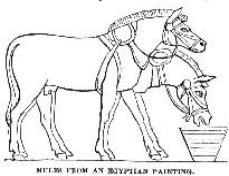
29. All the king’s sons arose — In greatest terror and alarm, not knowing the designed extent of this foul play. Mule — This is the first mention of mules in Scripture, for ימים, translated mules in Genesis 36:24, undoubtedly means warm springs, as the Vulgate there renders it. The law prohibited the Hebrews to “gender cattle with a diverse kind,” (Leviticus 19:19,) and so they probably first came into possession of mules by importation. Compare Ezekiel 27:14. It seems from Scripture notices of these animals that only kings and great men used them.
Cited across the library (1 reference)
- DictionaryWatson’s Dictionary: Mule
And it came to pass, while they were in the way, that tidings came to David, saying, Absalom hath slain all the king’s sons, and there is not one of them left.
Adam Clarke on 2 Samuel 13:30
Verse 30. Absalom hath slain all the king’s sons] Fame never lessens but always magnifies a fact. Report, contrary to the nature of all other things, gains strength by going.
Virgil has given, in his best manner, a fine personification of Fame or Evil Report.-ÆN. iv., 173.
Extemplo Libyæ magnas it Fama per urbes; Fama, malum qua non aliud velocius ullum, Mobilitate viget, viresque adquirit eundo, &c. “Now Fame, tremendous fiend! without delay, Through Libyan cities took her rapid way; Fame, the swift plague, that every moment grows, And gains new strength and vigour as she goes,” &c.
Daniel Whedon on 2 Samuel 13:30
30. Tidings came — Some excited person, seeing Amnon fall, and expecting that all the other sons would share the same fate, ran to Jerusalem at once to bear the awful news.
Cited across the library (2 references)
Then the king arose, and tare his garments, and lay on the earth; and all his servants stood by with their clothes rent.
Joseph Benson on 2 Samuel 13:31–32
Verses 31, 32. Then the king arose — He was thrown by this news, as we may well imagine, into the utmost consternation, and almost driven even to despair. He tore his clothes, and laid himself down upon the earth, like a person frantic with grief, and abandoned to distress; and his servants stood disconsolate around him with their garments torn also. And Jonadab answered, &c. — Recollecting himself in his subtlety, and running over the train of his own thoughts, he easily concluded that Amnon only was killed; and immediately took upon him to assure the king it must be so. Amnon only is dead; for by the appointment of Absalom, &c. — It is probable Absalom had talked among his familiar friends, that he would take an opportunity to revenge the injury done his sister, although, for the present, he took no notice of it, which Jonadab had some way or other discovered. But “what unparalleled impudence and effrontery,” says Delaney, “was this, to speak with such calmness and unconcern of a horrid villany, which he himself had contrived, and of which he now saw the dreadful consequences! What a miscreant minister was this, and how much fitter to be admitted into the councils of hell than into those of David! This hath been determined from the day that he forced his sister — And did Jonadab know all this? or had he any cause to suspect it? Then what a wicked wretch was he, that he did not make David acquainted with it sooner, in order that means might have been used to make up the quarrel, or, at least, that David might not have thrown Amnon into the mouth of danger, by letting him go to Absalom’s house. For, if we do not do our utmost to prevent mischief, we make ourselves accessory to it. It is well if Jonadab was not as guilty of Amnon’s death as he was of his sin. Such friends do they prove who are hearkened to when they counsel us to do wickedly.
And Jonadab, the son of Shimeah David’s brother, answered and said, Let not my Lord suppose that they have slain all the young men the king’s sons; for Amnon only is dead: for by the appointment of Absalom this hath been determined from the day that he forced his sister Tamar.
Adam Clarke on 2 Samuel 13:32
Verse 32. And Jonadab-said-Amnon only is dead] This was a very bad man, and here speaks coolly of a most bloody tragedy, which himself had contrived.
Daniel Whedon on 2 Samuel 13:32
32. Jonadab… said — That subtle busybody, who is posted on all the secrets of the royal family, (verses 3-5,) now coolly explains the matter as only a thing that had long been determined.
Now therefore let not my Lord the king take the thing to his heart, to think that all the king’s sons are dead: for Amnon only is dead.
But Absalom fled. And the young man that kept the watch lifted up his eyes, and looked, and, behold, there came much people by the way of the hill side behind him.
Joseph Benson on 2 Samuel 13:34
Verse 34. Absalom fled — He was now as much afraid of the king’s sons as they were of him; they fled from his malice, he from their justice. No part of the land of Israel could shelter him; the cities of refuge afforded no protection to a wilful murderer. Though David had let Amnon’s incest go unpunished, Absalom could not promise himself his pardon for this murder. He therefore made the best of his way to his mother’s relations, and was entertained and protected by his grandfather Talmai three years; David not demanding him, and Talmai not thinking himself obliged to send him back unless he were demanded.
Cited across the library (1 reference)
- DictionaryWatson’s Dictionary: War
And Jonadab said unto the king, Behold, the king’s sons come: as thy servant said, so it is.
And it came to pass, as soon as he had made an end of speaking, that, behold, the king’s sons came, and lifted up their voice and wept: and the king also and all his servants wept very sore.
But Absalom fled, and went to Talmai, the son of Ammihud, king of Geshur. And David mourned for his son every day.
John Wesley on 2 Samuel 13:37
V. 37. Talmai-His mother’s father, that he might have present protection and sustenance from him; and that by his mediation he might obtain his father’s pardon.
Adam Clarke on 2 Samuel 13:37
Verse 37. Absalom fled] As he had committed wilful murder, he could not avail himself of a city of refuge, and was therefore obliged to leave the land of Israel, and take refuge with Talmai, king of Geshur, his grandfather by his mother’s side. See 2 Samuel 3:3.
Joseph Benson on 2 Samuel 13:37
Verse 37. David mourned for his son every day — Either for the murder of Amnon, or for Absalom, who was lost as to any comfort he could have from him. “Thus did God, by withdrawing his restraining grace from Amnon, and leaving him a prey to his own passions, raise up evil to David out of his own house; a daughter ravished by her own brother; that brother murdered by another brother; and that other in exile on that account; and soon to perish by a fate yet more deplorable, had it not been more deserved! And now began another and more dreadful prophecy of Nathan to be fulfilled upon David, before his eyes: the sword was now first brought in upon his house, attended with this dreadful assurance of never departing from it.” — Delaney.
Joseph Sutcliffe on 2 Samuel 13:37
Ver. 37. Absalom fled to Talmai; his maternal grandfather, king of Geshur, adjacent to Amalek. 1 Samuel 27:8. He fled not to the altar with his bloody hands; no atonement was to be found there. He fled not to a city of refuge; there he could not be protected; but he fled to a court that had not the law.
Daniel Whedon on 2 Samuel 13:37–39
ABSALOM’S FLIGHT TO GESHUR, 37-39.
37. Absalom fled — When the other sons of the king arose and fled, he took advantage of the confusion and escaped out of the land. Verses 29,
34. Went to Talmai — His maternal grandfather. 2 Samuel 3:3. Geshur — A province belonging, at the time of Absalom’s flight, to Syria. 2 Samuel 15:8. It was on the northern border of Bashan, and adjoining the province of Argob. See Deuteronomy 3:14; Joshua 12:5. “It is a remarkable fact — and it shows how little change three thousand years have produced on this eastern land — that Bashan is still the refuge of all offenders. If a man can only reach it, no matter what may have been his crimes or his failings, he is safe; the officers of government dare not follow him, and the avenger of blood even turns away in despair. During a short tour in Bashan, I met more than a dozen refugees, who, like Absalom in Geshur; awaited in security some favourable turn of events.” — Porter.
So Absalom fled, and went to Geshur, and was there three years.
Daniel Whedon on 2 Samuel 13:38
38. Three years — During which time, as we learn from the next verse, David became reconciled to the loss of Amnon and yearned to see Absalom again. His undue paternal affections involved him in additional and greater sorrows.
And the soul of king David longed to go forth unto Absalom: for he was comforted concerning Amnon, seeing he was dead.
John Wesley on 2 Samuel 13:39
V. 39. Go forth-And could not he recalled, to visit him, or to send for him. What amazing weakness was this! At first he could not find in his heart, to do justice to the ravisher of his sister! And now he can almost find in his heart to receive into favour the murderer of his brother? How can we excuse David from the sin of Eli; who honoured his sons more than God?
Adam Clarke on 2 Samuel 13:39
Verse 39. David longed to go forth unto Absalom] We find that he had a very strong paternal affection for this young man, who appears to have had little to commend him but the beauty of his person. David wished either to go to him, or to bring him back; for the hand of time had now wiped off his tears for the death of his son Amnon. Joab had marked this disposition, and took care to work on it, in order to procure the return of Absalom. It would have been well for all parties had Absalom ended his days at Geshur. His return brought increasing wretchedness to his unfortunate father. And it may be generally observed that those undue, unreasonable paternal attachments are thus rewarded.
Joseph Benson on 2 Samuel 13:39
Verse 39. The soul of King David longed to go forth to Absalom — To visit him, or to send for him. What amazing weakness was this! At first he could not find in his heart to do justice to the ravisher of his sister; and now he can almost find in his heart to receive into favour the murderer of his brother! How can we excuse David from the sin of Eli, who honoured his sons more than God.
Closing reflections and analysis
Joseph Sutcliffe
REFLECTIONS.
Having reviewed the affecting case of David in the preseding chapter, we now find a complicated tragedy in two of his sons. The storms of passion, like those of the ocean, rise and fall in succession. Parents should form those habits in children from the earliest dawn of reason, which may be cultivated in future life with greater success: he who has no command of his passions, but suffers himself to be precipitated in the foulest crimes, forfeits his claims to the title and dignity of man.
It was an additional calamity to Amnon, that he had a friend and a cousin not less wicked, but more artful than himself. This man, instead of consulting the interest and honour of the heir apparent, instructed and emboldened him to the perpetrating of a crime which cost him his life. Happy is that prince who is surrounded by a wise and virtuous council; but as this cannot always be obtained, it would be well for those designated to the throne, to be acquainted with human nature on a full scale from the cottage to the palace, that they be might be able in the issue to be their own ministers. Those have generally made the best kings who have known adversity as well as prosperity.
The moment Amnon had accomplished his wishes, the high tide of criminal passion suddenly ebbed, from frantic love to utter abhorrence. He was overwhelmed with anguish; horror seized his soul, and his heart loaded him with a thousand reproaches. Unable to bear himself, he could no longer bear the sight of Tamar. A moment before, all the wise and weighty arguments of the princess, which had no effect in restraining his impetuous desire, now fell as millstones on his conscience. Auguring that the public odium and punishment about to follow would correspond with his conscience, he basely spurned from his presence the unoffending victim of his crime.
Here is a case indeed worthy of improvement. Draw near then to this chamber, ye gay and guilty circles, who riot in pleasure and despise restraint; who accuse heaven of contraction in the sacred limits of marriage, and who love tragedy, provided it be embellished with lawless love. Here is a tragedy consummate in its characters, and replete with instruction. Here is a prince, who by one frantic passion lost his crown and his life; and for ought we know, lost his soul. Here is a prince, who by one crime covered the princess his sister with shame and tears all her future days; who embittered the life of his Sire with every calamity which can afflict the best of fathers, and the best of kings. Here is the prince who provoked Absalom to revenge; and a revenge followed by rebellion, which caused tears to Israel for an age to come. From the ghastly countenance of Amnon, from the horrid language of that guilty chamber, make the transition to yourselves. Recal the scenes of your intrigues; the oaths, the perjuries, the violence, to accomplish the objects of your desire; read in all the scenery of this chamber, what sort of a place hell will be, when you shall meet with all the accomplices of your crimes, and not be able as Amnon to expel them from your presence. Anticipate what sort of anguish you will feel, when God, the avenger of the wrongs of unprotected innocence, shall pour his vengeance down in full tale for all your sins: and say now, say by the force of reflection, whether the laws of heaven which enjoin mortification and self-denial, be not worthy of the holy character of God, and conducive to the happiness of man.
Absalom, on receiving his sister under his protection, was animated with a disposition widely different from Amnon’s, but far more fatal. As though educated in an Indian court, he discovered neither anger nor resentment. The cunning of a long protracted malice, suppressed the rising of indignation and the language of revenge. He made no complaints to the public, nor solicited redress from the throne; he was resolved to take revenge, and in such a way as should leave the throne open for himself. What an argument may hence be drawn for the impartial administration of justice. If man, roaming in hordes and camps in a savage state, have surrendered his rights for the benefit of civilized society and legal protection, and if he fail of redress when greatly wronged, it is natural for him to resume his ancient liberty, by taking vengeance in private war. No one but a christian is superior to revenge, because he believes that God will do it to the impenitent in a time and a way, far above all his wishes. Thus the immortal spirit of Uriah saw inflicted on David’s house a series of punishments, better timed, and far more tremendous than any plots he could have formed against his sovereign.
The assassination of Amnon, in slaying the heir apparent, if the real views of Absalom be considered, was, in regard to his malice, hypocrisy, and the intoxication of the unhappy victim, an example of wickedness almost without precedent. Providence nevertheless permitted it to occur, and in great compassion to all Israel: two wicked princes totally disqualified for the throne, were by this means removed. To David, those calamities were peculiarly instructive. By the dishonour of Tamar he would be reminded of Bathsheba; by the plot against Amnon he would recollect his own contrivance to dispatch Uriah, and that he had previously intoxicated him with wine. How mysterious is providence. In time and in eternity, it is a study worthy of angels and of men.
John Wesley
CHAPTER 13.
Amnon ravishes Tamar, ver. 1-20. Absalom kills him, ver. 21-29. David mourns: Absalom flees to Geshur, ver. 30-39.
Adam Clarke
CHAPTER 13
Amnon falls in love with his half-sister Tamar, and feigns himself sick, and requests her to attend him, 1-6. David sends her to him, and he violates her, 7-14. He then hates her, and expels her from his house, 15-17, She rends her garments, puts ashes on her head, and goes forth weeping, 18, 19. She is met by Absalom her brother, who, understanding her case, determines the death of Amnon, 20-22. Two years after, he invites all his brothers to a sheep-shearing, when he orders his servants to murder Amnon, 23-29. Tidings come to David that Absalom has slain all the king’s sons, which fill him with the bitterest distress, 30, 31. The rest soon arrive, and he finds that Amnon only is killed, 32-36. Absalom flees to Talmai, king of Geshur, where he remains three years, 37, 38. David longs after Absalom, having become reconciled to the death of Amnon, 39.
NOTES ON CHAP. 13
Joseph Benson
CHAPTER 13.
A.M. 2972. — B.C. 1032.
Amnon ravishes Tamar, 1-20. Absalom kills him, 21-29. David mourns: Absalom flees to Geshur, 30-39.
NOTES ON CHAPTER 13.
Joseph Sutcliffe
CHAPTER 13.
Daniel Whedon
CHAPTER 13.