Chapter introductions
In that day the LORD with his sore and great and strong sword shall punish leviathan the piercing serpent, even leviathan that crooked serpent; and he shall slay the dragon that is in the sea.
John Wesley on Isaiah 27:1
V. 1. Leviathan-By this leviathan, serpent and dragon (for all signify the same thing) be understands some powerful enemy or enemies of God, and of his church or people, which may well be called by these names, partly for their great might, and partly for the great terror and destruction which they cause upon the earth. The piercing-Which by its sting pierces deeply into mens bodies. Crooked serpent-Winding and turning itself with great variety and dexterity. Whereby he seems to signify the craftiness and activity of this enemy, whose strength makes it more formidable.
Adam Clarke on Isaiah 27:1
Verse 1. Leviathan] The animals here mentioned seem to be the crocodile, rigid by the stiffness of the backbone, so that he cannot readily turn himself when he pursues his prey; hence the easiest way of escaping from him is by making frequent and short turnings: the serpent or dragon, flexible and winding, which coils himself up in a circular form: and the sea-monster, or whale. These are used allegorically, without doubt for great potentates, enemies and persecutors of the people of God: but to specify the particular persons or states designed by the prophet under these images, is a matter of great difficulty, and comes not necessarily with in the design of these notes. R. D. Kimchi says, leviathan is a parable concerning the kings of the Gentiles: it is the largest fish in the sea, called also תנין tannin, the dragon, or rather the whale. By these names the Grecian, Turkish, and Roman empires are intended. The dragon of the sea seems to mean some nation having a strong naval force and extensive commerce. See Kimchi on the place.
Joseph Benson on Isaiah 27:1
Verse 1. In that day, &c. — This verse, which Bishop Lowth considers as being connected with the last two verses of the preceding chapter, is translated by him as follows: “In that day shall Jehovah punish with his sword; his well-tempered, and great, and strong sword; Leviathan the rigid serpent, and Leviathan the winding serpent: and shall slay the monster that is in the sea.” And he observes, “The animals here mentioned seem to be, the crocodile, rigid, by the stiffness of the back-bone, so that he cannot readily turn himself when he pursues his prey; hence the easiest way of escaping from him is by making frequent and short turnings: the serpent, or dragon, flexible and winding, which coils himself up in a circular form; the sea-monster, or the whale. These are used allegorically, without doubt, for great potentates, enemies and persecutors of the people of God; but to specify the particular persons or states designed by the prophet under these images, is a matter of great difficulty.” Vitringa, who considers the prophecy contained in verse 19 of the preceding chapter, as referring to the deliverance granted to the Jews under the Maccabees, thinks that by the first two of these creatures, the piercing, or rigid serpent, and the crooked, or winding serpent, “the kingdoms of Egypt and Assyria are meant, as they existed after the times of Alexander the Great; and by the whale, the kingdom of Arabia, and the other neighbouring nations, which were adversaries to the people of God; or that by these three animals are to be understood the persecutors and adversaries of the church, who should exist successively in the world, and be destroyed by the divine judgments.” But whether this be the right interpretation of the allegory is much to be questioned.
Joseph Sutcliffe on Isaiah 27:1
Verse 1. In that day the Lord shall punish leviathan. It would seem that the Assyrian and Chaldean empire are here intended. See on Job 41:1. Amos 9:13. The desolations mentioned in the tenth verse appear to indicate the same thing; for cattle should feed in their once strong but now desolate city. In the prophetic style, these are indications of utter execration.—By the dragon, the Egyptian nation, it would seem, was intended; and both those kingdoms received their scourge from God’s “great and strong sword.”
Daniel Whedon on Isaiah 27:1
1. In that day — The same time as that referred to in the preceding verse, when the Lord should come “out of his place to punish.” This verse should have closed the preceding chapter. Sore — An epithet applied to the “sword” with which the Lord efficiently enters the contest, meaning hard and well-tempered. Great and strong sword — Triple epithets completed, denoting no failure of providential turnings in the adjustments of this war. Leviathan… dragon — Really the same sea or river monster, thrice named. There is but little doubt that leviathan the piercing, or fleeing, (or, if Arabic etymology is a help to its meaning, as Gesenius thinks, cross mailed, referring to the twisted mailed covering of the crocodile,) applies to Assyria on the rapid Tigris, and leviathan the crooked, to Babylon, on the winding Euphrates, where the stream is stagnant and marshy. The dragon — Referring to the same beast, probably, applies to Egypt on the Nile sea, including thus the three great representative world-powers which had more or less always harassed Israel. The meaning here is difficult, and has been explained variously; this, however, seems the best explanation.
Cited across the library (3 references)
- WorksClarke's Commentary - Ancillary Data — C
- DictionaryWatson’s Dictionary: Leviathan
- DictionaryWatson’s Dictionary: Whale
In that day sing ye unto her, A vineyard of red wine.
John Wesley on Isaiah 27:2
V. 2. In that day-When this enemy shall be destroyed. A vineyard-My church and people, of red wine, of the choicest and best wine, which in those parts was red.
Adam Clarke on Isaiah 27:2
Editorial note: Source collation note — paragraph 1: “sing ye unto her] אנו לה anu lah. bishop lowth”. source PDF page 240: “Sing ye unto her לה אנו anu lah Bishop Lowth”. Compared with CLA_ISA.PDF PDF p. 240. The source-font or layout comparison does not securely establish every letter, mark or local sequence in these passages. The flagged language readings or layout are retained; the original source pages should be consulted for these specific readings. Additional-source investigation: an automated comparison of surrounding English text located possible corresponding passages in OCR from separately digitized printed volumes. The linked scan pages are research locators; their images have not been collated for this note's flagged readings. OCR agreement does not verify Greek or Hebrew letters, diacritics, word order, or table layout. The flagged readings or layout remain uncertain. CLA_ISA.PDF, PDF page 240; Additional printed-scan page locator (OCR context only; flagged reading unverified).
Verse 2. Sing ye unto her] אנו לה anu lah. Bishop Lowth translates this, Sing ye a responsive song; and says that ענה anah, to answer, signifies occasionally to sing responsively; and that this mode of singing was frequently practised among the ancient Hebrews. See De Pœs. Sac. Heb. Præl. xix., at the beginning.
This, indeed, was the ancient method of singing in various nations. The song was divided into distinct portions, and the singers sang alternately. There is a fine specimen of this in the song of Deborah and Barak; and also in the Idyls of Theocritus, and the Eclogues of Virgil. This kind of singing was properly a dialogue in verse, sung to a particular tune, or in the mode which is now termed recitativo. I have seen it often practiced on funeral occasions among the descendants of the aboriginal Irish. The poems of Ossian are of this kind.
The learned Bishop distinguishes the parts of this dialogue thus:—
3. JEHOVAH. It is I, JEHOVAH, that preserve her;
I will water her every moment:
I will take care of her by night;
And by day I will keep guard over her.
4. VINEYARD. I have no wall for my defence:
O that I had a fence of the thorn and brier!
JEHOVAH. Against them should I march in battle,
I should burn them up together.
5. Ah! let her rather take hold of my protection.
VINEYARD. Let him make peace with me!
Peace let him make with me!
6. JEHOVAH. They that come from the root of Jacob shall flourish, Israel shall bud forth;
And they shall fill the face of the world with fruit.
A vineyard of red wine] The redder the wine, the more it was valued, says Kimchi.
Bishop Lowth translates, To the beloved vineyard. For חמר chemer, red, a multitude of MSS. and editions have חמד chemed, desirable. This is supported by the Septuagint and Chaldee.
Joseph Benson on Isaiah 27:2–3
Editorial note: Source collation note — paragraph 1: “ye unto her — hebrew, ענו לה, answer ye her, or”. source PDF page 502: “ye unto her Hebrew, לה ענו answer ye her, or”. Compared with BEN_VOL4.PDF PDF p. 502. The source-font or layout comparison does not securely establish every letter, mark or local sequence in these passages. The flagged language readings or layout are retained; the original source pages should be consulted for these specific readings. Additional-source investigation: an automated comparison of surrounding English text located possible corresponding passages in OCR from separately digitized printed volumes. The linked scan pages are research locators; their images have not been collated for this note's flagged readings. OCR agreement does not verify Greek or Hebrew letters, diacritics, word order, or table layout. The flagged readings or layout remain uncertain. BEN_VOL4.PDF, PDF page 502; Additional printed-scan page locator (OCR context only; flagged reading unverified).
Verses 2, 3. In that day — When these powerful enemies shall be destroyed. Sing ye unto her — Hebrew, ענו לה, answer ye her, or say ye to her, namely, to the church of God. A vineyard of red wine — “Behold a vineyard,” or, “Thou art a vineyard of red wine,” that is, of the choicest and best wine, which in those parts was red, as appears both from the Scriptures and from heathen authors. I the Lord do keep it, &c. — I will protect my church from all her enemies, and supply her with my ordinances, word, and Spirit, with all necessary means and helps. “The import of these two verses,” says Lowth, “is, that when the enemies of God’s people are destroyed, among other songs and thanksgivings, this acknowledgment shall be made to the praise of God, and of the church which he protects, that as she is fruitful in all good works, so God continually watches over her, and defends her from danger.”
Joseph Sutcliffe on Isaiah 27:2
Ver. 2. In that day, sing ye to her, (even Jerusalem) A vineyard of red wine, the best and most delicious wine. Oh Judah, keep the feast, the fall of thine oppressors shall raise thee to happier days. This ode is full of beauties, in the ideas, the figures, and the words.
Daniel Whedon on Isaiah 27:2–5
2-5. God’s work of overthrow and vindication being accomplished, what more appropriate than the ode which follows? In that day — The day or period in which leviathan is destroyed. Vineyard of red wine — Lowth turns the sense into lovely, pleasant, wine; to the ancients, meaning joy. Jehovah is the keeper of the vineyard, or the Church on Mount Zion, which assures its complete preservation. It is watered and guarded night and day. Fury is not in me — God speaks and says, I entertain no longer any anger toward my vine. My people have been punished as they needed for discipline. Purified, they need it no more as in days past. Briers and thorns — To whom do these refer? The foes of God’s people, most likely, in defence of which people God would go through, that is, against, the said foes; which would be equivalent to burning them. Or — Alternative, else, otherwise. To be safe from this, let such foes take hold of my strength. Let them become reconciled and at peace with God.
Cited across the library (1 reference)
I the LORD do keep it; I will water it every moment: lest any hurt it, I will keep it night and day.
John Wesley on Isaiah 27:3
V. 3. I keep it-I will protect my church from all her enemies, and supply her with all necessary provisions.
Adam Clarke on Isaiah 27:3
Editorial note: Source collation note — paragraph 1: “guard over her”] for פן יפקד pen yiphkod, lest any”. source PDF page 241: “guard over her”] For יפקד פן pen yiphkod, lest any”. Compared with CLA_ISA.PDF PDF p. 241. The source-font or layout comparison does not securely establish every letter, mark or local sequence in these passages. The flagged language readings or layout are retained; the original source pages should be consulted for these specific readings. Additional-source investigation: an automated comparison of surrounding English text located possible corresponding passages in OCR from separately digitized printed volumes. The linked scan pages are research locators; their images have not been collated for this note's flagged readings. OCR agreement does not verify Greek or Hebrew letters, diacritics, word order, or table layout. The flagged readings or layout remain uncertain. CLA_ISA.PDF, PDF page 241; Additional printed-scan page locator (OCR context only; flagged reading unverified).
Verse 3. Lest any hurt it, I will keep it night and day— “I will take care of her by night; and by day I will keep guard over her”] For פן יפקד pen yiphkod, lest any visit it, the Syriac read ואפקד veephkod, and I will visit it. Twenty MSS. of Kennicott’s, fourteen of De Rossi’s, and two of my own, and six editions read אפקד ephkod, I will visit, in the first person.
Cited across the library (1 reference)
Fury is not in me: who would set the briers and thorns against me in battle? I would go through them, I would burn them together.
Adam Clarke on Isaiah 27:4
Editorial note: Source collation note — paragraph 4: “the briers and thorns. מי יתנני שמיר שית mi yitteneni shamir shayith”. source PDF page 243: “the briers and thorns שית שמיר יתנני מי mi yitteneni shamir shayith,”. Compared with CLA_ISA.PDF PDF p. 242, CLA_ISA.PDF PDF p. 243. The source-font or layout comparison does not securely establish every letter, mark or local sequence in these passages. The flagged language readings or layout are retained; the original source pages should be consulted for these specific readings. Additional-source investigation: an automated comparison of surrounding English text located possible corresponding passages in OCR from separately digitized printed volumes. The linked scan pages are research locators; their images have not been collated for this note's flagged readings. OCR agreement does not verify Greek or Hebrew letters, diacritics, word order, or table layout. The flagged readings or layout remain uncertain. CLA_ISA.PDF, PDF page 242; CLA_ISA.PDF, PDF page 243; Additional printed-scan page locator (OCR context only; flagged reading unverified).
Verse 4. Fury is not in me— “I have no wall”] For חמה chemah, anger, the Septuagint and Syriac read חומה chomah, wall. An ancient MS. has חימה cheimah. For בה bah, in her, two MSS. read בם bam, in them, plural. The vineyard wishes for a wall and a fence of thorns-human strength and protection, (as the Jews were too apt to apply to their powerful neighbours for assistance, and to trust to the shadow of Egypt:) JEHOVAH replies, that this would not avail her, nor defend her against his wrath. He counsels her, therefore, to betake herself to his protection. On which she entreats him to make peace with her.
From the above note it appears that the bishop reads, חומה chomah, wall, for חמה chemah, anger or fury, in accordance with the Syriac and Septuagint. The letter w vau makes the only difference, which letter is frequently absent from many words where its place is supplied by the point . cholem: it might have been so here formerly; and in process of time both vau and cholem might have been lost. The Syriac supports the learned bishop’s criticism, as the word [Syriac] shora is there used; which word in the plural is found, Hebrews 11:30: “By faith the walls of Jericho.” The bishop thinks the Septuagint is on his side: to me, it seems neither for nor against the criticism. The words in the Vatican copy are εγω πολις οχυρα, I am a fortified city; which the Arabic follows: but instead of οχυρα, the Codex Alexandrinus has ισχυρα, I am a STRONG city. The word חומה chomah, wall, is not found in any MS. in the collections of Kennicott and De Rossi, nor in any of my own MSS. However, one of Dr. Kennicott’s MSS. has חימה cheimah; but probably that which now appears to be a y yod was formerly a w vau, and now partially obliterated.
This song receives much light from being collated with that in chap. v.; and perhaps the bishop’s criticism will find its best support from such a collation. In Isaiah 5:5 of that chapter, God threatens to take away the wall of his vineyard: this was done; and here the vineyard complains, I have no wall, and wishes for any kind of defense rather than be thus naked. This is the only natural support of the above criticism. “About Tripoli there are abundance of vineyards and gardens, inclosed, for the most part, with hedges, which chiefly consist of the rhamnus, paliurus, oxyacantha,” &c. Rawolf, p. 21, 22. A fence of thorns is esteemed equal to a wall for strength, being commonly represented as impenetrable. See Micah 7:4; Hosea 2:6.
Who would set the briers and thorns against me— “O that I had a fence of the thorn and brier”] Seven MSS., (two ancient,) and one edition, with the Syriac, Vulgate, and Aquila, read ושית veshayith, with the conjunction w vau prefixed: Who would set the briers and thorns. מי יתנני שמיר שית mi yitteneni shamir shayith, Who shall give me the brier and thorn, i.e., for a defense: but hear Kimchi: “Who (the vineyard) hath given me (Jehovah) the brier and the thorn instead of good grapes.”
Joseph Benson on Isaiah 27:4–5
Verses 4, 5. Fury is not in me — Namely, against my vineyard or my people; I have been displeased with them, and have chastized them, but I am not implacable toward them, and resolved utterly to destroy them, as their enemies are. Who would set the briers and thorns against me, &c. — Yet if any hypocrite in the church, false professor, or wilful sinner, shall offer to contend with me, he shall feel the effects of my fury. Or, more largely, thus: “Though fury doth not belong to me, and vengeance be called my strange work, (Isaiah 28:21,) yet if the briers and thorns, that is, the wicked and incorrigible, bid defiance to me, they will find I shall soon destroy and consume them like fire.” Or let him take hold of my strength, &c. — Rather, let such a one return to me, and make his peace with me, by unfeigned repentance and living faith, and he shall make peace with me — For I am always ready to receive returning sinners, and to pardon the truly penitent, who have recourse to me for mercy and salvation.
Joseph Sutcliffe on Isaiah 27:4
Ver. 4. Fury is not in me. חמה chaimah. Forerius thinks it should be translated wall; and he is followed by Lowth, who reads the passage as a dialogue between the Lord and the church. “Sing ye, in that day, to the beloved vineyard a responsive song. It is I JEHOVAH that preserve her. I will water her every moment. I will take care of her by night; and by day will I keep guard over her.—Vineyard. I have no wall. Oh that I had a hedge of thorn and brier.—Jehovah. Against them should I march in battle, I should burn them up together. Ah, let her rather take hold of my protection.”
Cited across the library (2 references)
Or let him take hold of my strength, that he may make peace with me; and he shall make peace with me.
John Wesley on Isaiah 27:5
V. 5. Or-Or if at any time fury seem to be in me against my people. Let him-My people. Take hold-Which he may by humble prayer not only restrain from doing him hurt, but engage to do him good.
Adam Clarke on Isaiah 27:5
Verse 5. Or— “Ah”] For או o I read אוי oi, as it was at first in a MS. The y yod was easily lost, being followed by another y yod.
He shall cause them that come of Jacob to take root: Israel shall blossom and bud, and fill the face of the world with fruit.
John Wesley on Isaiah 27:6
V. 6. Take root-To be firmly settled in their possessions. Fruit-Their posterity shall seek habitations in other countries, and replenish them with people. But this seems to be understood of the spiritual seed of Jacob.
Adam Clarke on Isaiah 27:6
Editorial note: Source collation note — paragraph 1: “read, with the syriac, משרש mishshoresh. and for יציץ ופרח yatsits uparach, יציצו פרח yatsitsu parach, joining the”. source PDF page 243: “read, with the Syriac משרש mishshoresh And for ופרח יציצ yatsits uparach פרח יציצו yatsitsu parach joining the”. Compared with CLA_ISA.PDF PDF p. 243. The source-font or layout comparison does not securely establish every letter, mark or local sequence in these passages. The flagged language readings or layout are retained; the original source pages should be consulted for these specific readings. Additional-source investigation: an automated comparison of surrounding English text located possible corresponding passages in OCR from separately digitized printed volumes. The linked scan pages are research locators; their images have not been collated for this note's flagged readings. OCR agreement does not verify Greek or Hebrew letters, diacritics, word order, or table layout. The flagged readings or layout remain uncertain. CLA_ISA.PDF, PDF page 243; Additional printed-scan page locator (OCR context only; flagged reading unverified).
Verse 6. To take root— “From the root”] For ישרש yashresh, I read, with the Syriac, משרש mishshoresh. And for יציץ ופרח yatsits uparach, יציצו פרח yatsitsu parach, joining the w vau to the first word, and taking that into construction with the first part of the sentence, Israel shall bud forth. I suppose the dialogue to be continued in this verse, which pursues the same image of the allegory, but in the way of metaphor.
Joseph Benson on Isaiah 27:6
Verse 6. He shall cause them of Jacob to take root — To be firmly settled in their possessions. The words may be rendered, In times to come he shall cause Jacob to take root. Israel shall blossom and bud — Shall revive and flourish. The metaphor of a vine is still pursued, and these expressions signify the increase of the Jewish people, after their return from their captivity in Babylon. And fill the face of the world with fruit — Their posterity shall be so numerous that their own land shall not be sufficient for them, but they shall be forced to seek habitations in other countries, and shall replenish them with people. This prediction was indeed fulfilled after the captivity; for the Jews filled all Judea and Syria, and were spread over all the Roman empire, as appears, not only from their own histories, but from the books of the New Testament. See note on Isaiah 26:15. But, perhaps, this is chiefly intended to be understood of the spiritual seed of Jacob, or of believers, who are often called God’s Israel, as Romans 9:6, and elsewhere.
Daniel Whedon on Isaiah 27:6
6. The song of the vineyard is here explained. The posterity of Jacob, the true Israel which God owns, shall, as this divinely nourished vine, take root, grow, extend branches, send down new roots, and spread blossoms and fruit to all parts of the earth. Romans 11:12. Israel becometh thus “the riches of the Gentiles.”
Hath he smitten him, as he smote those that smote him? or is he slain according to the slaughter of them that are slain by him?
John Wesley on Isaiah 27:7
V. 7. Hath he-He hath not dealt so severely with his people, as he hath dealt with their enemies, whom he hath utterly destroyed. Of them-Of those who were slain by God on the behalf of Israel.
Joseph Benson on Isaiah 27:7
Verse 7. Hath he smitten him — Namely, Jacob; as he smote those that smote him? — The question implies a denial. He hath not so smitten him. He hath not dealt so severely with his people as he hath with their enemies, whom he hath utterly destroyed. Or is he slain as those slain by him — Namely, those slain by God on the behalf of Israel? The meaning is, God had never permitted the Jews to be smitten to their entire destruction, as he had their enemies, but had always taken care to preserve a remnant.
Daniel Whedon on Isaiah 27:7–8
7, 8. Him — That is, Israel. The question, in form, calls for a negative answer. Not to the degree God has punished his enemies has he punished Israel. He has punished in measure, only moderately. בסאסאה, (b’sassah,) composed probably of two words, and to be translated in measure, measure, which means, very moderately. The word is used in no other place in the Bible, and has occasioned a world of difficulty. But interpreters of approved character come together in the explanation above given. When it shooteth forth — A translation not intelligible. Literally, it is, In sending her forth, that is, God’s vineyard, or Jewish people. Thou wilt debate — Or, enter into contention with this vineyard. With these clauses, “in measure” is to be construed. Then the meaning of the verse is: “When thou didst send thy people into Babylon, thou didst punish them very moderately, considering, first, their deserts, and second, the fruits of this captivity.” He stayeth — Showing how he punished only moderately. He checked the severe rough wind upon them. He is to return them to Jerusalem, though not in the period of the tempestuous east wind. Such winds are emblematic of divine judgment. See Job 27:21.
In measure, when it shooteth forth, thou wilt debate with it: he stayeth his rough wind in the day of the east wind.
John Wesley on Isaiah 27:8
V. 8. In measure-With moderation. When-When the vine shooteth forth its luxuriant branches, he cuts them off, but so as not to destroy the vine. Contend-God is said to contend with men, when he executes his judgments upon them, Amos 7:4. Stayeth-He mitigates the severity of the judgment. In the day-In the time when he sends forth his east-wind; which he mentions because that wind in those parts was most violent and most hurtful.
Joseph Benson on Isaiah 27:8
Editorial note: Source collation note — paragraph 1: “sendest it forth, as בסאסאה בשלחה, may be properly rendered”. source PDF page 503: “sendest it forth, as בשלחה בסאסאה may be properly rendered.”. Compared with BEN_VOL4.PDF PDF p. 503. The source-font or layout comparison does not securely establish every letter, mark or local sequence in these passages. The flagged language readings or layout are retained; the original source pages should be consulted for these specific readings. Additional-source investigation: an automated comparison of surrounding English text located possible corresponding passages in OCR from separately digitized printed volumes. The linked scan pages are research locators; their images have not been collated for this note's flagged readings. OCR agreement does not verify Greek or Hebrew letters, diacritics, word order, or table layout. The flagged readings or layout remain uncertain. BEN_VOL4.PDF, PDF page 503; Additional printed-scan page locator (OCR context only; flagged reading unverified).
Verse 8. In measure when it shooteth forth — Rather, In measure when thou sendest it forth, as בסאסאה בשלחה, may be properly rendered. The words seem to be addressed by the prophet to God, and to signify that God would observe a measure in punishing the Jewish people, and not go beyond a certain degree; and that he then would send them forth again, namely, from captivity: from which God, after they had suffered sufficient correction, would deliver them by a singular providence. Thou wilt debate, or contend with it — God is said to debate or contend with men, when he executes his judgments upon them. But תריבנה may be rendered, Thou wilt contend for it, that is, undertake its cause and defend it. This is still spoken of God’s singular protection of the Jews, when they returned from Babylon. He stayeth his rough wind — He mitigates the severity of the judgment; in the day of the east wind — In the time when he sendeth forth his east wind, that is, very grievous and destructive calamities. The cast wind, being a dry, blasting wind, and the most violent and destructive of all others in those parts of the world, is frequently put, in the Scriptures, for the calamities of war, and such like wasting judgments: see Jeremiah 4:11, 12; Ezekiel 17:10; and 19:12; Hosea 13:15. Here it seems to be mentioned with a reference to the shooting forth of the branches of the vine, spoken of in the foregoing words, that wind being very prejudicial to tender shoots.
By this therefore shall the iniquity of Jacob be purged; and this is all the fruit to take away his sin; when he maketh all the stones of the altar as chalkstones that are beaten in sunder, the groves and images shall not stand up.
John Wesley on Isaiah 27:9
V. 9. By this-By this manner of God’s dealing with them. When-Which sin of Jacob’s shall be purged, when he shall truly repent of all his sins, and especially of his idolatry. Altar-Their idolatrous altars. Possibly he may say the altar, with respect to that particular altar, which Ahaz had set upon the place of God’s own altar; and this prophecy might be delivered in Ahaz’s time, while that altar stood. Chalk-stones-When he shall break all those goodly altars in pieces. Not stand-Shall be thrown down with contempt.
Adam Clarke on Isaiah 27:9
Verse 9. The groves— “And if the groves”] ולא velo. Four MSS., two ancient, of Kennicott’s, and one ancient of my own, with the Septuagint; this makes a fuller sense.
Joseph Benson on Isaiah 27:9
Verse 9. By this therefore — By this manner of God’s dealing with his people; shall the iniquity of Jacob be purged — Hebrew, יכפר, expiated, or forgiven: that is, by these chastisements Jacob shall be brought to true repentance, and in consequence thereof shall be pardoned. And this is all the fruit — The effect designed to be produced, by these severe corrections; to take away his sin — Not to destroy the sinner, as others are often destroyed by the calamities brought upon them, but only to take away the guilt and power of his sins; when he, &c. — Which sin of Jacob shall be taken away, and the punishment thereof removed, when he shall give such an evidence of the reality of his repentance as to destroy all the objects, instruments, means, and signs of idolatry out of the land; when he maketh the stones of the altar — Namely, the idolatrous altar, or altars, as chalk-stones — That is, broken into small pieces, and reduced to powder and dust. Possibly he may say, the altar, with respect to that particular altar which Ahaz had set up in the place of God’s altar; and this prophecy might be delivered in Ahaz’s time, while that altar stood and was used. He seems to allude to Moses’s showing his detestation of idolatry, by taking the golden calf, burning it, and grinding it to powder: and he intimates that when their repentance should be sincere, it would discover itself in a similar way. It must be observed, that of all sins, which are of a heinous nature, the Jews, till they were carried into captivity, were most inclined to idolatry, and for that sin especially, most of God’s judgments, which they had hitherto suffered, had been inflicted upon them. But of that most unreasonable and wicked inclination they were in a great measure cured by that severe punishment, the seventy years captivity in Babylon. The groves and images shall not stand up — Shall be thrown down with contempt and indignation.
Joseph Sutcliffe on Isaiah 27:9
Ver. 9. Chalk-stones. Hebrews gar, designates limestones, or gypsum, or chalk, to shame the Hebrew idolaters, who, building their altars with lias, saw that the fire reduced the stones to lime, and the rain reduced them to dust. Their groves and their worship should not stand: and what is worse, they would destroy their country, as in the next words.
Daniel Whedon on Isaiah 27:9
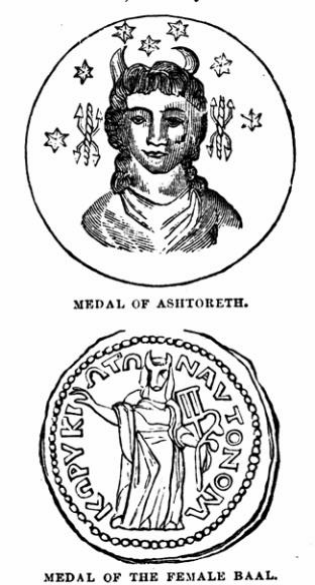
9. By this — By this sending away to Babylon. Purged — Of idolatrous tendencies forever. The fruit to take away his sin — The object or overruling purpose of the captivity. As chalkstones — The old idolatrous altars in Judea are to crumble down as chalk crumbles in long weathering. The limestone of Judea is what, in geology, is called cretaceous, and easily crumbles or wears away. Likewise the old idolatrous groves, in which licentious rites were enacted, shall be cut down, and the sun images (Ashtoreth and Baal) destroyed.
Yet the defenced city shall be desolate, and the habitation forsaken, and left like a wilderness: there shall the calf feed, and there shall he lie down, and consume the branches thereof.
John Wesley on Isaiah 27:10
V. 10. Yet-Yet before this glorious promise be fulfilled, a dreadful and desolating judgment shall come. The city-Jerusalem and the rest of the defenced cities in the land. The habitation-The most inhabited and populous places. The calf-This is put for all sorts of cattle, which may securely feed there, because there shall be no men left to disturb them.
Adam Clarke on Isaiah 27:10
Verse 10. There shall the calf feed] That is, the king of Egypt, says Kimchi.
Joseph Benson on Isaiah 27:10–11
Verses 10, 11. Yet, &c. — Before this glorious promise, concerning the removal of Israel’s sin and calamity, shall be fulfilled, a dreadful and desolating judgment shall come upon them. The defenced city shall be desolate — Jerusalem, and the rest of the defenced cities of the land, the singular number being put for the plural; and the habitation forsaken — The most inhabited and populous parts of the country; or, as נוה properly signifies, their pleasant habitation, whether in the city or country; left like a wilderness — Which was the case in the time of the Babylonish captivity. There shall the calf feed — The calf is put for all sorts of cattle, which, it is foretold, should securely feed there, because there should be no man left to disturb or annoy them; and consume the branches thereof — Of their pleasant habitation; of the young trees that grow up in that desolated country. When the boughs thereof are withered — As they will be when they are thus gnawed and cropped by cattle; they shall be broken off — That there may be no hopes of their recovery. The women come, &c. — He mentions women, because the men would be destroyed. For it is a people of no understanding — They neither know me, nor themselves; neither my word, nor my works: they know not the things which concern their peace, but blindly and wilfully go on in sin. Therefore he that made them — Both as they are creatures, and as they are his people; for this also is expressed by making, or forming; will not have mercy on them — So as to save them from this dreadful calamity and ruin, which they bring on themselves. Thus he overthrows their false and presumptuous conceit, that God would never destroy the work of his own hands, nor the seed of Abraham his friend.
Joseph Sutcliffe on Isaiah 27:10
Ver. 10. The defenced city (Jerusalem) shall be desolate. Isaiah here saw, as in Malachi 4:1, that the Lord’s prophets would fail in the struggle against atheism, idolatry, and vice; that the carnal Hebrew vine would wither, and that the burning of the city would follow. Daniel 9:27. Nothing but a hope in the Messiah could have supported them in a hopeless contest with the errors of their age.
Daniel Whedon on Isaiah 27:10–11
10, 11. The defenced city — Which some think means Jerusalem, some Samaria, and some Babylon. Samaria, at least, may be ruled out; but the question hangs in doubt as to the other two. In favour of Babylon is the natural conservation of verse 12. In favour of Jerusalem is the easily-supposed figure of a vineyard at the close of this verse, and so still kept up through the next verse. The interpretation is not materially to be changed, whichever is meant. During the captivity all the figures of desolation here apply to Jerusalem, and when Babylon shall be overthrown the stone description will apply to it, though the desolation is not so complete here as in Isaiah 13:19-22; (where see notes;) but there total desolation was the work of ages, not of a single short period. If it means Jerusalem, the prophet speaks from the foreseen captivity as a point of time. The city ruins are overgrown with grass and thickets, where stray cattle browse. When the shrubs decay, the women (a custom still in the East) gather them for fuel. The lowest class only were left behind — the class of least character, and of least regard to Jehovah, apparently uncared for of their Creator, as indicated by their destitution.
When the boughs thereof are withered, they shall be broken off: the women come, and set them on fire: for it is a people of no understanding: therefore he that made them will not have mercy on them, and he that formed them will shew them no favor.
John Wesley on Isaiah 27:11
V. 11. Broken-That there may be no hopes of their recovery. Women-He mentions women, because the men would be destroyed. Not understanding-They know not the things which concerns their peace, but they blindly and wilfully go on in sin. Therefore-Thus he overthrows their conceit that God would never destroy the work of his own hands.
Adam Clarke on Isaiah 27:11
Verse 11. The boughs thereof— “Her boughs”] קציריה ketsireyha, MS. and Vulg.; that is, the boughs of the vineyard, referring still to the subject of the dialogue above.
The scarcity of fuel, especially wood, in most parts of the east is so great, that they supply it with every thing capable of burning; cow-dung dried, roots, parings of fruit, withered stalks of herbs and flowers; see Matthew 6:21-30. Vine-twigs are particularly mentioned as used for fuel in dressing their food, by D’Arvieux; La Roque, Palestine, p. 198. Ezekiel says, in his parable of the vine, used figuratively for the people of God, as the vineyard is here: “Shall wood be taken thereof to do any work? or will men take a pin of it to hang any vessel thereon? Behold, it is cast into the fire for fuel;” Ezekiel 15:3, 4. “If a man abide not in one,” saith our Lord, “he is cast forth as a branch of the vine and is withered; and men gather them, and cast them into the fire, and they are burned;” John 15:6. They employed women and children to gather these things, and they laid them up in store for use. The dressing and pruning their vines afforded a good supply of the last sort of fuel; but the prophet says that the vines themselves of the beloved vineyard shall be blasted, withered, and broken, and the women shall come and gather them up, and carry away the whole of them to make their fires for domestic uses. See Harmer’s Observations, vol. i., p. 254, &c.
Cited across the library (2 references)
And it shall come to pass in that day, that the LORD shall beat off from the channel of the river unto the stream of Egypt, and ye shall be gathered one by one, O ye children of Israel.
John Wesley on Isaiah 27:12
V. 12. Beat out-It is a metaphor from grain which was beaten out with a rod or staff, and then carefully gathered and laid up. From-From Euphrates to the Nile, which were the two borders of the land of promise. All the Israelites who are left in the land. One by one-Which signifies, God’s exact care of them.
Adam Clarke on Isaiah 27:12
Verse 12. The channel of the river] The river Sabbation, beyond which the Israelites were carried captive.—Kimchi.
Joseph Benson on Isaiah 27:12–13
Verses 12, 13. It shall come to pass, &c., that the Lord shall beat off — Or, beat out: which is not meant in the way of punishment, but as an act of mercy, as is evident from the following clause of this, and of the next verse: the sense is, He shall sever, and take from among the nations, and gather together, like thrashed corn into the garner; from the channel of the river unto the stream of Egypt — All the Israelites that are scattered in those parts. It is a metaphor taken from thrashing, or beating out and separating the pure grain from the chaff. And ye shall be gathered one by one — Which signifies God’s exact and singular care of them. And in that day the great trumpet shall be blown — God shall summon them, as it were, by the sound of trumpet, namely, by an eminent call, or act of his providence on their behalf. He alludes to the custom of calling the Israelites together with trumpets: of which see Numbers 10:2, 3. And they shall come which were in the land of Assyria — Into which the ten tribes had been carried captive; and the outcasts in the land of Egypt — Where many of the Jews were, as is manifest, both from the Scriptures and from other authors. This prediction had its first accomplishment in the restoration of the Jews from Babylon, to whom many of the Israelites from Assyria were joined, and returned with them; and to whom many from Egypt, and other parts, came and united themselves, and having rebuilt the city and temple, worshipped the Lord, as is here said, in his holy mountain at Jerusalem. But this prophecy has manifestly a further aspect, and foretels the restoration of the Jews in the latter times; when, the gospel trumpet having been blown, and the fulness of the Gentiles brought in, the Jews shall be gathered from their several dispersions, united to God’s church, numbered among his true worshippers, and probably reinstated in their own land.
Joseph Sutcliffe on Isaiah 27:12
Ver. 12. From the channel of the river to the stream of Egypt. That is, from the Euphrates to the Nile, and the ancient boundaries of the promised land.
Daniel Whedon on Isaiah 27:12
12. But on Israel’s repentance all this is to cease, as to Jerusalem. Shall beat off from the channel — Of the Euphrates to the river of Egypt (Wady el Arish) the Rhinocolura of the Septuagint, ancient boundary line between Egypt and Palestine. Over the whole extent of the original land of Promise, Jehovah shall order the growth and beating, or threshing, of grain for the sustenance of the returned ones of Israel. This is one view of the imagery employed here. Another is, that the beating implies an extensive growth of olives or other fruit to be carefully beaten off and discriminated as to the good and the bad; the good then to be gathered together; the whole signifying that the true Israel shall be discriminately gathered. One by one — Rather, one to another, or, one after another, in colonies, to their home in Judea, from the different directions where their exile has been. Perhaps this meaning better suits the idea of the text.
And it shall come to pass in that day, that the great trumpet shall be blown, and they shall come which were ready to perish in the land of Assyria, and the outcasts in the land of Egypt, and shall worship the LORD in the holy mount at Jerusalem.
John Wesley on Isaiah 27:13
V. 13. Trumpet-God shall summon them altogether by sound of trumpet, by an eminent call of his providence. He alludes to the custom of calling the Israelites together with trumpets.
Adam Clarke on Isaiah 27:13
Verse 13. The great trumpet shall be blown] Does not this refer to the time spoken of by our Lord, Matthew 24:31: He shall send forth his angels—the preachers of his Gospel with a great sound of a trumpet—the earnest invitation to be saved by Jesus Christ; and shall gather his elect— the Jews, his ancient chosen people, from the four winds—from all parts of the habitable globe in which they have been dispersed.
In this prophet there are several predictions relative to the conversion of Egypt to the true faith, which have not yet been fulfilled, and which must be fulfilled, for the truth of God cannot fail. Should Egypt ever succeed in casting off the Ottoman yoke, and fully establish its independence, it is most likely that the Gospel of Christ would have a speedy entrance into it; and, according to these prophecies, a wide and permanent diffusion. At present the Mohammedan power is a genuine antichrist. This also the Lord will remove in due time.
Daniel Whedon on Isaiah 27:13
13. The great trumpet — An image taken from the trumpet blown to summon the people to holy convocation. Leviticus 23:24. Jehovah is, as it were, to summon his righteous ones to worship him on Mount Zion. Ready to perish — That is, those who, in the region of the Euphrates, had not enjoyed religious opportunities, and those who, amid national trouble in Judah, had fled in consternation to Egypt. All these shall hear the call to return, and, purified from old vices, with intense zeal to serve Jehovah shall they come.
Thus closes these four chapters respecting the destiny of the true Israel, not alone of Judah, but the sincere and true of all tribes of Israel, who, one after another, were to be gathered as individuals or in colonies to Mount Zion.
Closing reflections and analysis
Joseph Sutcliffe
REFLECTIONS.
We see here, as in all other places, the care which God takes of his church. While he makes the world a wilderness, and cities desolate for the wickedness of the inhabitants, he regards his church as his vineyard; yea, a vineyard producing red wine. And when she sighs, because she seems to have no wall against the wicked, he himself becomes that wall. He waters her with his grace every moment, and watches for her safety. Happy Zion; the praise of the whole earth shalt thou be called.
In times of sore visitation and war, when the Lord cuts off the wicked, root and branch, he little more than purges the iniquity of his people, and renders unto Zion by measure. Let us therefore rely on his providence at the worst of times.
The visitations which overwhelm the infidel world with despair and impervious gloom, brighten with cheering hope on the church. The Lord shall blow with his great trumpet, and a time of tears shall be followed with the joy of jubilee. In all promises of temporal deliverance to Israel, the prophets most assuredly kept their eye on the great and everlasting deliverance which God shall accord to his people, when all Israel shall be saved, and the fulness of the gentiles be brought in. The authorities which the scriptures give for this assertion are so numerous and evident, that it is useless for a cold and corrupt theology to deny them. This great trumpet therefore, which called the Jews back to their sanctuary after the Assyrian invasion, and the Babylonian captivity, was figurative of the gospel trumpet or joyful sound, which shall be heard in all the earth.
John Wesley
CHAPTER 27.
God’s care over his vineyard, ver. 1-6. His chastisements on them, ver. 7-9. His severe judgments against them, ver. 10, 11. Their return, ver. 12, 13.
Adam Clarke
CHAPTER 27
Destruction of the enemies of the Church, 1. God’s care of his vineyard, 2-11. Prosperity of the descendants of Abraham in the latter days, 12, 13. The subject of this chapter seems to be the nature, the measure, and the design of God’s dealings with his people. 1. His judgments inflicted on their great and powerful enemies, Isaiah 27:1. 2. His constant care and protection of his favourite vineyard, in the form of a dialogue, Isaiah 27:2. 3. The moderation and lenity with which the severity of his judgments have been tempered, Isaiah 27:7. 4. The end and design of them, to recover them from idolatry, Isaiah 27:9. And, 5. The recalling of them, on their repentance, from their several dispersions, Isaiah 27:12. The first verse seems connected with the two last verses of the preceding chapter.—L.
NOTES ON CHAP. 27
Joseph Benson
CHAPTER 27.
A.M. 3292. — B.C. 712.
“The subject of this chapter,” says Bishop Lowth, “seems to be the nature, the measure, and the design of God’s dealings with his people.” We have his judgments inflicted on their great and powerful enemies, 1. His constant care and protection of his favourite vineyard, 2-6. The moderation with which the severity of his judgments had been and is tempered, 7, 8. The end and design of them, to recover his church from idolatry, 9-11. The recalling of them, on their repentance, from their several dispersions, 12, 13.
NOTES ON CHAPTER 27.
Joseph Sutcliffe
CHAPTER 27.
Daniel Whedon
CHAPTER 27.
This chapter is connected with the three preceding, and closes the prophecy, or series of prophecies, concerning God’s true Israel and the fate of Israel’s opposers.