Chapter introductions
O God, why hast thou cast us off for ever? why doth thine anger smoke against the sheep of thy pasture?
Adam Clarke on Psalm 74:1
Verse 1. O God, why hast thou cast us off for ever?] Hast thou determined that we shall never more be thy people? Are we never to see an end to our calamities?
Joseph Benson on Psalm 74:1
Verse 1. O God, why hast thou cast us off for ever — So as to leave us no visible hopes of restitution? Why doth thine anger smoke? — That is, why doth it rise to such a degree, that all about us take notice of it, and ask, What meaneth the heat of this great anger? Deuteronomy 29:24. Compare verse 20, where the anger of the Lord and his jealousy are said to smoke against sinners. Against the sheep of thy pasture — Against thy chosen people.
Daniel Whedon on Psalm 74:1
1. Why hast thou cast us off for ever—The rejection and desolation appeared absolute and without remedy. See verses 3, 10. In the first three verses the psalmist utters a fervent prayer, which is suspended by the recitals of verses 4-9, and then resumed to the end. Sheep of thy pasture—See Psalm 80:1. Smoke—Compare under Psalm 80:4. The smouldering ruins of the temple and city fitly illustrated the dark and fiery breath of wrath.
Cited across the library (1 reference)
Remember thy congregation, which thou hast purchased of old; the rod of thine inheritance, which thou hast redeemed; this mount Zion, wherein thou hast dwelt.
John Wesley on Psalm 74:2
V. 2. Thy congregation-Thy people. Thine inheritance-The tribe of Judah, which thou hast in a special manner chosen for thine inheritance, and for the birth of the Messiah. Nor is it strange that he mentions this tribe particularly, because the calamity here remembered, did principally befal this tribe, and Benjamin, which was united with it.
Adam Clarke on Psalm 74:2
Verse 2. Remember thy congregation, which thou hast purchased of old] We are the descendants of that people whom thou didst take unto thyself; the children of Abraham, Isaac, and Jacob. Wilt thou never more be reconciled to us?
Joseph Benson on Psalm 74:2
Editorial note: Source collation note — paragraph 1: “tribe (as the word שבט, shebet, here rendered rod”. source PDF page 852: “tribe (as the word שבשׂ shebet, here rendered rod,”. Compared with BEN_VOL3.PDF PDF p. 852. The source-font or layout comparison does not securely establish every letter, mark or local sequence in these passages. The flagged language readings or layout are retained; the original source pages should be consulted for these specific readings. Additional-source investigation: the available separately digitized printed volumes were searched, but the corresponding passage was not securely located. The flagged readings or layout remain uncertain; this search provides no basis for reconstructing or silently normalizing them. BEN_VOL3.PDF, PDF page 852.
Verse 2. Remember thy congregation — That is, the Israelites, who are thy church, and whom at the expense of so many miracles, thou didst make thy peculiar people; show by thine actions that thou hast not utterly forgotten and forsaken them; which thou hast purchased — Hebrew, קנית, kanita, rendered bought, Deuteronomy 32:6, but which also signifies acquired or procured, though without price, as Ruth 4:9, 10. Of old — When thou didst bring them out of Egypt, and form them into a commonwealth; gavest them laws, and didst enter into covenant with them at Sinai. The rod of thine inheritance — That people which thou hast measured out, as it were, by rod, to be thy portion: or, the tribe (as the word שבט, shebet, here rendered rod, commonly signifies) of thine inheritance, that is, the tribe of Judah, which thou hast, in a special manner, chosen for thine inheritance, and for the seat of thy church and kingdom, and the birth of the Messiah. And thus here is an elegant gradation from the general to particulars: First, the congregation, consisting of all the tribes; then the tribe of Judah; and lastly, mount Zion. Nor is it strange that he mentions this tribe particularly, because the calamity and captivity here lamented principally befell this tribe and Benjamin, which was united with it, and subject to it; and those who returned from the captivity were generally of this tribe. This mount Zion — Which is often put for the temple, or the hill of Moriah, on which it was built.
Joseph Sutcliffe on Psalm 74:2
Ver. 2. Thine inheritance—redeemed from Egypt, as the Chaldaic adds: whom thou only hast a right to rule with thy rod, or thy sceptre. This is a good argument in prayer to God for another redemption.
Daniel Whedon on Psalm 74:2
2. Thy congregation—That is, thy Church. Compare Psalm 22:22; Hebrews 2:12. Purchased—The language is that of endearment. Deuteronomy 9:29; Psalm 78:54. Compare Isaiah 43:3: “I gave Egypt for thy ransom.” Rod of thine inheritance— “The inheritance rod is the staff with which the inheritance is measured; the land surveyor’s rod. Ezekiel 40:3.”—Hengstenberg. See Revelation 11:1. The word rendered “rod” in the original often stands for tribe, and also for sceptre, either of which makes a good sense here.
Cited across the library (1 reference)
- DictionaryWatson’s Dictionary: Rod
Lift up thy feet unto the perpetual desolations; even all that the enemy hath done wickedly in the sanctuary.
John Wesley on Psalm 74:3
V. 3. Lift up-Come speedily to our rescue. Because-Because otherwise our destruction is irrecoverable.
Adam Clarke on Psalm 74:3
Verse 3. Lift up thy feet] Arise, and return to us, our desolations still continue. Thy sanctuary is profaned by thine and our enemies.
Joseph Benson on Psalm 74:3
Verse 3. Lift up thy feet — This is spoken after the manner of men, and means, Come speedily to our rescue, and do not delay, as men do when they sit or stand still; unto — Or rather, because of, the perpetual desolations — Namely, those ruins of the city and country, which had lasted so very long, and which, if God did not come to their help, he intimates, would be perpetual and irrecoverable. Even all that the enemy hath done wickedly, &c. — God had deserted his sanctuary, and the shechinah, or cloud of glory, emblematical of the divine presence, had gone up from between the cherubim: see Ezekiel 10:4. In consequence of which the heathen people had invaded that holy place, and laid it waste. And the psalmist here supplicates and urges God’s return to them, as that which alone could restore their temple, city, and country to their former happy state.
Daniel Whedon on Psalm 74:3
3. Lift up thy feet—Hasten thy footsteps to the places utterly desolate. This lifting up of the foot, [or hand,] implies the purpose of doing something, as in Genesis 41:44: “Without thee shall no man lift up his hand or foot [that is, to execute a purpose] in all Egypt.” The lifting up the foot is sometimes for trampling down, in judgment; but here for haste to witness the work of the enemy, with the implied idea of recompense. See Psalm 7:5; Daniel 8:7. Perpetual—Without end, eternal. Verse 1. So the desolations appeared to the crushed spirit. In the sanctuary—The desolations reach even to the temple.
Thine enemies roar in the midst of thy congregations; they set up their ensigns for signs.
John Wesley on Psalm 74:4
V. 4. Roar-In a way of triumph. Midst, &c.-In the places where thy people used to assemble for thy worship. Set up-Monuments of their victory.
Adam Clarke on Psalm 74:4
Editorial note: Source collation note — paragraph 2: “their ensigns for signs.] שׂמו אותתם אתות samu othotham othoth, they”. source PDF page 595: “their ensigns for signs. אתות אותתם שׂמו samu othotham othoth they”. Compared with CLA_PSA.PDF PDF p. 595. The source-font or layout comparison does not securely establish every letter, mark or local sequence in these passages. The flagged language readings or layout are retained; the original source pages should be consulted for these specific readings. Additional-source investigation: an automated comparison of surrounding English text located possible corresponding passages in OCR from separately digitized printed volumes. The linked scan pages are research locators; their images have not been collated for this note's flagged readings. OCR agreement does not verify Greek or Hebrew letters, diacritics, word order, or table layout. The flagged readings or layout remain uncertain. CLA_PSA.PDF, PDF page 595; Additional printed-scan page locator (OCR context only; flagged reading unverified).
Verse 4. Thine enemies roar] Thy people, who were formerly a distinct and separate people, and who would not even touch a Gentile, are now obliged to mingle with the most profane. Their boisterous mirth, their cruel mockings, their insulting commands, are heard every where in all our assemblies.
They set up their ensigns for signs.] שׂמו אותתם אתות samu othotham othoth, they set up their standards in the place of ours. All the ensigns and trophies were those of our enemies; our own were no longer to be seen. The fifth, sixth, and seventh verses give a correct historical account of the ravages committed by the Babylonians, as we may see from 2 Kings 25:4, 7-9, and Jeremiah 52:7, 18, 19: “And the city was broken up, and all the men fled by night by the way of the gate. They took Zedekiah, and slew his sons before his eyes; and put out his eyes, and bound him with fetters of brass, and carried him to Babylon. And on the second day of the fifth month of the nineteenth year of Nebuchadnezzar, Nebuzaradan, the captain of the guard, came unto Jerusalem; and he burnt the house of the Lord, and the king’s house, and every great man’s house; and all the houses of Jerusalem burnt he with fire. And they broke down the walls of Jerusalem round about. And the pillars of brass, and the bases, and the brazen sea, they broke in pieces, and carried the brass to Babylon. And the pots, shovels, snuffers and spoons, and the fire pans and bowls, and such things as were of gold and silver, they took away.” Thus they broke down, and carried away, and destroyed this beautiful house; and in the true barbarian spirit, neither sanctity, beauty, symmetry, nor elegance of workmanship, was any thing in their eyes. What hammers and axes could ruin, was ruined; Jerusalem was totally destroyed, and its walls laid level with the ground. Well might the psalmist sigh over such a desolation.
Joseph Benson on Psalm 74:4
Verse 4. Thine enemies roar — Make loud outcries; either out of rage and fury against the conquered and captivated Israelites, now in their power; or rather, in the way of triumph for their success and victory. In the midst of thy congregations — In the places where thy people used to assemble together for thy worship; whereby they designed to insult, not only over us, but over thee also, as if their idols had been too strong for thee. They set up their ensigns for signs — As trophies, in token of their victory over us and over thee. “No sound,” says Dr. Horne, “can be more shocking than the confused clamours of a heathen army sacking the temple; no sight so afflicting as that of the abomination of desolation standing in the holy place. Turbulent passions are the enemies which raise an uproar of confusion in the heart; wealth, power, and pleasure are the idols which profane that sanctuary.”
Daniel Whedon on Psalm 74:4
4. Thine enemies roar—Having taken the city and entered the temple, the fierce cry of the soldiery was like the roaring of wild beasts. In the midst of thy congregations—Here to be understood of the places of assembly of the people for worship, chiefly the temple and its courts. They set up their ensigns for signs—They have erected their military standards, bearing the insignia of their gods, as trophies or signals of victory, in the holy places. This was a direct challenge to Jehovah, on the part of the heathen conquerors, to deliver his people if he could, as in verses 10, 18,
22. See Psalm 79:10; Isaiah 10:13; Habakkuk 1:11, 16.
A man was famous according as he had lifted up axes upon the thick trees.
John Wesley on Psalm 74:5
V. 5. Famous-The temple was so noble a structure, that it was a great honour to any man to be employed in the meanest part of the work, though it were but in cutting down the trees of Lebanon.
Joseph Benson on Psalm 74:5–6
Verses 5, 6. A man was famous, &c. — The meaning, according to this translation, is this: The temple was so noble a structure, that it was a great honour to any man to be employed in the meanest part of the work, though it were but in cutting down the trees of Lebanon. And this interpretation is favoured by the opposition in the next verse. But now, &c. — Some learned expositors, however, translate the first words of this verse, יודע, not, He was famous, but, as is more literal, It is, or will be, well known; and they interpret the two verses thus: “It is, or rather, will be, known or manifest; it will be published to all posterity, as matter of astonishment and admiration, that, as one lifteth up axes in the thick wood, or upon thick trees, to cut them down; so now they, the enemies above mentioned, break down the carved wood thereof, namely, of the sanctuary, with axes and hammers.” It has been ingeniously observed by some, that the two words thus rendered are not Hebrew, but Chaldee or Syriac words, to point out the time when this was done, even when the Chaldeans brought in their language, together with their arms, among the Israelites. Dr. Horne thinks that the Hebrew word above mentioned may be translated a knowing, or skilful person; and then the sense is, “As a skilful person, who understands his business, lifteth up the axe in the thick wood, so now men set themselves to work to demolish the ornaments and timbers of the sanctuary.” They neither regard the sacredness of the place, nor the exquisite curiosity and art of the work, (here signified by the term carved work,) but cut it down as indifferently and rashly as men cut down the thick and entangled boughs of the trees of the forest. “The words,” adds Dr. H., “suggest another reason why God should arise and have mercy upon Zion, lest his name should be blasphemed among the nations, when they saw and heard of the sacrilegious and horrible destruction wrought by the enemy; whom neither the majesty of the temple, nor the reverence of its divine inhabitant, could restrain from defacing the beauty of holiness. The ornaments of the internal and spiritual temple sometimes suffer as much from the fury of inordinate affections, as the carved work of the sanctuary ever did from the armies of Nebuchadnezzar or Antiochus.”
Daniel Whedon on Psalm 74:5
5. Lifted up axes upon the thick trees—The description, in verses 5, 6, is to this effect: The temple appeared as when one had lifted up axes in a thick wood, for they had struck down the beautiful carved work and panelling of the temple with hatchets and hammers, with the indifference of a woodman. This was with a view to despoiling it of its costly ornaments preparatory to setting it on fire. See this despoiling detailed, Jeremiah 52:17-23.
But now they break down the carved work thereof at once with axes and hammers.
John Wesley on Psalm 74:6
V. 6. Axes and hammers-These words are not Hebrew, but Chaldee or Syriack, to point out the time when this was done, even when the Chaldeans brought in their language, together with their arms, among the Israelites.
They have cast fire into thy sanctuary, they have defiled by casting down the dwelling place of thy name to the ground.
Joseph Benson on Psalm 74:7–8
Verses 7, 8. They have cast fire into thy sanctuary, &c. — The Chaldeans first polluted, and then set fire to Solomon’s temple, and burned that stately and costly fabric down to the ground. And Antiochus set fire to the gates of the second temple, (1 Mac. 4:28,) and afterward the Romans razed it from the foundation, and left not one stone upon another. They said, Let us destroy them together — Root and branch, one as well as another, or all at once. So they desired, and so, it seems, many of them intended, although afterward they changed their counsel, and carried some away captive, and left others to cultivate the ground. They have burned up all the synagogues — All the public places wherein the Jews used to meet together to worship God every sabbath day, as is mentioned Acts 13:27, and upon other occasions. That the Jews had such synagogues is manifest, both from these and other places of Scripture, and from the testimony of the Hebrew doctors, and other ancient and learned writers, who affirm it, and particularly of Jerusalem, in which they say there were above four hundred; and from the necessity of such places: for seeing it is undeniable that they did worship God publicly on every sabbath, and at other holy times, even when they could not go up to Jerusalem, both conscience and prudence must needs have directed them to appoint convenient places for that purpose.
Joseph Sutcliffe on Psalm 74:7
Ver. 7. They have cast fire into thy sanctuary. 2 Chronicles 36:19. They burned the house of the Lord. Antiochus also burned the gates, and profaned the temple, 1 Macc. 4:38.
Daniel Whedon on Psalm 74:7
7. They have cast fire into thy sanctuary—The temple was fired one month after it was taken. Jeremiah 52:12, 13. This fearful month witnessed, before the eyes of the now captive nation, the horrible work of demolishing and despoiling by the enemy. The dwellingplace of thy name—Another title of sanctity and endearment for the temple, or sanctuary.
Cited across the library (1 reference)
They said in their hearts, Let us destroy them together: they have burned up all the synagogues of God in the land.
John Wesley on Psalm 74:8
V. 8. Destroy them-All at once. So they intended, although afterwards they changed their council, and carried some away captive. Burnt up-All the public places wherein the Jews used to meet together to worship God every sabbath-day.
Adam Clarke on Psalm 74:8
Verse 8. Let us destroy them] Their object was totally to annihilate the political existence of the Jewish people.
They have burned up all the synagogues of God in the land.] It is supposed that there were no synagogues in the land till after the Babylonish captivity. How then could the Chaldeans burn up any in Judea? The word מועדי moadey, which we translate synagogues, may be taken in a more general sense, and mean any places where religious assemblies were held: and that such places and assemblies did exist long before the Babylonish captivity, is pretty evident from different parts of Scripture. It appears that Elisha kept such at his house on the sabbaths and new moons. See 2 Kings 4:23. And perhaps to such St. James may refer, Acts 15:23, a species of synagogues, where the law was read of old, in every city of the land. And it appears that such religious meetings were held at the house of the Prophet Ezekiel, Ezekiel 33:31. And perhaps every prophet’s house was such. This is the only place in the Old Testament where we have the word synagogue. Indeed, wherever there was a place in which God met with patriarch or prophet, and any memorial of it was preserved, there was a מועד moed, or place of religious meeting; and all such places the Chaldeans would destroy, pursuant to their design to extinguish the Jewish religion, and blot out all its memorials from the earth. And this was certainly the most likely means to effect their purpose. How soon would Christianity be destroyed in England if all the churches, chapels, and places of worship were destroyed, and only the poor of the people left in the land; who, from their circumstances, could not build a place for the worship of God! After such desolation, what a miracle was the restoration of the Jews!
Joseph Sutcliffe on Psalm 74:8
Ver. 8. They have burnt up all the synagogues. It is said that the Lord loveth the gates of Zion, more than all the dwellings of Jacob. The dwellingplaces were the synagogues, by consequence, synagogues existed more or less from the beginning of the Hebrew nation: the heathen made their boast of conquering the gods, and insulting Jehovah.
Daniel Whedon on Psalm 74:8
Editorial note: Source collation note — paragraph 1: “a happy rendering of מועדי אל, which simply means, meetingplaces”. source PDF page 347: “a happy rendering of אל מועדי which simply means, meetingplaces”. Compared with WHD_CO05.PDF PDF p. 346, WHD_CO05.PDF PDF p. 347. The source-font or layout comparison does not securely establish every letter, mark or local sequence in these passages. The flagged language readings or layout are retained; the original source pages should be consulted for these specific readings. Additional-source investigation: an automated comparison of surrounding English text located possible corresponding passages in OCR from separately digitized printed volumes. The linked scan pages are research locators; their images have not been collated for this note's flagged readings. OCR agreement does not verify Greek or Hebrew letters, diacritics, word order, or table layout. The flagged readings or layout remain uncertain. WHD_CO05.PDF, PDF page 346; WHD_CO05.PDF, PDF page 347; Additional printed-scan page locator (OCR context only; flagged reading unverified).
8. They said… Let us destroy them together—We will destroy them at once: or utterly; that is, all the sacred places of Jehovah. They have burned up all the synagogues of God in the land—The synagogue proper dates during and after the captivity, and the word is not to be taken here in the restricted sense which it afterward received, but in the general sense of sacred places of meeting, or assembly, perhaps like the proseuchae—places of prayer—mostly in the open field, or by the river side. Thus, Acts 16:16: “As we went to prayer,” προσευχην, to the place of prayer. Such oratories they might have had before the exile. Germs of them appear in the time of Samuel. 1 Samuel 9:12; 10:5. Later, the “schools of the prophets” were gatherings for instruction and devotion, open, it would seem, to all who would come. Such gatherings also seem implied in 2 Kings 4:23, and other places. But “synagogues of God” certainly is not a happy rendering of מועדי אל, which simply means, meetingplaces of God. In Lamentations 2:6, it is rendered “places of the assembly.” The root of the verb means simply to gather, particularly at set times and for religious purposes; though in Psalm 75:2, it applies to a judicial assembly, or court. The object of the enemy was, as alluded to in the text, to destroy all places of religious worship or resort, and break up and annihilate all vestiges of the Hebrew system of religion.
Cited across the library (1 reference)
We see not our signs: there is no more any prophet: neither is there among us any that knoweth how long.
John Wesley on Psalm 74:9
V. 9. Signs-Those tokens of God’s gracious presence, which we used to enjoy. The temple and ark, and sacrifices, and solemn feasts, were signs between God and his people. Prophet-Who can foretell things to come. Probably Ezekiel and Jeremiah were dead when this psalm was composed; and David was involved in civil affairs, and did not teach the people as a prophet. Knoweth-How long their captivity should continue.
Adam Clarke on Psalm 74:9
Verse 9. We see not our signs] “They have taken away all our trophies, and have left us no memorial that God has been among us. Even thou thyself hast left us destitute of all those supernatural evidences that have so often convinced us that thou wert among us of a truth.” But we may say that they were not totally destitute even of these. The preservation of Daniel in the lion’s den, and of the three Hebrews in the fiery furnace; the metamorphosis of Nebuchadnezzar; the handwriting that appeared to Belshazzar; were all so many prodigies and evidences that God had not left them without proofs of his being and his regard.
There is no more any prophet] There was not one among them in that place that could tell them how long that captivity was yet to endure. But there were prophets in the captivity. Daniel was one; but his prophecies were confined to one place. Ezekiel was another, but he was among those captives who were by the river Chebar. They had not, as usual, prophets who went to and fro through the land, preaching repentance and remission of sins.
Joseph Benson on Psalm 74:9
Verse 9. We see not our signs — Those tokens of God’s gracious presence with us, which we and our ancestors used to enjoy. There is no more any prophet — Either, 1st, Any public teacher. We have few or none left to instruct us in the law of God, and in divine things. Or, 2d, Any extraordinary prophet, who can foretel things to come, as the next words explain it. For as for Jeremiah and Ezekiel, they might be dead when this Psalm was composed; and Daniel was involved in civil affairs, and did not teach the people as a prophet; and the prophetical spirit, which sometimes came upon him, and made those great discoveries to him which we read in his book, might possibly at this time suspend his influences. Besides, it is not unusual, in Scripture, to say there is none of a sort of persons or things, when there is a very great scarcity of them. Bishop Patrick thinks what is here said respecting there being no prophet, to tell the Jews how long the captivity would last, is a proof that this Psalm was written toward the end of that captivity.
Joseph Sutcliffe on Psalm 74:9
Ver. 9. We see not our signs, of altar, sacrifice, and temple.
Daniel Whedon on Psalm 74:9
9. We see not our signs—The word rendered “our signs” implies tokens or answers of prayer, of a general character, connected with the instituted ordinances of worship. These they had not, now that their temple and altars were destroyed, and they in exile. There is no more… prophet—For Jeremiah did not accompany the exiles, but was released at Ramah and returned to Mizpah. Jeremiah 40:1-6. Ezekiel, however, did live and prophesy among the exiles of Mesopotamia, by the river Chebar, or Chaboras, (Ezekiel 1:1-3,) but did not go into Babylonia. The complaint strongly indicates that the psalm was written after Ezekiel’s death, and before Daniel came into public repute as a prophet. Neither is there among us any that knoweth how long—They did not know how long the captivity was to continue, though Jeremiah had foretold it, (Jeremiah 25:12,) and afterward wrote to the exiles more specifically as to the time. Jeremiah 29:10. For the same cause the disciples understood not the Saviour’s prediction of his own death and sufferings. Luke 18:31-34. It was against their traditional faith, not against their sacred writings, and they had not risen to the height of the new dispensation.
O God, how long shall the adversary reproach? shall the enemy blaspheme thy name for ever?
Joseph Benson on Psalm 74:10–12
Verses 10-12. How long shall the adversary reproach — Namely, thy name, (which is expressed in the next clause,) by saying that thou art either unkind to thy people, or unfaithful in thy covenant, or unable to deliver us out of our miseries. Why withdrawest thou thy hand? — Why dost thou suspend or forbear the exercise of that power which thou hast so often exerted in behalf of thy people? Pluck it out of thy bosom — In which thou now seemest to hide it, as idle persons used to do. This is spoken after the manner of men. It means, Why art thou an inactive spectator of our miseries? Why dost thou not put forth thy power and deliver us? For God is my king of old — In a singular manner. It belongs to thine office to protect and save us; working salvation in the midst of the earth — In the view of the world: saving thy people so eminently and gloriously, that all the nations around observed and admired it.
Daniel Whedon on Psalm 74:10
10. See note under verse 4.
Why withdrawest thou thy hand, even thy right hand? pluck it out of thy bosom.
John Wesley on Psalm 74:11
V. 11. Why-Why dost thou forebear the exercise of thy power? Bosom-In which thou now seemest to hide it.
Adam Clarke on Psalm 74:11
Verse 11. Why withdrawest thou thy hand] It has been remarked, that as the outward habit of the easterns had no sleeves, the hands and arms were frequently covered with the folds of the robe; and in order to do any thing, the hand must be disentangled and drawn out. The literal version of the Hebrew is: “To what time wilt thou draw back thy hand; yea, thy right hand, from within thy bosom?” Consume; that is, manifest thy power, and destroy thy adversaries. I have, in the introduction to the book of Psalms, spoken of the old metrical version by Sternhold and Hopkins, and have stated that it was formed from the original text. A proof of this may be seen by the learned reader in this and the preceding verse; where, though their version is harsh, and some of their expressions quaint almost to ridicule, yet they have hit the true meaning which our prose translators have missed:—
Ver. 10. When wilt thou once, Lord, end this shame,
And cease thine en’mies strong?
Shall they always blaspheme thy name,
And rail on thee so long?
Ver. 11. Why dost thou draw thy hand aback,
And hide it in thy lap?
O pluck it out, and be not slack
To give thy foes a rap!
Daniel Whedon on Psalm 74:11
11. Pluck it out of thy bosom—With the orientals the hand in the bosom indicates a state of rest, inaction. “In the folds of the garment, in front of the body, they keep their little valuables, (see Psalm 79:12, and note,) and there, when they are perfectly at ease, they place their hands.”— Roberts.
For God is my King of old, working salvation in the midst of the earth.
John Wesley on Psalm 74:12
V. 12. King-It belongs therefore to thy office to protect and save me. Midst-In the view of the world.
Adam Clarke on Psalm 74:12
Verse 12. For God is my King of old] We have always acknowledged thee as our sovereign; and thou hast reigned as a king in the midst of our land, dispensing salvation and deliverance from the centre to every part of the circumference.
Daniel Whedon on Psalm 74:12
12. For God is my King of old, etc.—Having finished his special prayer against his enemies, in which he struggles with the “crying contradiction between the present state of things and God’s relationship to Israel,” (Delitzsch,) the psalmist now proceeds to draw comfort, and fresh argument for divine interposition, from a review of the times when God was Israel’s King, working salvation in the midst of the earth.
Cited across the library (2 references)
Thou didst divide the sea by thy strength: thou brakest the heads of the dragons in the waters.
John Wesley on Psalm 74:13
V. 13. Dragons-He means Pharaoh and his mighty men.
Adam Clarke on Psalm 74:13
Verse 13. Thou didst divide the sea] When our fathers came from Egypt. Thou brakest the heads of the dragons in the waters.] Pharaoh, his captains, and all his hosts were drowned in the Red Sea, when attempting to pursue them.
Joseph Benson on Psalm 74:13–14
Editorial note: Source collation note — paragraph 1: “…nhabiting the wilderness — hebrew, לעם לציים, legnam letziim, populo desertorum”. source PDF page 856: “inhabiting the wilderness Hebrew, לציים לעם legnam letziim, populo desertorum,”. Compared with BEN_VOL3.PDF PDF p. 856. The source-font or layout comparison does not securely establish every letter, mark or local sequence in these passages. The flagged language readings or layout are retained; the original source pages should be consulted for these specific readings. Additional-source investigation: the available separately digitized printed volumes were searched, but the corresponding passage was not securely located. The flagged readings or layout remain uncertain; this search provides no basis for reconstructing or silently normalizing them. BEN_VOL3.PDF, PDF page 856.
Verses 13, 14. Thou didst divide the sea, &c. — “The first part of this verse alludes to that marvellous act of omnipotence which divided the Red sea for Israel to pass over; the second part to the return of its waves upon the heads of the Egyptians, who, like so many sea-monsters, opening their mouths to devour the people of God, were overwhelmed, and perished in the mighty waters.” — Horne. Thou brakest the heads of the dragons — The crocodiles, meaning Pharaoh’s mighty men, who were like these beasts in strength and cruelty. Thou brakest the heads — That is, the head of Pharaoh himself. He says heads, because of the several princes who were and acted under his influence. Dr. Waterland renders the first word, which we translate dragons, crocodiles, and the latter, the crocodile, meaning Pharaoh. And gavest him, &c., to the people inhabiting the wilderness — Hebrew, לעם לציים, legnam letziim, populo desertorum, locorum, (Buxtorf,) to the people of desert places. The Seventy render it, λαοις τοις Αιθιοψι, to the Ethiopian people. Poole, Horne, and some other commentators, suppose that ravenous birds and beasts of the desert, and not men, are here intended; and that the sense of the clause is, that the bodies of Pharaoh and his captains were thrown on shore by the sea, and so became food for the wild beasts of the neighbouring deserts. We find the same word ציים, used for wild beasts haunting the deserts, Isaiah 13:21, and 34:14.
Daniel Whedon on Psalm 74:13
13. Thou didst divide the sea—He begins with the deliverance from Egypt. Could their deliverance now from Babylon be greater? Could not the same God even now restore them? Verses 13-15 are a historical review of God’s providence; verses 16, 17, of his providence and power in nature. Thou brakest the heads of the dragons—Or, crocodiles, the symbol of Egypt. Isaiah 51:9; Ezekiel 29:3. In the waters—Hebrew, upon the waters; in allusion to those river and sea monsters who lie with their heads exposed above water. See verse 14.
Cited across the library (1 reference)
- DictionaryWatson’s Dictionary: Whale
Thou brakest the heads of leviathan in pieces, and gavest him to be meat to the people inhabiting the wilderness.
John Wesley on Psalm 74:14
V. 14. Leviathan-Pharaoh. The people-To the ravenous birds and beasts of the desert. These creatures are significantly called the people of the wilderness, because they are the only people that inhabit it.
Adam Clarke on Psalm 74:14
Verse 14. The heads of leviathan] Leviathan might be intended here as a personification of the Egyptian government; and its heads, Pharaoh and his chief captains.
To the people inhabiting the wilderness.] Probably meaning the birds and beasts of prey. These were the people of the wilderness, which fed on the dead bodies of the Egyptians, which the tides had cast ashore. The Vulgate, Septuagint, Æthiopic, and Arabic read, “Thou hast given him for meat to the Ethiopians,” or Abyssinians.
Joseph Sutcliffe on Psalm 74:14
Ver. 14. Thou brakest the heads of leviathan; figuratively, of Pharaoh and his princes at the Red sea. The alligator is killed by a stroke on the head. The bodies of the Egyptians were washed far and wide, even down the sea to Ethiopia, that the beasts and ravens might eat their flesh. See note on Amos 9:3.
Daniel Whedon on Psalm 74:14
14. Leviathan—A different word in the original from “dragons” in preceding verse, but of similar import. In Isaiah 27:1, it is described as a serpent, crooked and tortuous, but crocodiles often present that form. So Job 26:13. These names are not given according to scientific classification, but generally signify saurian monsters of any kind, and are here used interchangeably. In Psalm 104:26, it evidently means a mammal of the Mediterranean, the whale, which formerly inhabited that sea. Gavest him to be meat to the people inhabiting the wilderness— The Egyptians proper held the crocodile sacred, and worshipped it as a god, hence they never ate its flesh. But others, like the inhabitants of the city of Elephantine, in Upper Egypt, of whom Herodotus speaks, (book ii, sec. 69,) freely ate it. But we may take “people” in the figurative sense of Proverbs 30:25, “The ants are a people not strong,” and apply the term to the wild beasts of the desert. The crushing the head of the crocodile and throwing out the carcass as common food for desert men or beasts, was the contempt which Jehovah inflicted upon its worshippers.
Cited across the library (1 reference)
- DictionaryWatson’s Dictionary: Leviathan
Thou didst cleave the fountain and the flood: thou driedst up mighty rivers.
John Wesley on Psalm 74:15
V. 15. The flood-Thou didst by cleaving the rock, make a fountain and a stream to flow from it, for the refreshment of thy people in those dry deserts. Driedst-Jordan and the Red Sea; for the sea itself; yea, a greater sea than that, is called a river, Jonah 2:3, where the Hebrew word is the same which is here used. And the same title is expressly given to the sea, by Homer, and other ancient writers.
Adam Clarke on Psalm 74:15
Verse 15. Thou didst cleave the fountain] Thou didst cleave the rock in the wilderness, of which all the congregation drank. Thou driedst up mighty rivers.] Does not this refer to the cutting off the waters of the Jordan, so that the people passed over dryshod?
Joseph Benson on Psalm 74:15
Editorial note: Source collation note — paragraph 1: “up mighty rivers — hebrew, נהרות איתן rivers of strength. the”. source PDF page 856: “up mighty rivers Hebrew, איתן נהרות rivers of strength. The”. Compared with BEN_VOL3.PDF PDF p. 856. The source-font or layout comparison does not securely establish every letter, mark or local sequence in these passages. The flagged language readings or layout are retained; the original source pages should be consulted for these specific readings. Additional-source investigation: the available separately digitized printed volumes were searched, but the corresponding passage was not securely located. The flagged readings or layout remain uncertain; this search provides no basis for reconstructing or silently normalizing them. BEN_VOL3.PDF, PDF page 856.
Verse 15. Thou didst cleave the fountain and the flood — That is, thou didst, by cleaving the rock, make a fountain in it, and a flood or stream to flow from it, for the refreshment of thy people in those dry deserts. Thou driedst up mighty rivers — Hebrew, נהרות איתן rivers of strength. The Seventy, however, render it, ποταμους ηθαμ, taking the latter word, eethan, for a proper name. Undoubtedly Jordan is meant: so that “two other remarkable exertions of the divine power, in favour of the Israelites, are here referred to. Water was brought out of the rock to satisfy their thirst in the time of drought; and the river Jordan was dried up to open the passage for them into Canaan.”
Daniel Whedon on Psalm 74:15
15. Driedst up mighty rivers—This was done when he dried up the rivers of the desert after having miraculously created them. See note on Psalm 78:15, and when he “dried up the waters of Jordan.” Joshua 4:23.
The day is thine, the night also is thine: thou hast prepared the light and the sun.
John Wesley on Psalm 74:16
V. 16. The light-The moon, the lesser light.
Adam Clarke on Psalm 74:16
Verse 16. The day is thine, the night also is thine] Thou art the Author of light, and of the sun, which is the means of dispensing it.
Joseph Benson on Psalm 74:16
Verse 16. The day is thine, the night also is thine — It is not strange that thou hast done these great and wonderful works, for thou hast made the heavenly bodies, and appointed the vicissitudes of day and night, depending upon them, which is a far greater work. Thou hast prepared — Hebrew, הכינות, hachinota, thou hast established, that is, not only created, but settled in a constant and orderly course, the light and the sun — That primitive light mentioned Genesis 1:3, and the sun, in which it was afterward condensed and gathered: or the luminaries in general, with their chief the sun. Thus, “from the miraculous interpositions of God in behalf of his people, the psalmist passes to those ordinary and standing evidences of his goodness toward us, the sweet vicissitudes of light and darkness, and the grateful succession of times and seasons; by which man is taught, in the most sorrowful night, to look for a joyful morning; and, during the severest winter, to expect a reviving spring. Thus is the revolving year our constant instructer and monitor; incessantly inculcating the duties of faith and hope, as well as those of adoration, gratitude, and praise.” — Horne.
Daniel Whedon on Psalm 74:16
16. The day is thine—From a glance at God in history the psalmist ascends to God in nature. Faith rises upon these steps of ascent, and pleads, Cannot the God of history interpose now as of old? Cannot the God of day and night, of sun and earth, of summer and winter, restore his own people? Thou hast prepared the light and the sun—The light, even the sun. So the Hebrew particle is often used.
Cited across the library (1 reference)
Thou hast set all the borders of the earth: thou hast made summer and winter.
John Wesley on Psalm 74:17
V. 17. Set-Thou hast fixed the bounds of the habitable world in general, and of all the countries and people upon the earth. And as this clause shews God’s power over all places, so the next displays his dominion over all times and seasons.
Adam Clarke on Psalm 74:17
Verse 17. Thou hast set all the borders of the earth] Thou alone art the Author of all its grand geographical divisions.
Thou hast made summer and winter.] Thou hast appointed that peculiarity in the poise and rotation of the earth, by which the seasons are produced.
Joseph Benson on Psalm 74:17
Verse 17. Thou hast set all the borders of the earth — Thou hast fixed the bounds, both of the habitable world in general, so that the seas, though they do encompass and assault them, yet are not, and never shall be, able to remove them, and of all the countries and people upon earth, whom thou hast confined within such bounds as thou hast seen fit. Thou hast made summer and winter — As the former clause of the verse shows God’s power and government over all places, so this displays his dominion over all times and seasons. And both together are fitly alleged as a motive to God, that he would, at this time, take care of his poor people, and restore them to their ancient land and borders, in which he had been pleased to set them.
Remember this, that the enemy hath reproached, O LORD, and that the foolish people have blasphemed thy name.
John Wesley on Psalm 74:18
V. 18. Remember-Though we deserve to be forgotten, yet do not suffer our enemies to reproach the name of the great and glorious God.
Adam Clarke on Psalm 74:18
Verse 18. Remember this] The heathen not only deny these things, but give the honour of them to their false gods, and thus blaspheme thy name.
Joseph Benson on Psalm 74:18
Verse 18. Remember this, that the enemy hath reproached thee — Though we deserve to be forgotten and destroyed, yet remember thyself, and do not suffer thine and our enemies to reproach and blaspheme the name of that great and glorious Being, the Creator and sovereign Lord of the whole world, whom they ought always to reverence and adore; and that the foolish people have blasphemed thy name — Who, though they think themselves, and are thought by others, to be wise, yet in truth are fools, and herein show their stupendous folly, that they vilify and provoke that God whose powerful anger they can neither resist, nor escape, nor endure.
Daniel Whedon on Psalm 74:18
18. Remember this—The issue is between thee and these idolaters. They have reproached and blasphemed thy name. O consider this!
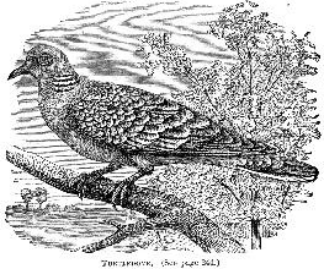
O deliver not the soul of thy turtledove unto the multitude of the wicked: forget not the congregation of thy poor for ever.
John Wesley on Psalm 74:19
V. 19. Soul-The life. Turtle-dove-Of thy church, which is fitly compared to a turtle-dove, because simple and harmless, and meek, and faithful.
Adam Clarke on Psalm 74:19
Verse 19. Deliver not the soul of thy turtle-dove] Thy people Israel are helpless, defenceless, miserable, and afflicted: O deliver them no longer into the power of their brutal adversaries.
Joseph Benson on Psalm 74:19
Verse 19. O deliver not the soul — That is, the life; of thy turtle-dove — That is, thy church; unto the multitude of the wicked — Or, to the wild beast, as חית, chajath, often signifies: or, to the troop, namely, of her enemies. As if he had said, Thou hast delivered thy people into captivity; do not deliver them to death, nor suffer their enemies utterly to destroy them. The church is fitly compared to a turtle-dove, as resembling it in disposition, being simple, harmless, meek, faithful, solitary, timid, mournful, exposed to manifold injuries, and unable to defend itself.
Joseph Sutcliffe on Psalm 74:19
Ver. 19. Thy turtle dove. As these doves were domestic favourites, so the Hebrews were dear to God.
Daniel Whedon on Psalm 74:19
19. Turtledove—The emblem of innocence and fidelity, but here used as the emblem of helplessness, timidity, and mourning. See on mourning, Isaiah 38:14; Ezekiel 7:16. Israel is represented as like the turtledove, the smallest of the dove family, unable to offer resistance or self-defence, bemoaning their guilt and sufferings. Congregation of thy poor—Same as denoted by “turtledove;” and is another appeal for help, grounded on their helplessness and their relation to God.
Cited across the library (1 reference)
- DictionaryWatson’s Dictionary: Turtle
Have respect unto the covenant: for the dark places of the earth are full of the habitations of cruelty.
John Wesley on Psalm 74:20
V. 20. The covenant-Made with Abraham, whereby thou didst give the land of Canaan to him, and to his seed for ever. Dark places-This dark and dismal land in which we live.
Adam Clarke on Psalm 74:20
Editorial note: Source collation note — paragraph 1: “respect unto the covenant] הבט לברית habbet labberith. pay attention”. source PDF page 599: “respect unto the covenant לברית הבשׂ habbet labberith Pay attention”. Compared with CLA_PSA.PDF PDF p. 599. The source-font or layout comparison does not securely establish every letter, mark or local sequence in these passages. The flagged language readings or layout are retained; the original source pages should be consulted for these specific readings. Additional-source investigation: an automated comparison of surrounding English text located possible corresponding passages in OCR from separately digitized printed volumes. The linked scan pages are research locators; their images have not been collated for this note's flagged readings. OCR agreement does not verify Greek or Hebrew letters, diacritics, word order, or table layout. The flagged readings or layout remain uncertain. CLA_PSA.PDF, PDF page 599; Additional printed-scan page locator (OCR context only; flagged reading unverified).
Verse 20. Have respect unto the covenant] הבט לברית habbet labberith. Pay attention to the covenant sacrifice; to that offered by Abraham, Genesis 15:9, &c., when the contracting parties, God and Abram, passed through between the separated parts of the covenant sacrifice. An indisputable type of Jesus Christ; and of God and man meeting in his sacrificed humanity.
The dark places of the earth] The caves, dens, woods, &c., of the land are full of robbers, cut-throats, and murderers, who are continually destroying thy people, so that the holy seed seems as if it would be entirely cut off and the covenant promise thus be rendered void. The words may either apply to Chaldea or Judea. Judea was at this time little else than a den of robbers, its own natural inhabitants being removed. Chaldea was infested with hordes of banditti also.
Joseph Benson on Psalm 74:20
Verse 20. Have respect unto the covenant — Made with Abraham, whereby thou didst give the land of Canaan to him, and to his seed for ever; and thou didst further promise, that if thy people were carried away captive into a strange land, and did there humble themselves and pray, and turn unto thee, thou wouldst mercifully restore them, 1 Kings 8:46-50. Do thou, therefore, now restore us to that pleasant land which thou hast given us. For the dark places of the earth — That is, this dark and dismal land in which we live, wherein there is nothing but ignorance and confusion, and all the works of darkness; are full of the habitations of cruelty — Here are nothing but injustice, and oppression, and tyranny, under which we groan, in all the parts of this great empire, where we have our abode.
Joseph Sutcliffe on Psalm 74:20
Ver. 20. The dark places of the earth. Gentile lands and gentile lords are full of cruelty.
Daniel Whedon on Psalm 74:20
20. Have respect unto the covenant—Hebrew, Look to the covenant. Comp. Genesis 9:16, “And I will look upon it”—the bow— “that I may remember the everlasting covenant.” But the reference is to the covenant, (Genesis 17:7,) “To be a God unto thee and to thy seed after thee.” Their present condition seemed wholly in violation of the covenant engagements. But God never forgets his promise. Psalm 111:5; Daniel 11:4. Faith now goes back to this ground of all their Church relations and national hopes. For the dark places of the earth—Hebrew, The darknesses, the plural for emphasis. Those regions where God is not known nor his law obeyed. All religions and all infidelity which reject the one true God, and man’s accountability to him, have ever been against humanity, cruel and selfish, as all history attests.
O let not the oppressed return ashamed: let the poor and needy praise thy name.
John Wesley on Psalm 74:21
V. 21. Return-From the throne of thy grace, to which they make their resort.
Adam Clarke on Psalm 74:21
Verse 21. Let not the oppressed return ashamed] Do not permit thy people to be so diminished, that when, according to thy promise, they are restored to their own land, they may appear to be but a handful of men.
Joseph Benson on Psalm 74:21–23
Verses 21-23. O let not the oppressed return ashamed — From thee, and from the throne of thy grace, to which they have recourse in this their distressed condition. “It is for the honour of God that they who apply to him for help should not, by returning without it, suffer shame and confusion in the presence of their insulting adversaries.” Let the poor and needy praise thy name — Which they will have a fresh motive to do, if thou deliver us. O God, plead thine own cause — Maintain thy honour, worship, and service, against those that reproach thee, as it here follows, and was observed before, verses 10, 18. As we are reviled and persecuted for thy sake, so thou art injured in all our wrongs. Forget not the voice of thine enemies — Their insulting and reproachful expressions against thee, as well as against us. The tumult — The tumultuous noise and loud clamours; of those that rise up against thee increaseth — They grow worse and worse, encouraging and hardening themselves in their wicked courses by their continual success and prosperity, and by thy patience extended to them.
Cited across the library (1 reference)
Arise, O God, plead thine own cause: remember how the foolish man reproacheth thee daily.
Adam Clarke on Psalm 74:22
Verse 22. Plead thine own cause] Thy honour is concerned, as well as our safety and salvation. The fool-the idolater, reproacheth thee daily-he boasts of the superiority of his idols, by whose power, he asserts, we are brought under their domination.
Daniel Whedon on Psalm 74:22
22. Thine own cause—Again the issue is urged as between Jehovah and the gods of the heathen, and the “cause” is thrown upon him. The chastened importunity of the prayer closes with a tone of subdued and plaintive appeal.
Forget not the voice of thine enemies: the tumult of those that rise up against thee increaseth continually.
Adam Clarke on Psalm 74:23
Verse 23. Forget not the voice] While we pray to thee for our own salvation, we call upon thee to vindicate thy injured honour: and let all the nations see that thou lovest thy followers, and hatest those who are thy enemies. Let not man prevail against thee or thine.
Closing reflections and analysis
Adam Clarke
ANALYSIS OF THE SEVENTY-FOURTH PSALM
This Psalm divides itself into two parts:—
I. The Psalmist’s complaint, Psalm 74:1-10.
II. His prayer, Psalm 74:10-23.
Both the complaint and petition are summarily comprised in the three first verses; and afterwards amplified throughout the Psalm. I. He expostulates with God about their calamity.
1. From the author of it: “Thou, O God.”
2. From the extremity of it: “Cast us not off.”
3. From the duration of it: “For ever.”
4. From the cause: “Thy anger smokes against us.”
5. From the object of it: “The sheep of thy pasture.”
To his complaint he subjoins his petition; in which every word has the strength of an argument.
1. “Remember thy congregation:” Thy chosen people.
2. “Whom thou hast purchased: “ By a mighty hand from Pharaoh.
3. “Of old:” Thy people ever since thy covenant with Abraham.
4. “The rod of thine inheritance;” dwelling in that land which thou didst measure out to them.
5. “Whom thou hast redeemed:” From the Canaanites, &c.
6. “This Mount Zion, wherein thou hast dwelt:” Where we gave thee the worship which belonged to the true God; and thou wert pleased with our sacrifices and services. Remember this people, and all these engagements; and “cast us not off for ever.”
7. Lift up thy feet:” Consider thy own dishonour; they are thy enemies as well as ours. See what they have done against thee, thy temple, thy ordinances. Look at their blasphemies, and avenge the quarrel of thy covenant, Psalm 74:3-11.
Consider what thou hast done for our fore-fathers.
1. Thou hast been long our King and Deliverer. See the proofs, Psalm 74:12-16.
2. Thy general providence respects all men. Thou hast given them light; the sun and moon, the vicissitude of seasons, &c., Psalm 74:16, 17. II. The psalmist’s prayer:—
1. That God would remember the reproaches of his enemies, Psalm 74:18.
2. That he would deliver the souls of his children, Psalm 74:19.
3. That he would not forget “the congregation of the poor,” Psalm 74:19.
4. That he would remember his covenant with Abram, to make them an innumerable people, and a blessing to all mankind, Psalm 74:20.
5. That, when they did return, they might not be a diminished people; for their enemies were determined to destroy them, Psalm 74:21.
6. That they might be led from all considerations to praise his name, Psalm 74:21.
At the conclusion he urges his petition:—
1. “Arise,—plead thine own cause.”
2. “Remember the foolish.”
3. “Forget not thine enemies.”
4. They make a tumult, and their partisans daily increase, Psalm 74:22, 23.
Joseph Sutcliffe
REFLECTIONS.
The psalmist asks here, “Oh God, why hast thou cast us off?” The prophets have said of Zion, her foundation standeth fast; she should not be moved for ever. Strange that the Lord should abhor his own inheritance. Moses gives the answer:—but if there shall arise a root bearing wormwood and gall; a departure from the Lord to the worship of idols, then the Lord would send them into captivity, and scatter them on the face of the whole earth. Here then is an equal voice to the christian church. The psalmist complains in the day of visitation of the peculiar pride with which the enemy raised their axes against the beautifully carved work of the cedars, and the branches of the palm-trees, which designated the ever-flourishing state of religion, and put fire to the temple, which for three nights illuminated the heavens, and then expired as an omen of departed glory. These were scenes which rent the hearts of all lovers of Zion. These were the severer strokes of an angry God; but the Hope of Israel was not lost; grace was reserved for the remnant.
He cries to heaven for help, being encouraged by ancient graces which God had conferred on the Hebrew church, in breaking the head of leviathan, the cruel tyrant, and dragon of the Nile; in dividing the rock of Horeb to give water, and in opening the Jordan to give passage to his saints. He pleads, that as God still gave them light from heaven, and fruitful seasons, so he would ultimately hear their prayers and avenge the blasphemies of the heathen who had insulted his name. It was a dark day for the Jews; but the eye of faith was not beclouded. Truly, after all chastisements, God is good to Israel, to them who are clean in heart. A glorious high throne is the place of our sanctuary from the beginning. That throne is higher than the heavens, and cannot be affected by the burning of earthly temples.
John Wesley
PSALM 74.
This psalm, which so particularly describes the destruction of Jerusalem, was probably written by another Asaph, who lived at the time of the captivity. He, in the name of the Jews, complains of the miseries they suffered, ver. 1-11. Encourages himself by recollecting the mighty works of God, ver. 12-17. Prays for deliverance, ver. 18-23. Maschil of Asaph
Title of the psalm. Maschil of Asaph-Not composed by that famous Asaph, who flourished in David’s time, but by some of his posterity, who is called by their father’s name, as this psalm speaks of the destruction of the temple and of Jerusalem, and of God’s people by the Chaldeans.
Adam Clarke
PSALM 74
The psalmist complains of the desolations of the sanctuary, and pleads with God, 1-3; shows the insolence and wickedness of their enemies, 4-8; prays to God to act for them as he had done for their fathers, whom, by his miraculous power, he had saved, 9-17; begs God to arise, and vindicate his own honour against his enemies, and the enemies of his people, 18-23.
NOTES ON PSALM 74
The title is, Maschil of Asaph, or, “A Psalm of Asaph, to give instruction.” That this Psalm was written at a time when the temple was ruined, Jerusalem burnt, and the prophets scattered or destroyed, is evident. But it is not so clear whether the desolations here refer to the days of Nebuchadnezzar, or to the desolation that took place under the Romans about the seventieth year of the Christian era. Calmet inclines to the former opinion; and supposes the Psalm to be a lamentation over the temple destroyed by Nebuchadnezzar.
Joseph Benson
PSALM 74.
A.M. 2989. — B.C. 1015.
This Psalm seems to have been composed on occasion of the destruction of Jerusalem and the temple by the Chaldeans. The author, after lamenting the calamities of his country, and the insults of his enemies, calls to remembrance the glorious exploits which God had performed in ancient days for his people, and prays him to exert himself afresh in their cause, which, through the blasphemous defiance of the enemy, was now become his own. It could not certainly be composed by the same Asaph who wrote the foregoing Psalm; (see 2 Chronicles 29:30;) but, as Bishop Patrick thinks, by some one of his posterity, who, during the captivity, was suffered to remain in Jerusalem with the Chaldeans. The psalmist, in the name of the Jews, complains of the miseries they suffered, 1-11. Encourages himself by recollecting the mighty works of God, 12-17. Prays for deliverance, 18-23.
NOTES ON PSALM 74.
Joseph Sutcliffe
PSALM 74.
Title. Maschil of Asaph; that is, instruction, as Psalm 32. The EDDA is the title of the Icelandic poem, which also signifies instruction. This mournful ode is also alleged to have been written in Babylon, and to bear the name of Asaph, because sung to his musical compositions, or sung by the sons of Asaph. See Psalm 79. But Lyranus thinks that Asaph foretold the destruction of the temple; and the use of the pronoun this, in ver. 2: “Remember THIS mount Zion, wherein thou hast dwelt,” sufficiently indicates that the psalmist wrote in Jerusalem. The phraseology would not be natural to a resident in Babylon.
Daniel Whedon
PSALM 74.
Maschil of Asaph.
The historic ground of this psalm is found in 2 Chronicles 36:17-20; Jeremiah 52:4-16. It seems properly to stand first in the order of those psalms which commemorate the destruction of Jerusalem and the temple by the Chaldeans, and is intimately connected with Psalm 79. The author, who was of the family of Asaph, must be supposed to be with the multitude of the exiles on their way to Babylonia, or recently to have come to that province. Verses 1-3 are an earnest prayer for divine interposition in behalf of his Church; verses 4-8 are a more detailed description of what the enemy had done; verses 9-11 are a bitter cry of distress that in all their troubles God has not seemed to reveal himself by any offer of help or promise of relief; verses 12-15 are a rehearsal of God in their national history for the encouragement of faith; and verses 16, 17, for the same end, are a recognition of him as Creator and general ruler of the worlds. At verse 18 the direct prayer is resumed, and with humble pathos continued to the end.
TITLE: Maschil of Asaph—A fitting title for a lesson of instruction, the most serious of any to which the nation had ever been called to listen. Its Asaphic origin appears, not only in its didactic style, but “in the contemplation of Israel as a flock, and the predilection for retrospective references to Israel’s early history.”—Delitzsch.