Chapter introductions
He that dwelleth in the secret place of the most High shall abide under the shadow of the Almighty.
John Wesley on Psalm 91:1
V. 1. He-He that makes God his habitation and refuge.
Adam Clarke on Psalm 91:1
Verse 1. He that dwelleth in the secret place] The Targum intimates that this is a dialogue between David, Solomon, and Jehovah. Suppose we admit this,—then
DAVID asserts: “He who dwelleth in the secret place of the Most High shall abide under the shadow of the Almighty,” Psalm 91:1. SOLOMON answers: “I will say of the Lord, He is my refuge and my fortress; my God, in him will I trust,” Psalm 91:2. DAVID replies, and tells him what blessings he shall receive from God if he abide faithful, Psalm 91:3-13.
Then the SUPREME BEING is introduced, and confirms all that David had spoken concerning Solomon, Psalm 91:14-16: and thus this sacred and instructive dialogue ends.
In the secret place of the Most High] Spoken probably in reference to the Holy of holies. He who enters legitimately there shall be covered with the cloud of God’s glory-the protection of the all-sufficient God. This was the privilege of the high priest only, under the law: but under the new covenant all believers in Christ have boldness to enter into the holiest by the blood of Jesus; and those who thus enter are safe from every evil.
Joseph Benson on Psalm 91:1
Verse 1. He that dwelleth in the secret place, &c. — He that makes God his habitation and refuge, as he is called verse 9, that has recourse to him, and relies on him in his dangers and difficulties; that has access to him, intercourse with him, and worships within the veil, living a life of constant communion with him; shall abide under the shadow of the Almighty — He shall not be disappointed of his hope, but shall find a quiet and safe resting-place under the divine care. A shadow, in Scripture, often signifies protection. But there evidently seems to be an allusion to the most holy place in the tabernacle and temple, and to the outstretched wings of the cherubim covering the ark and mercy-seat: see notes on Psalm 27:5, and 32:7. And it is as if the psalmist had said, He shall dwell like the ark in the holy of holies, under the immediate shadow and protection of the Divine Majesty. It is justly observed here by Dr. Horne, that “in all dangers, whether spiritual or corporal, the members of Christ’s mystical body may reflect, with comfort, that they are under the same almighty Protector.”
Joseph Sutcliffe on Psalm 91:1
Verse 1. The secret place of the Most High, where he resides on the mercyseat. There the refugee covers himself with the shield of omnipotence. All the evils of the fowler’s snares, of pestilence and war, are set at defiance.
Daniel Whedon on Psalm 91:1
1. Dwelleth—Sitteth, or waiteth. Secret place—The allusion is to the holy of holies in the tabernacle. Shadow of the Almighty—Referring to the wings of the cherubim that “shadowed the mercy seat.” See Exodus 25:18-20; Hebrews 9:5. But this could be taken only in the spiritual sense, as in Matthew 6:6; Hebrews 10:19-22. To abide under the shadow of the Almighty is to abide under his immediate protection. The “secret place” is also an oriental phrase for the interior room or rooms of the house or tent, reserved for the master or chief. See on Psalm 27:5; 31:20; 61:4.
Cited across the library (1 reference)
I will say of the LORD, He is my refuge and my fortress: my God; in him will I trust.
Adam Clarke on Psalm 91:2
Verse 2. I will say of the Lord] This is my experience: “He is my fortress, and in him will I continually trust.”
Joseph Benson on Psalm 91:2–3
Verses 2, 3. I will say of the Lord, He is my refuge — Upon that ground I will confidently commit myself and all my affairs to God. Surely he shall deliver thee — O thou believing, pious soul, who after my example shalt make God thy refuge, thou shalt partake of the same privilege which I enjoy. From the snare of the fowler — Which is laid unseen, and catches the unwary prey on a sudden; and from the noisome pestilence — Which, like a fowler’s snare, seizeth men unexpectedly, and holdeth them fast, and commonly delivers them up to death. “This promise,” saith Henry, “protects, 1st, The natural life, and is often fulfilled in our preservation from those dangers which are very threatening, and very near, and yet we ourselves are not apprehensive of them, no more than the bird is of the snare of the fowler. 2d, The spiritual life, which is protected by divine grace from the temptations of Satan, which are as the snares of the fowler, from the contagion of sin, which is the noisome pestilence. He that has given grace to be the glory of the soul, will create a defence upon all that glory.”
Daniel Whedon on Psalm 91:2
2. I will say of the Lord—The Septuagint has it: “He shall say to the Lord,” but the author must be considered as speaking in his own person, from his own experience, though from the heart of the people.
Surely he shall deliver thee from the snare of the fowler, and from the noisome pestilence.
John Wesley on Psalm 91:3
V. 3. Pestilence-From the pestilence, which like a fowler’s snare takes men suddenly and unexpectedly.
Adam Clarke on Psalm 91:3
Verse 3. Surely he shall deliver thee] If thou wilt act thus, then the God in whom thou trustest will deliver thee from the snare of the fowler, from all the devices of Satan, and from all dangerous maladies. As the original word, דבר dabar, signifies a word spoken, and deber, the same letters, signifies pestilence; so some translate one way, and some another: he shall deliver thee from the evil and slanderous word; he shall deliver thee from the noisome pestilence-all blasting and injurious winds, effluvia, &c.
Daniel Whedon on Psalm 91:3
Editorial note: The supplied edition prints “Proverbs 19:30” here (WHD_CO05.PDF, physical PDF page 437). The surrounding discussion of the word calamity corresponds to Proverbs 19:13 in the King James Version. The origin of the printed numbering is not established here; the historical wording is retained. WHD_CO05.PDF, PDF page 437.
3. Surely he shall deliver thee—The change from the first person in verse 2, to the second in verse 3, is abrupt and perplexing. We must either adopt the dramatic theory respecting the structure of this psalm, (see the introduction,) making three speakers, and assigning verse 3 and part of verse 9 to the second, verses 14-16 to the third, (namely, to Jehovah,) and the rest to the first; or, we must suppose in verses 3 and 9 the same speaker adopts the I instead of thou, for the purpose of speaking from his own heart, and for greater pathos. Snare of the fowler—In the enumeration of evils from which the righteous shall be delivered by his single trust in God, he properly begins with the “trap of the fowler”—the dangers arising from the secret wickedness of men. Noisome pestilence— Fatal pestilence, or pestilence of wickedness. The words are not specific of any bodily disease, or class of destructive diseases, but apply to any causes by which men are swept away suddenly—often those which come from the crafty wickedness of men, and is parallel to “snare of the fowler” in the previous member. It is one of the four great judgments of God, enumerated Ezekiel 14:21; Revelation 6:8. The word “noisome” means calamitous, ruinous, as Psalm 57:1, where verses 4-6 show it was brought only against wicked men. So Psalm 94:20, where it is rendered iniquity, and Proverbs 19:30, rendered calamity. But see on verse 6.
He shall cover thee with his feathers, and under his wings shalt thou trust: his truth shall be thy shield and buckler.
Adam Clarke on Psalm 91:4
Verse 4. He shall cover thee with his feathers] He shall act towards thee as the hen does to her brood,—take thee under his wings when birds of prey appear, and also shelter thee from chilling blasts. This is a frequent metaphor in the sacred writings; see the parallel texts in the margin, and the notes on them. The Septuagint has Εν τοις μεταφρενοις αυτου επισκιασει σοι, He will overshadow thee between his shoulders; alluding to the custom of parents carrying their weak or sick children on their backs, and having them covered even there with a mantle. Thus the Lord is represented carrying the Israelites in the wilderness. See Deuteronomy 32:11, 12, where the metaphor is taken from the eagle. His truth shall be thy shield and buckler] His revelation; his Bible. That truth contains promises for all times and circumstances; and these will be invariably fulfilled to him that trusts in the Lord. The fulfillment of a promise relative to defence and support is to the soul what the best shield is to the body.
Joseph Benson on Psalm 91:4
Verse 4. He shall cover thee with his feathers — shall protect thee with the greatest tenderness and affection, as a hen covers and defends her chickens when they are in any danger. And under his wings shalt thou trust — The wings of his overshadowing power and providence; his truth — Whereby he is obliged to fulfil all his gracious promises, and among the rest, that of protection in dangers; shall be thy shield and buckler — Thy strong and sure defence.
Joseph Sutcliffe on Psalm 91:4
Ver. 4. He shall cover thee with his feathers, the wings of the cherubim. Ezekiel 1:6.
Thou shalt not be afraid for the terror by night; nor for the arrow that flieth by day;
John Wesley on Psalm 91:5
V. 5. By night-When evil accidents are most terrible and least avoidable. Arrow-The pestilence, or any such destructive calamity; such are frequently called God’s arrows. By day-Thou shalt be kept from secret and open mischiefs.
Adam Clarke on Psalm 91:5
Verse 5. The terror by night] Night is a time of terrors, because it is a time of treasons, plunder, robbery, and murder. The godly man lies down in peace, and sleeps quietly, for he trusts his body, soul, and substance, in the hand of God; and he knows that he who keepeth Israel neither slumbers nor sleeps. It may also mean all spiritual foes,—the rulers of the darkness of this world. I have heard the following petition in an evening family prayer: “Blessed Lord, take us into thy protection this night; and preserve us from disease, from sudden death, from the violence of fire, from the edge of the sword, from the designs of wicked men, and from the influence of malicious spirits!”
Nor for the arrow] The Chaldee translates this verse, “Thou shalt not fear the demons that walk by night; nor the arrow of the angel of death which is shot in the day time.” Thou needest not to fear a sudden and unprovided-for death.
Joseph Benson on Psalm 91:5–6
Verses 5, 6. Thou shalt not be afraid for the terror by night — When evil accidents are most terrible and least avoidable; nor for the arrow — Any common and destructive calamity; (for such are commonly called God’s arrows;) that flieth by day — Which is the time for shooting arrows. The sense of the verse is, Thou shalt be kept from secret and open mischiefs at all times. Nor for the pestilence, &c. — This verse explains the former, and shows what that terror and arrow signify; that walketh in darkness — That makes progress and spreads death and desolation in an invisible manner, such as can neither be foreseen nor prevented; nor for the destruction at noon-day — That, like a bold enemy, assaults us openly, and though discovered cannot be resisted.
Daniel Whedon on Psalm 91:5
5. Terror by night… arrow… by day—A time of war is here supposed, when the night is filled with apprehensions and the day with battles.
Nor for the pestilence that walketh in darkness; nor for the destruction that wasteth at noonday.
John Wesley on Psalm 91:6
V. 6. Darkness-Invisibly, so that we can neither foresee nor prevent it.
Adam Clarke on Psalm 91:6
Verse 6. Nor for the pestilence that walketh in darkness; nor for the destruction that wasteth at noonday.] The rabbins supposed that the empire of death was under two demons, one of which ruled by day, the other by night. The Vulgate and Septuagint have-the noonday devil. The ancients thought that there were some demons who had the power to injure particularly at noonday. To this Theocritus refers, Id. i. ver. 15:— Ου θεμις, ω ποιμαν, το μεσαμβρινον, ου θεμις αμμιν Συρισδεν, τον Πανα δεδοικαμες, η γαρ απ᾽ αγρας
Τανικα κεκμακως αμπαυεται, εντι γε πικρος,
Και οι αει δριμεια χολα ποτι ρινι καθηται.
“It is not lawful, it is not lawful, O shepherd, to play on the flute at noonday: we fear Pan, who at that hour goes to sleep in order to rest himself after the fatigues of the chase; then he is dangerous, and his wrath easily kindled.”
Lucan, in the horrible account he gives us of a grove sacred to some barbarous power, worshipped with the most horrid rites, refers to the same superstition:—
Lucus erat longo nunquam violatus ab ævo,
Non illum cultu populi propiore frequentant,
Sed cessere deis: medio cum Phœbus in axe est,
Aut cœlum nox atra tenet, pavet ipse sacerdos
Accessus, dominumque timet deprendere luci.
LUCAN, lib. iii., ver. 399.
“Not far away, for ages past, had stood
An old inviolated sacred wood:—
The pious worshippers approach not near,
But shun their gods, and kneel with distant fear:
The priest himself, when, or the day or night
Rolling have reached their full meridian height,
Refrains the gloomy paths with wary feet,
Dreading the demon of the grove to meet;
Who, terrible to sight, at that fixed hour
Still treads the round about this dreary bower.”
ROWE.
It has been stated among the heathens that the gods should be worshipped at all times, but the demons should be worshipped at midday: probably because these demons, having been employed during the night, required rest at noonday and that was the most proper time to appease them. See Calmet on this place. Both the Vulgate and Septuagint seem to have reference to this superstition.
The Syriac understands the passage of a pestilential wind, that blows at noonday. Aquila translates, of the bite of the noonday demon.
Daniel Whedon on Psalm 91:6
6. Pestilence that walketh in darkness—The usual idea of דבר, pestilence, is here preserved, a mode of destruction, whether by sickness or other divine judgment, which is sudden, secret, and without warning. (See on verse 3.) It “walketh in darkness,” like the angel of death. Amos 4:10. Destruction that wasteth at noon-day—A description of a battle, and parallel to the “arrow that flieth by day,” verse 5. It is better to thus take verses 4, 5, as one verse of four lines, as some do, and as the antitheses would justify. But קשׂב, destruction, seems best understood of the sirocco, the terror of all travellers and dwellers in and adjacent to the Arabian desert. In the two other places where the word occurs it is associated with “burning heat” (Deuteronomy 32:24) and violent “storm,” (Isaiah 28:2,) the known accompaniments of the sirocco. See on Psalm 103:16. Bishop Mant thus understands it, and paraphrases verse 6:—
“Plagues that in the darkness waste,
Nor the noontide’s purple blast.”
See more on Psalm 103:16.
Cited across the library (2 references)
A thousand shall fall at thy side, and ten thousand at thy right hand; but it shall not come nigh thee.
Adam Clarke on Psalm 91:7
Verse 7. A thousand shall fall at thy side] Calmet thinks this place should be translated thus: “A thousand enemies may fall upon thee on one side, and ten thousand may fall upon thee on thy right hand: but they shall not come nigh thee to take away thy life.” It is a promise of perfect protection, and the utmost safety.
Joseph Benson on Psalm 91:7
Verse 7. A thousand shall fall at thy side — At thy left side, this being opposed to the right hand, immediately mentioned; but it shall not come nigh thee — This and such like promises are not to be understood absolutely and universally, as if no truly good man could be cut off by the plague, or by other common calamities, which is confuted both by other plain texts of Scripture, and by unquestionable experience; but with due limitations and conditions; either on man’s part, as, if there be a defect in his faith or obedience; or on God’s part, when God sees death is more for his good than life, as it apparently is, when righteous men are taken away from the evil to come, as is said Isaiah 57:1. In which case, though God doth not give the thing promised, yet he giveth a far greater mercy instead of it, and so fulfils his promise in the best sense, and with most advantage.
Joseph Sutcliffe on Psalm 91:7
Ver. 7. Thousands shall fall in battle. David could say this with confidence, for God had always covered his head in the day of battle. To others, both in war and pestilence, this special favour has been denied.
Cited across the library (1 reference)
Only with thine eyes shalt thou behold and see the reward of the wicked.
Adam Clarke on Psalm 91:8
Verse 8. The reward of the wicked.] Thou shalt not only be safe thyself, but thou shalt see all thy enemies discomfited and cast down.
Joseph Benson on Psalm 91:8
Verse 8. Only with thine eyes shalt thou behold, &c. — Without any terror or danger to thyself, and with a thankful reflection on God’s goodness to thee; and see the reward of the wicked — The just recompense of their sins, or the vengeance of God upon them. Observe well, reader, those that preserve their purity in times of general corruption, may trust God with their safety in times of general desolation. When multitudes die around us, though thereby we ought to be awakened to prepare for our own death, yet we ought not to be afraid with any amazement, nor make ourselves subject to bondage, as many do all their lifetime, through fear of death. The sprinkling of blood secured the firstborn of Israel, when thousands fell.
Daniel Whedon on Psalm 91:8
8. With thine eyes shalt thou behold—Like the Israelites who saw the overthrow of their enemies, a stated Exodus 14:30, 31.
Because thou hast made the LORD, which is my refuge, even the most High, thy habitation;
Adam Clarke on Psalm 91:9
Verse 9. Because thou hast made the Lord] Seeing thou hast taken Jehovah, the Most High, for thy portion and thy refuge, no evil shall come nigh thy dwelling; thou shalt be safe in thy soul, body, household, and property, Psalm 91:10. Every pious man may expect such protection from his God and Father.
Joseph Benson on Psalm 91:9–12
Verses 9-12. Because thou hast made the Most High thy habitation — Which is the only ground and reason of that safety here mentioned; there shall no evil befall thee — Namely, so as to destroy or really hurt thee. Though affliction befall thee, yet there shall be no real evil in it; for it shall come from the love of God, and shall be sanctified; it shall come, not for thy hurt, but for thy good; and though for the present it be not joyous but grievous, yet, in the end, it shall yield so well that thou thyself shalt own no evil befell thee. Neither shall any plague come nigh thy dwelling — This promise is not made to all that dwell nigh a righteous man, as, suppose, to his children, servants, and neighbours, who may, possibly, be wicked persons, and so strangers from God’s covenant and promises. How far it secures his own person, see on verse 7. For he shall give his angels charge over thee — Those blessed, powerful, and watchful spirits, whom God hath appointed to minister to, and take care of, the heirs of salvation. To keep thee in all thy ways — In the whole course of thy life, and in all thy lawful undertakings. They shall bear thee up in their hands — Sustain or uphold thee in thy goings, as we do a child or a weakly man, especially in uneven or dangerous paths; lest thou dash thy foot against a stone — So as to hurt it, or to cause thee to fall. Satan, it is well known, tempted Christ to cast himself from a pinnacle of the temple upon the presumption of this promise, which he quoted, implying, that angels should guard and support him in all dangers whatever. “But Christ, in answer, at once detected and exposed the sophistry of the grand deceiver, by showing that the promise belonged only to those who fell unavoidably into danger, in the course of duty; such might hope for the help and protection of Heaven; but that he who should wantonly and absurdly throw himself into peril, merely to try whether Providence would bring him out of it, must expect to perish for his pains.’” — Horne.
Daniel Whedon on Psalm 91:9
9. The Lord… my refuge—On the person speaking here see note on verses 2, 3.
There shall no evil befall thee, neither shall any plague come nigh thy dwelling.
Daniel Whedon on Psalm 91:10
10. Come nigh thy dwelling—The allusion is to Exodus 12:23. Compare Isaiah 54:14.
Cited across the library (1 reference)
For he shall give his angels charge over thee, to keep thee in all thy ways.
Adam Clarke on Psalm 91:11
Verse 11. He shall give his angels charge over thee] Evil spirits may attempt to injure thee; but they shall not be able. The angels of God shall have an especial charge to accompany, defend, and preserve thee; and against their power, the influence of evil spirits cannot prevail. These will, when necessary, turn thy steps out of the way of danger; ward it off when it comes in thy ordinary path; suggest to thy mind prudent counsels, profitable designs, and pious purposes; and thus minister to thee as a child of God, and an heir of salvation.
To keep thee in all thy ways.] The path of duty is the way of safety. Thou canst not reasonably expect protection if thou walk not in the way of obedience. Thy ways are the paths of duty, which God’s word and providence have marked out for thee. The way of sin is not thy way-thy duty, thy interest. Keep in thy own ways, not in those of sin, Satan, the world, and the flesh; and God will take care of thee.
Joseph Sutcliffe on Psalm 91:11
Ver. 11. He shall give his angels charge over thee, as illustrated in Psalm 34:7. The repetition seems a further proof that David was the author of this psalm.
Daniel Whedon on Psalm 91:11
11. His angels charge over thee—The doctrine of angelic ministry to God’s children, or chosen ones, is everywhere recognised in the Bible. Genesis 28:12; Psalm 34:7; Matthew 18:10; Hebrews 1:14. Keep thee in all thy ways—Preserve thee from the dangers which may beset thy daily life, in whatever path duty may call thee. Thus the path of duty becomes the path of safety. This passage was perversely quoted by the tempter to Christ to encourage him to presumption. Matthew 4:6.
Cited across the library (3 references)
They shall bear thee up in their hands, lest thou dash thy foot against a stone.
John Wesley on Psalm 91:12
V. 12. Bear thee-Sustain or uphold thee in thy goings, as we do a child.
Adam Clarke on Psalm 91:12
Verse 12. They shall bear thee up in their hands] Take the same care of thee as a nurse does of a weak and tender child; lead thee,—teach thee to walk,—lift thee up out of the way of danger, “lest thou shouldst dash thy foot against a stone,” receive any kind of injury, or be prevented from pursuing thy path with safety and comfort.
Let us remember that it is GOD, whose these angels are; HE gives them charge-from HIM they receive their commission,—to HIM they are responsible for their charge. From God thou art to expect them; and for their help he alone is to receive the praise. It is expressly said, He shall give his angels charge; to show that they are not to be prayed to nor praised; but GOD alone, whose servants they are. See Clarke’s note on “Matthew 4:6”.
Thou shalt tread upon the lion and adder: the young lion and the dragon shalt thou trample under feet.
John Wesley on Psalm 91:13
V. 13. The lion-Shall lie prostrate at thy feet, and thou shalt securely put thy feet upon his neck. Dragon-By which he understands all pernicious creatures, though never so strong, and all sorts of enemies.
Adam Clarke on Psalm 91:13
Verse 13. Thou shalt tread upon the lion and adder] Even the king of the forest shall not be able to injure thee; should one of these attack thee, the angels whom God sends will give thee an easy victory over him. And even the asp, (פתן pethen,) one of the most venomous of serpents, shall not be able to injure thee.
The asp is a very small serpent, and peculiar to Egypt and Libya. Its poison kills without the possibility of a remedy. Those who are bitten by it die in about from three to eight hours; and it is said they die by sleep, without any kind of pain. Lord Bacon says the asp is less painful than all the other instruments of death. He supposes it to have an affinity to opium, but to be less disagreeable in its operation. It was probably an this account that Cleopatra, queen of Egypt, chose to die by the asp, as she was determined to prevent the designs of Augustus, who intended to have carried her captive to Rome to grace his triumph.
The dragon shalt thou trample] The תנין tannin, which we translate dragon, means often any large aquatic animal; and perhaps here the crocodile or alligator.
Joseph Benson on Psalm 91:13
Verse 13. Thou shalt tread upon the lion — The lion shall lie prostrate at thy feet, and thou shalt securely put thy feet upon his neck, as the Israelites did upon the necks of the Canaanitish kings, Joshua 10:24. The young lion and the dragon shalt thou trample, &c. — By which he figuratively understands all pernicious creatures, though never so strong, and fierce, and subtle, and all sorts of enemies. “The fury and venom of our spiritual enemies,” especially, “are often portrayed by the natural qualities of lions and serpents.” And it is observable, that when the seventy disciples returned to Christ with joy, saying, Lord, even the devils are subject to us through thy name, he answered them in the metaphorical language of this Psalm, Behold I give unto you power to tread on scorpions and serpents, &c. A promise this, which, in part, at least, belongs to all his faithful servants, whom through grace, he makes more than conquerors in all their conflicts with the same adversaries; enabling them to resist the devil, as St. Peter exhorts, steadfast in the faith; or bruising Satan under their feet, as St. Paul expresses it. We have need, however, to pray “for courage to resist the lion’s rage, and wisdom to elude the serpent’s wiles.”
Daniel Whedon on Psalm 91:13
13. Lion… adder—Two deadly enemies, the one representing open violence, the other secret cunning; both formerly, and the adder (Hebrew, pethen, see note on Psalm 58:4,) still, infesting the Arabian desert. To “tread upon the lion,” may be understood in the sense of triumphing over a vanquished enemy, as Judges 5:21; Isaiah 63:3; or, in the sense of an accidental treading upon, from being too near the monster as he lies concealed in the path. This danger is the common terror of the natives where this animal abounds. Wood says: “In the dark there is no animal so invisible as the lion. Almost every hunter has told a similar story of the utter inability to see him, though he was so close that they could hear his breathing. Sometimes, when he has crept near an encampment, he crouches closely to the ground, and in the semi-darkness looks so like a large stone, or a little hillock, that one might pass close to it without perceiving its real nature. This gives the opportunity for which the lion
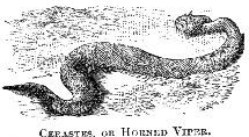
has been watching, and in a moment he strikes down the careless straggler.” This is especially true of the “old lion,” ליש, layish, who is too feeble to roam at large for prey. See Job 4:11. Tread upon the… adder—This allusion to a common danger—arising from the serpent lying concealed in the path—though here spoken of the pethen, (see note on Psalm 58,) applies well to the שפיפן, (shephiphon,) the cerastes, or horned adder. See on Genesis 49:17. Young lion—Proverbially bloodthirsty and ferocious in its youthful strength. See Ezekiel 19:3. Dragon—The Hebrew may denote a monster either of the serpent or crocodile family, whether inhabiting the land or water, but here denotes some formidable land serpent. Trample under feet—A stronger expression than “tread,” in preceding verse, denoting the most perfect triumph over them. On this power over beasts and reptiles see Daniel 6:22; Mark 16:18; Luke 10:19; Acts 28:3-5. It is difficult to imagine how the Israelites, with their flocks, herds and families, could pass through the desert safely without superhuman protection from the evils enumerated in this psalm.
Cited across the library (2 references)
Because he hath set his love upon me, therefore will I deliver him: I will set him on high, because he hath known my name.
John Wesley on Psalm 91:14
V. 14. Because-This and the two following verses are the words of God.
Adam Clarke on Psalm 91:14
Verse 14. Because he hath set his love upon me] Here the Most High is introduced as confirming the word of his servant. He has fixed his love— his heart and soul, on me.
Therefore will I deliver him] I will save him in all troubles, temptations, and evils of every kind.
I will set him on high] I will place him out of the reach of all his enemies. I will honour and ennoble him, because he hath known my name—because he has loved, honoured, and served me, and rendered me that worship which is my due. He has known me to be the God of infinite mercy and love.
Joseph Benson on Psalm 91:14–16
Verses 14-16. Because he hath set his love upon me — In the former part of the Psalm the prophet had spoken in his own person; but here God himself is introduced as the speaker, confirming the preceding promises, and giving an account of the reasons of his singular care of all that truly believe and trust in him. Therefore will I deliver him — I will abundantly recompense his love with my favour and blessing. I will set him on high — In a high and safe place, where no evil can reach him; because he hath known my name — With a true and saving knowledge, so as to love me and put his trust in me; God’s name being here, as often elsewhere, put for God himself. He shall call upon me — As he knows and loves me, so he will offer up sincere and fervent prayers to me upon all occasions. And I will answer him — I will grant his petitions as far as will be for his good and my glory. I will be with him in trouble — To keep him from sinking under his burden. With long life — Either in this world, when it is expedient for my service, and for his benefit; or, at least, in the next world, where he shall live to eternity, in the blissful sight and enjoyment of me in glory. And show him my salvation — Either here or hereafter.
Daniel Whedon on Psalm 91:14
14. Because he hath set his love upon me—Jehovah speaks now. Because his love has taken fast hold of me: loved me ardently. “Reclined sweetly upon me.”—Calvin. Love, then as now, was “the fulfilling of the law.” Romans 8:28.
He shall call upon me, and I will answer him: I will be with him in trouble; I will deliver him, and honor him.
Adam Clarke on Psalm 91:15
Editorial note: Source collation note — paragraph 2: “i am with him. עמו אנכי immo anochi; as soon”. source PDF page 726: “I am with him אנכי עמו immo anochi as soon”. Compared with CLA_PSA.PDF PDF p. 726. The source-font or layout comparison does not securely establish every letter, mark or local sequence in these passages. The flagged language readings or layout are retained; the original source pages should be consulted for these specific readings. Additional-source investigation: an automated comparison of surrounding English text located possible corresponding passages in OCR from separately digitized printed volumes. The linked scan pages are research locators; their images have not been collated for this note's flagged readings. OCR agreement does not verify Greek or Hebrew letters, diacritics, word order, or table layout. The flagged readings or layout remain uncertain. CLA_PSA.PDF, PDF page 726; Additional printed-scan page locator (OCR context only; flagged reading unverified).
Verse 15. He shall call upon me] He must continue to pray; all his blessings must come in this way; when he calls, I will answer him—I will give him whatever is best for him.
I will be with him in trouble] Literally, I am with him. עמו אנכי immo anochi; as soon as the trouble comes, I are there.
I will deliver him] For his good I may permit him to be exercised for a time, but delivered he shall be.
And honour him] אכבדהו acabbedehu, “I will glorify him.” I will load him with honour; that honour that comes from God. I will even show to men how highly I prize such.
Daniel Whedon on Psalm 91:15
15. I will answer him—The response given to verses 15 to 16 of the preceding psalm. In trouble—Compare Genesis 46:4; Isaiah 63:9. Deliver… honour—Deliverance from trouble, even all the perils enumerated, which have been the world’s terror, is not the fulness of the salvation promised. The soul is advanced to “honour” also. God setteth him on high—to be understood of, and fully realized in, the spiritual life.
With long life will I satisfy him, and shew him my salvation.
Adam Clarke on Psalm 91:16
Editorial note: Source collation note — paragraph 2: “show him my salvation.] ואראהו בשועתי vearehu bishuathi, “i will”. source PDF page 726: “show him my salvation. בשועתי ואראהו vearehu bishuathi “I will”. Compared with CLA_PSA.PDF PDF p. 726. The source-font or layout comparison does not securely establish every letter, mark or local sequence in these passages. The flagged language readings or layout are retained; the original source pages should be consulted for these specific readings. Additional-source investigation: an automated comparison of surrounding English text located possible corresponding passages in OCR from separately digitized printed volumes. The linked scan pages are research locators; their images have not been collated for this note's flagged readings. OCR agreement does not verify Greek or Hebrew letters, diacritics, word order, or table layout. The flagged readings or layout remain uncertain. CLA_PSA.PDF, PDF page 726; Additional printed-scan page locator (OCR context only; flagged reading unverified).
Verse 16. With long life] Literally, With length of days will I fill him up. He shall neither live a useless life, nor die before his time. He shall live happy and die happy.
And show him my salvation.] ואראהו בשועתי vearehu bishuathi, “I will make him see (or contemplate) in my salvation.” He shall discover infinite lengths, breadths, depths, and heights, in my salvation. He shall feel boundless desires, and shall discover that I have provided boundless gratifications for them. He shall dwell in my glory, and throughout eternity increase in his resemblance to and enjoyment of me. Thus shall it be done to the man whom the Lord delighteth to honour; and he delights to honour that man who places his love on him. In a word, he shall have a long life in this world, and an eternity of blessedness in the world to come.
Daniel Whedon on Psalm 91:16
16. Long life—Compare the complaint of the brevity and frailty of life. Psalm 90. Show him my salvation—Cause him to see my salvation. The acme of all Old Testament hope and desire. To such a character as this psalm describes, God would not only grant all present deliverance and honour, but open to his view the higher knowledge of that mysterious plan of redemption, involving the office of Messiah, to which all Old Testament rites pointed. See John 8:56; Hebrews 11:13; Matthew 13:17.
Closing reflections and analysis
Adam Clarke
ANALYSIS OF THE NINETY-FIRST PSALM
The full intent and purpose of this Psalm is to encourage and exhort the godly in all extremities, pressures, troubles, temptations, afflictions, assaults, inward or outward; in a word, in all dangers to put their trust and confidence in God, and to rely upon his protection.
There are two parts in this Psalm:—
I. A general proposition, in which is given an assurance of help and protection to every godly man, Psalm 91:1: “He that dwelleth,” &c. II. The proof of this by three witnesses:—
1. Of the just man, in whose person the psalmist speaks, Psalm 91:2: “I will say of the Lord,” &c.
2. Of the prophet, Psalm 91:3: “Surely he shall deliver thee from the snare,” &c.; which he amplifies by an enumeration of the dangers, God’s assistance, and the angels’ protection, Psalm 91:3-14.
3. Of God himself, whom he brings in speaking to the same purpose, Psalm 91:14-16.
I. The first part or verse is a universal proposition, in which is contained a comfortable and excellent promise made by the Holy Ghost of security, viz., that God’s help shall never be wanting to those who truly put their hope and trust in him: “He that dwelleth in the secret place of the Most High shall abide (or lodge) under the shadow of the Almighty.”
1. He,—be he who he will, rich or poor; king or people, God is no respecter of persons.
2. “That dwells.” For that he must be sure to do, constantly, daily, firmly, rest and acquiesce in God, to persevere in the faith of his promise, and carry that about him, else he cannot be assured by this promise.
3. “In the secret place.” For his aid and defence is not as some strong-hold or castle which is visible; it is a secret and invisible fortress, known only to a faithful soul. In that he may repose his hope, as a means and secondary defence; but he dwells, relies, rests in that help of God which is secret, and is not seen except by the eye of faith.
4. “Of the Most High.” And upon this he relies, because he is the Most High. Above he is, and sees all; nothing is hid from him. And again, above he is, sits in the highest throne, and rules all. All things are under his feet; he can therefore deliver his people from all troubles and dangers. Yea, he will do it for this faithful man; he that relies and trusts in him shall never be frustrated of his hope; protected he shall be; he shall be safe. 1. “He dwells, therefore he shall abide.” He shall lodge quietly-securely. 2. “He dwells in the secret place, therefore he shall abide under the shadow.” In the cool, the favour, the cover from the heat. 3. “He dwelleth in the secret place of the Most High, therefore he shall abide under the shadow of the Almighty;” i.e., of the all-powerful God, of the God of heaven; of that God whose name is Shaddai, All-sufficient; by which name he made his promise to Abraham, Genesis 17:1.
II. This proposition being most certainly true, in the next place the psalmist explains it. And that no man may doubt of it, descends to prove it by three witnesses: first, of a just man; secondly, of the prophet; thirdly, of God himself.
He brings in the just man thus speaking in his own person: “I will say unto the Lord, He is my refuge, my fortress my God; in him will I trust.” Is it so? “Shall he that dwells in the secret of the Most High, abide under the shadow of the Almighty?” Therefore I will say, in the person of all just men, to the Lord, that hath no superior, that hath no peer; to that Lord to whose command all things are subject, and who can be commanded by none; I will say to him,—
1. “Thou art my refuge.” If pursued, I will flee to thee as a sanctuary.
2. “Thou art my fortress.” If set upon, I will betake myself to thee as a strong tower.
3. “Thou art my God.” If assaulted by men or devils, thou, the Most High; thou, Almighty, art a God able to defend me, and therefore “I will hope in thee;” I will dwell, trust, rely upon thee and this thy promise, in every temptation and danger.
Next, to assert the truth of this, he brings in the attestation of the prophet; for, being moved by the Holy Ghost, he saith as much, “Surely he shall deliver thee;” and then falls upon the particulars, from which the godly man shall be delivered, set down in many metaphors.
1. “He shall deliver thee from the snare of the fowler;” the deceits of evil men or devils.
2. “From the noisome pestilence,” all danger to which we are incident, by plague, war, or famine.
Again, when thou art little in thine own eyes,—
1. “He shall cover thee,” as the hen does her young, “with his feathers; and under his wings shalt thou trust,” secured from the rain, the storm, the heat of the sun, and the birds of prey.
2. When thou art grown up, and able to encounter an enemy in the field, he shall help thee to a shield and buckler, and that shall be his truth, his veracity, thy faith in it; and which is yet more,—
Thou shalt not be afraid,—
1. “For the terror by night;” any hidden secret temptation, danger, treachery, detraction, conspiracy.
2. “Nor for the arrow that flies by day;” any open persecution, calamity, fraud, assault, invasion.
3. “Nor for the pestilence that walks in darkness;” the machinations of wicked men hatched in the dark.
4. “Nor for the destruction that wasteth at noon-day;” the bold threats and decrees of tyrants and persecutors.
Moller observes rightly that the promises of deliverance here made do not belong to one or other kind of evil, but to all kinds of calamities, open or secret, and so may be applicable to any; some of which steal upon us, as in the night secretly; others overwhelm as in the day, openly. But the promise is general, as Bellarmine well observes; whether the danger come by day or night, those who trust in God are armed with his shield of truth against it. “For if God be for us, who can be against us?” Romans 8:31 The prophet goes on, and confirms the godly in their security by the dissimilarity or unlike condition of wicked men. When thou shalt be safe, they shall fall.
1. “A thousand shall fall at thy side, on thy left hand,” overcome by adversity.
2. “Ten thousand on thy right hand,” flattered into sin by prosperity. “But neither the fear by night, nor the arrow by day, shall come nigh thee.”
3. And, which is another cause of comfort and pleasure: “Only with thine eyes shalt thou behold, and see the reward of the wicked;” which sometimes falls out in this life, as the Israelites saw the Egyptians dead upon the sea-shore; Moses and Aaron saw Dathan and Abiram swallowed up quick, &c. But it shall be amply fulfilled at the last judgment, Matthew 25:31-46. Of which security, comfort, content, the prophet in the next verse gives the reason; the danger shall not come nigh thee; when they fall thou shalt see it, and consider it with content. “Because thou hast made the Lord, which is my refuge, even the Most High, thy habitation;” thou trustest in him as I do; and therefore shalt have the like protection, deliverance, comfort, that I by his promise have. Farther, “there shall no evil befall thee, neither shall any plague come nigh thy dwelling.” But the just man may say, I am secure that no evil shall befall me; I desire to know how I may be kept so, that I fall not among thieves. This objection the prophet prevents, saying, in effect, Fear not, “for he shall give his angels charge over thee, to keep thee in all thy ways; they shall bear thee up in their hands, lest thou dash thy foot against a stone.” In which verses consider,—
1. That the good man is protected by angels; many angels have a care of one poor man.
2. That they are commanded by God to do it; for are not they ministering spirits sent by God to that end? Hebrews 1:14.
3. That it is a particular administration, a charge given to the poorest, the meanest saint.
4. That they are to keep, to look to, defend thee, and what is thine; thou hast an invisible guard.
5. But then mark the limitation and restriction; it is in “all thy ways,” in the walk of thy vocation to which God hath called thee; either walk in them, or the angels have no charge to keep thee.
6. Lastly, “In all thy ways;” not in one but all; for the ways of men are many, and in all he needs the custody of angels: 1. The law is a way, and the way of the law is manifold. 2. Our works and operations are manifold; which are our way too. 3. Our life is a way, and there be many parts and conditions of our life, various ages, manifold states; and in all these ways we need a guardian, for we may slip in every law, in every operation, in every age, in every state of life.
Which that it be not done, God hath given his angels charge over us: to keep us only; nay, which is more,—
1. “They shall bear thee,” as kind mothers and nurses do their children.
2. “They shall bear thee in their hands;” the will, understanding, wisdom, and power are, as it were, the angels’ hand; with all these they will bear us.
3. “That thou dash not thy foot;” that is, thy affections, which carry the soul to good or bad.
4. “Against a stone;” which are all difficulties and obstacles. And, which is yet more, under their custody we shall tread under foot Satan, and all his accomplices; him, a roaring lion, an old serpent, a fierce dragon, and all his associates, tyrants, persecutors, and hypocrites; for such is the promise; “Thou shalt tread upon the lion and adder; the young lion and dragon shalt thou trample under feet.”
5. “In the mouth of two or three witnesses shall every word stand, saith God;” and here we find the law strictly observed: it was to be proved, that all who truly trust in God were to be protected by God; of which; one witness was the just man, Psalm 91:2; another, the testimony of the Spirit by the prophet, from verse 3 to this verse; {Psalm 91:3-16} to which a third, we have here even GOD himself; for in these three last verses the prophet brings Him, God himself, testifying this great and comfortable truth with his own mouth:—
1. “Because he hath set his love upon me,” pleased me, loved me, adhered to me, hoped in me, trusted to me with a filial love and adherence.
2. “Because he hath known my name,” acknowledged my power, wisdom, goodness; these are the causes and conditions presupposed in the protected.
3. “He shall call upon me.” Invocation is necessary also. “Therefore I will deliver him, I will answer him, I will be with him in trouble, I will honour him. I will glorify him, or set him on high;” and the second, “I will deliver him; with long life will I satisfy him, and show him my salvation.”
1. “I will deliver him,” by the shield, by my angels, by other ways, directly or indirectly, yet so that it be remembered that I do it; for these shall not deliver without me.
2. “I will answer him;” answer his desires, answer his prayers, so they be cries.
3. “I will be with him in trouble;” join myself close to him, go into prison with him as it were, suffer with him, and think myself pursued when he is persecuted, give him comfort even then; they sung in prison; he neither delivers the martyrs from death, nor does he forsake them.
4. “I will honour him:” for the names of those who suffered for his sake are honourable; “precious in the sight of the Lord is the death of his saints.” These promises may belong to this life; those that follow to the other.
1. “I will deliver him.” For the just by death are freed from the present and all future miseries: “Blessed are the dead, for they rest from their labours.”
2. “I will glorify him.” As if it were not enough to deliver him; such a thing in this life may fall out, as it happened to Joseph, Job, David, Daniel; but the true glory no question must be, “when the righteous shall shine like the sun, be set upon their thrones, and judge the twelve tribes of Israel.”
3. “With long life will I satisfy him,” i.e., with eternal felicity, with a continuance in bliss, which shall be eternal; for without eternity, even length of days cannot satisfy; as appears by old men, who yet have complained of a short life.
4. And that the prophet speaks of this eternal felicity is more than probable, because he adds, “I will show him my salvation;” I will show him Jesus, my salvation; that is, I will bring to pass, that when through his whole life I have given him sufficient evidences of my fatherly affection, I will at last translate him to a place where he shall no longer live by faith, but shall see, and experimentally feel, what he hath believed.
Joseph Sutcliffe
REFLECTIONS.
This psalm describes the happiness of the man who is in close covenant with God. The numerous perils of the night, and all the dangers of the day, shall not make him afraid; whether the arrow which pierces in a moment, or the pestilence which destroys in an hour, either at noonday or at night. Likewise in the dreadful carnage, when whole columns are cut in pieces, the good man shall be safe, even while a spectator of the Lord’s tragic work. When he also ventures into the forests, he shall receive no harm from the furious lion, or the subtle serpent; these shall be subject to his power. But the psalm is to be understood of a good man under God’s special protection, of the man whom he loves, and whom he has called to do a great work in the earth. Paul at Corinth had the promise, “No man shall set on thee to hurt thee.” Likewise when at sea, the Lord said to him, “Lo I have given thee all the souls that sail with thee in the ship.” God gave his angels charge to keep him; and of His marvellous protection, history abounds with examples. But we should learn from those words which Satan adduced to our Saviour, not to tempt providence; for the wise man and the fool often die together, or fall alike by the same stroke. And in a spiritual view we should be still more confident of safety against ghostly enemies; for the God of peace will shortly bruise Satan under our feet as the adder, and awe the lions of the earth who would devour his flock.
John Wesley
PSALM 91.
This psalm is a dialogue, wherein one declares the safety of them, who take God for their keeper, ver. 1. David declares this to be his resolution, ver. 2. Various promises are made to him, ver. 3-13. Which God himself confirms, ver. 14-16.
Adam Clarke
PSALM 91
The safety of the godly man, and his confidence, 1, 2. How he is defended and preserved, 3-10. The angels of God are his servants, 11, 12; and he shall tread on the necks of his adversaries, 13. What God says of, and promises to, such a person, 14-16.
NOTES ON PSALM 91
This Psalm has no title in the Hebrew; nor can it be determined on what occasion or by whom it was composed. It is most likely by the author of the preceding; and is written as a part of it, by fifteen of Kennicott’s and De Rossi’s MSS., commencing before the repetition of the four last words of the ninetieth. It is allowed to be one of the finest Psalms in the whole collection. Of it Simon de Muis has said: “It is one of the most excellent works of this kind which has ever appeared. It is impossible to imagine any thing more solid, more beautiful, more profound, or more ornamented. Could the Latin or any modern languages express thoroughly all the beauties and elegancies as well of the words as of the sentences, it would not be difficult to persuade the reader that we have no poem, either in Greek or Latin, comparable to this Hebrew ode.”
Joseph Benson
PSALM 91.
A.M. 2987. — B.C. 1017.
It is not certain who was the author of this Psalm, but “the occasion,” says Bishop Patrick, “seems to have been some great pestilence; in which, as in all other dangers, the psalmist commends an humble confidence in God, and ardent love to him, as the best security. Now there is no pestilence,” adds he, “so likely to have given occasion to it, as that in the latter end of David’s reign,” 2 Samuel 24. Poole, with many others, agree with the bishop in this opinion, and not a few suppose that David was the author of the Psalm, although it does not bear his name, the style and matter of it resembling those of several of his Psalms. He here shows,
(1,) The safety of those who put themselves under the divine protection in times of danger, 1.
(2,) Declares it to be his resolution to do this, 2.
(3,) Makes various promises to such, 3-13.
(4,) Introduces God himself as confirming these promises, 14-16. NOTES ON PSALM 91.
Joseph Sutcliffe
PSALM 91.
This psalm is sent down to us as an ode of praise by David, written when the pestilence was stayed. The Targum considers it as a dialogue between David and Solomon, giving the Almighty the final word. But whoever was the author, the sublime and beautiful are joined in the composition. Like the pectoral of the highpriest, it is studded with gems of logic, and brilliants of rhetoric. The views of a protecting providence are set forth to perfection, and built on facts in the extraordinary preservation of holy men.
Daniel Whedon
PSALM 91.
The occasion and date of this psalm cannot be affirmed, as no historical allusion appears in it. The object, however, is clear, namely, to encourage trust in God in all dangers, offering assurance of safety to all who make him their refuge. Internal evidence offers a strong probability that it was written by Moses after the date of Psalm 90, (which see) to allay distrust and apprehensions which would be likely to arise after the fatal decree of Numbers 14:29, 30. Several commentators are of this opinion. Many of the dangers enumerated specially belong to the desert of Arabia and to the history of the Israelites while there. Still, like all Scripture, it is adapted to common use, and whatever be the form of danger, in any place or age, the principles of trust, of patient waiting, and the doctrine of the special care of God for his children, equally apply; and it is in this higher and general sense that the psalm is chiefly to be taken.
The change of person, from the third to the first, in verse 2, and again to the second in verse 3, returning to the first abruptly in verse 9, (“my refuge,”) and resuming it again in verse 14, has led many to divide the psalm into responsive choruses of three voices. It seems more natural, however, as Hengstenberg suggests, to consider the writer, in verses 2, 9, as speaking from the depths of his own experience, and in the other places as speaking from the heart of the righteous man. In impassioned style such changes are not rare.
The last three verses, however, must be understood as spoken in the person of God. “It is one of the freshest and most beautiful psalms, resembling the second part of Isaiah in its light winged, richly coloured, and transparent diction.”—Delitzsch.