Chapter introductions
Praise ye the LORD. O give thanks unto the LORD; for he is good: for his mercy endureth for ever.
Adam Clarke on Psalm 106:1
Verse 1. Praise ye the Lord] This, which is a sort of title, is wanting in several MSS., and in the Syriac Version.
O give thanks unto the Lord; for he is good] Ye who live by his bounty should praise his mercy. God is the good Being, and of all kinds of good he is the Author and Dispenser. That the term God among our Anglo-Saxon ancestors, expressed both the Supreme Being and good or goodness, is evident from the Anglo-Saxon version of this clause: [Anglo-Saxon] “Confess Lord for that God, (or good,) for that on world mildheartness his.” Which the old Psalter thus translates and paraphrases:— Trans. Schifes to Lorde for he is gude; for in worlde the mercy of him. Par. Schryfes synes, and louyngs to God. for he is gude of kynde, that nane do bot aske his mercy; for it lastes to the worlds ende in wriches whame it comfortes and delyvers: and the blysfulhede that is gyfen thrugh mercy is endles. That is:—
Confess your sins, and give praise to God, for he is good in his nature to all that ask his mercy; for it lasts to the world’s end in comforting and delivering the wretched: and the blessedness that is given through mercy is endless.
Joseph Benson on Psalm 106:1–3
Verses 1-3. Praise ye the Lord, &c. — He deserves our praises, notwithstanding all our sufferings, which are not to be imputed to him, for he is gracious and merciful, but only to our own sins. Who can show forth all his praise? — That is, his praiseworthy actions: “who is sufficient for a work which demands the tongues and harps of angels?” Blessed are they that keep judgment — That observe and practise what is just and right toward God and men; termed, doing righteousness, in the next clause; at all times — Constantly, in adversity, as well as in prosperity. Or, the meaning may be, They are blessed at all times, even in the day of their calamity; and therefore (as his words may imply) our calamities ought not to hinder us from this great and necessary duty of praising God. This verse may be considered as containing an answer to the inquiry made in the preceding, and signifying that they show forth God’s praise in the best manner who keep his judgments, and do righteousness at all times.
Daniel Whedon on Psalm 106:1–2
Editorial note: The supplied edition prints “Ezra 11:3” here (WHD_CO05.PDF, physical PDF page 505). The surrounding discussion of praising God because his mercy endures for ever corresponds to Ezra 3:11 in the King James Version. The origin of the printed numbering is not established here; the historical wording is retained. WHD_CO05.PDF, PDF page 505.
Verses 1, 2, are an invitation to praise and give thanks for the mercies of the Lord; verses 3-5 are a blessing pronounced upon the obedient, and a prayer for that salvation which belonged to the true covenant nation; verses 6-42, contain a confession of the national sins and unfaithfulness; verses 43-46 recall the forbearance and forgiving mercy of God when Israel repented; verse 47, is a prayer for national deliverance from their enemies, the heathen nations, and for the spirit of praise and worship; verse 48 is a doxology.
The date of the psalm has been fixed by some in the reign of David; by others, late in, or after, the Babylonian captivity. We assign it to David, because its theme and tone constitute it a side piece, or pair, with Psalm 105, and because verses 1, 47, 48, are copied from 1 Chronicles 16:34-36. We have already given reasons for taking the psalm as inserted in Chronicles as the original production of David, (see introduction to Psalm 96,) and have assumed that he took the first fifteen verses of that psalm (1 Chronicles 16:8-22) to prefix to Psalm cv, (see introduction to this psalm,) and the following eleven verses (1 Chronicles 16:23-33) to constitute, with some variations, the whole of Psalm 96. There is nothing improbable in the supposition that David should thus divide and distribute the psalms which were at first sung at the removal of the ark, in order to adapt their several parts to various occasions. Psalm 106:46, 47, would suit well enough the Babylon captives; but would also find sufficient explanation in the practice of the heathen nations of making Hebrew captives during the period of the Judges, and in the repressed liberty of the Palestine Hebrews who dwelt among their unsubdued enemies. The preterit tense of the verbs shows he is giving a historical review, and the prayer of verse 47 is general for all time. But to assume a postexilic date to this and the preceding psalms is to make the psalm-piece of 1 Chronicles 16 an unauthorized, and, indeed, historically a false, entry.
1. Praise ye the Lord—Hebrew, Hallelujah. The Septuagint and Vulgate place this word (in Hebrew two words, hallelu jah,) as the title of the psalm, and as such we must here accept it. It is not found in 1 Chronicles 16:34, from which this verse is taken. This is the first of a series of Hallelujah Psalms; so called because they begin with this word, consisting of Psalm 106, 111-113, 117, 135, 146-150. O give thanks— This was a favourite liturgical form for calling and inciting the people to the praise and worship of Jehovah. See 2 Chronicles 5:13; 7:3; Ezra 11:3; Jeremiah 33:11. Used, also, in later Maccabaean times. 1 Mac. 4:24. For ever—To eternity. Not only is God good in himself, but his outflowing, revealed mercy, is without end.
Cited across the library (1 reference)
Who can utter the mighty acts of the LORD? who can shew forth all his praise?
Adam Clarke on Psalm 106:2
Verse 2. Who can utter the mighty acts of the Lord?] His acts are all acts of might; and particularly those in behalf of his followers.
Daniel Whedon on Psalm 106:2
2. Who can utter—God’s manifested goodness is unspeakable, inexhaustible.
Blessed are they that keep judgment, and he that doeth righteousness at all times.
Adam Clarke on Psalm 106:3
Verse 3. Blessed are they that keep judgment, and he that doeth righteousness at all times.] How near do the Anglo-Saxon, the ancient Scottish Version, and the present translation, approach to each other! Anglo-Saxon. [A.S.]. “Blessed they that holdeth doom, and doth righteousness in ilkere tide.”
Anglo-Scottish. Blisful tha that kepes dome, and duse rightwisnes in ilk tyme.
Those are truly blessed, or happy, whose hearts are devoted to God, and who live in the habit of obedience. Those, the general tenor of whose life is not conformed to the will of God, have no true happiness.
Daniel Whedon on Psalm 106:3
3. Blessed—The psalmist describes the character of the man upon whom will abide true happiness, namely, he who keeps judgment and righteousness—the act and the principle of rectitude—at all times.
Remember me, O LORD, with the favor that thou bearest unto thy people: O visit me with thy salvation;
John Wesley on Psalm 106:4
V. 4. Me-He speaks here in the name, and on the behalf of the whole nation. With-With those favours which thou dost usually and peculiarly give to thy people.
Adam Clarke on Psalm 106:4
Verse 4. Remember me] This and the following clauses are read in the plural by several MSS.: Remember US-that WE may rejoice,—that WE may glory, &c.: and thus all the Versions except the Chaldee; and this is more agreeable to the context.
Joseph Benson on Psalm 106:4
Verse 4. Remember me, O Lord, &c. — Or, us: for he may be considered as praying, either for himself, or for the church of God among the Israelites, that they, with himself, might partake of the blessedness here spoken of. With the favour that thou bearest unto thy people — With those favours and blessings which thou dost usually and peculiarly confer upon thy people; meaning chiefly the pardon of their sins, by which they had brought their present miseries upon themselves, and a complete deliverance from those miseries, which they might improve to God’s praise and glory, as well as to their own comfort. O visit me with thy salvation — Thy great salvation, that of the soul. “Afford me,” as Dr. Hammond interprets the clause, “that pardon and that grace which I stand in need of, and can hope for from none but thee.” Let that salvation be my portion for ever, and the pledges of it my present comfort. That I may see — That is, enjoy, as the next clause explains it; the good of thy chosen — The good which thou usest to bestow on thy chosen people, or such as are Israelites indeed. That I may rejoice in the gladness of thy nation — With such joy as thou hast formerly afforded to thy beloved nation, or people. That I may glory with thine inheritance — That I and the congregation of thy people may have occasion to glory in thy goodness toward us.
Joseph Sutcliffe on Psalm 106:4–5
Verse 4, 5. Remember me. Nearly all the Versions employ the plural pronoun in these verses. Remember us—visit us—that we may see, &c.
Daniel Whedon on Psalm 106:4–5
4, 5. These verses are an earnest prayer that this blessedness of God’s chosen people may be his.
That I may see the good of thy chosen, that I may rejoice in the gladness of thy nation, that I may glory with thine inheritance.
John Wesley on Psalm 106:5
V. 5. See-Enjoy. Chosen-Of thy chosen people; such as are Israelites indeed. Gladness-Such joy as thou hast formerly afforded unto thy beloved nation. Glory-That we may have occasion to glory in God’s goodness towards us. Inheritance-In the congregation of thy people.
Adam Clarke on Psalm 106:5
Verse 5. That I may see the good of thy chosen] That I may enjoy the good, for so the word see is understood among the Hebrews. “Blessed are the pure in heart for they shall see God,”—they shall enjoy him, possess his favour, and be made like unto him.
We have sinned with our fathers, we have committed iniquity, we have done wickedly.
John Wesley on Psalm 106:6
V. 6. Glory-As our fathers did.
Adam Clarke on Psalm 106:6
Verse 6. We have sinned] Here the confession begins; what preceded was only the introduction to what follows: Our forefathers sinned, and suffered; we, like them, have sinned, and do suffer.
Joseph Benson on Psalm 106:6–7
Verses 6, 7. We have sinned with our fathers — That is, as our fathers did, and have not been made wiser or better by their examples, as we ought to have been. Our fathers understood not — Or, considered not; thy wonders in Egypt — Namely, so as to be rightly affected with them, and to receive from them the instruction they were intended to convey. They saw them, but they did not rightly apprehend the design of them; they thought, indeed, that the plagues of Egypt were intended for their deliverance; but they did not consider that they were intended also for their conviction and reformation; not only to rescue them out of their Egyptian slavery, but to cure them of their inclination to Egyptian idolatry, by evidencing the sovereign power and dominion of the God of Israel above all gods, and his particular concern for them. They remembered not the multitude of thy mercies — As their understandings were dull, so their memories were treacherous; though one would have thought such astonishing events should never have been forgotten or disregarded, yet they remembered them not so as to make a right use of them, and yield unto God that love, and praise, and obedience, and to put that trust in him, which such wonders deserved and required. But provoked him even at the Red sea — When those wonders of his power and goodness, performed in Egypt, had been newly done, and ought to have been fresh in their minds. The provocation here referred to, was their despair of deliverance, because the danger was great, and wishing they had been left in Egypt still, Exodus 14:11, 12. Observe well, reader, quarrelling with God’s providence, and calling in question his power, goodness, and faithfulness, are as great provocations to him as almost any whatsoever.
Daniel Whedon on Psalm 106:6
6. We have sinned—From this to verse 43 the strain of confession is unbroken and unrestrained. With our fathers—He does not palliate his own sin, nor that of his generation, by confessing that of his ancestors, but aggravates it, because they profited nothing by experience. And these old sins are now brought up to illustrate the forbearance and forgiving mercy of God, (verses 44-46,) as a ground of present hope.
Our fathers understood not thy wonders in Egypt; they remembered not the multitude of thy mercies; but provoked him at the sea, even at the Red sea.
John Wesley on Psalm 106:7
V. 7. At the sea-When those wonders were but newly done, and fresh in memory.
Adam Clarke on Psalm 106:7
Editorial note: Source collation note — paragraph 3: “the above: they provoked על ים al yam, “at the”; “yam, “at the sea;” בים סוף beyam suph, “in the”. source PDF page 844: “the above: they provoked ים על al yam AT the”; “yam AT the sea;” סוף בים beyam suph IN the”. Compared with CLA_PSA.PDF PDF p. 844. The source-font or layout comparison does not securely establish every letter, mark or local sequence in these passages. The flagged language readings or layout are retained; the original source pages should be consulted for these specific readings. Additional-source investigation: an automated comparison of surrounding English text located possible corresponding passages in OCR from separately digitized printed volumes. The linked scan pages are research locators; their images have not been collated for this note's flagged readings. OCR agreement does not verify Greek or Hebrew letters, diacritics, word order, or table layout. The flagged readings or layout remain uncertain. CLA_PSA.PDF, PDF page 844; Additional printed-scan page locator (OCR context only; flagged reading unverified).
Verse 7. Our fathers understood not] They did not regard the operation of God’s hands; and therefore they understood neither his designs nor their own interest.
At the sea, even at the Red Sea.] Some of the rabbins suppose that the repetition of the words point out two faults of the Israelites at the Red Sea.
1. They murmured against Moses for bringing them out of Egypt, when they saw the sea before them, and Pharaoh behind them. 2. When the waters were divided, they were afraid to enter in, lest they should stick in the mud which appeared at the bottom. The word seems to be added by way of explanation, and perhaps may refer to the above: they provoked על ים al yam, “AT the sea;” בים סוף beyam suph, “IN the sea Suph,” or Red Sea. They provoked him at it and in it.
Daniel Whedon on Psalm 106:7
7. Our fathers… in Egypt—Their sin and unfaithfulness dated back to the beginning of God’s redeeming mercy to them. At the Red sea—The allusion is to Exodus 14:11, 12. At their first great trial after their departure from bondage they sinned, because they had failed to comprehend the moral intent of, and to profit by, all the great miracles of Egypt. Red sea—Hebrew, sea of soph; that is, sea of sedge, or flags, or sea-weed, so called on account of the quantity of weeds which float upon the water and line the shores, and of the growth of flags and reeds upon its inlets and lowlands. Thus, “Pi-hahiroth,” where they encamped, (Exodus 14:2,) is, according to Robinson, “Most probably a word of Egyptian origin, denoting a place of reeds—a salt marsh,” or a gullet, or champaign section running out from the sea between the hills.
Cited across the library (1 reference)
Nevertheless he saved them for his name’s sake, that he might make his mighty power to be known.
John Wesley on Psalm 106:8
V. 8. Saved them-That he may vindicate his name from the blasphemous reproaches, which would have been cast upon it, if they had been destroyed.
Adam Clarke on Psalm 106:8
Editorial note: Source collation note — paragraph 1: “his name’s sake] למען שמו lemaan shemo, “on account”. source PDF page 844: “his name’s sake שמו למען lemaan shemo “on account”. Compared with CLA_PSA.PDF PDF p. 844. The source-font or layout comparison does not securely establish every letter, mark or local sequence in these passages. The flagged language readings or layout are retained; the original source pages should be consulted for these specific readings. Additional-source investigation: an automated comparison of surrounding English text located possible corresponding passages in OCR from separately digitized printed volumes. The linked scan pages are research locators; their images have not been collated for this note's flagged readings. OCR agreement does not verify Greek or Hebrew letters, diacritics, word order, or table layout. The flagged readings or layout remain uncertain. CLA_PSA.PDF, PDF page 844; Additional printed-scan page locator (OCR context only; flagged reading unverified).
Verse 8. He saved them for his name’s sake] למען שמו lemaan shemo, “on account of his name;” to manifest his own power, goodness, and perfections. There was nothing which he could draw from them as a reason why he should save them; therefore he drew the reason from himself. There is a singular gloss in the old Psalter on this verse: “Whan thai cam oute of Egypt to the rede Se, whare thai were closed on a syde with a hylle that na man mygt passe: on another side was the rede See: behynde tham was men of Egypt foluand; and for this thai began to gruch, forgetand Gods mygt: bot than he safed tham, depertand the Se in twelfe, to ilk kynde of Isrel a passage.” It seems as if this author thought there were twelve passages made through the Red Sea, that each tribe should have a passage to itself.
Joseph Benson on Psalm 106:8–12
Verses 8-12. Nevertheless, he saved them for his name’s sake — That he might glorify his name, and vindicate it from the blasphemous reproaches which the Egyptians and others would have cast upon it if the Israelites had been destroyed. He rebuked the sea also — For standing in their way, and retarding their march; and it was dried up — Immediately; as, in the creation, at God’s rebuke the waters fled, Psalm 104:7. He led them through the depths as through the wilderness — As securely as if they had walked upon the dry land. He saved them from him that hated them — From Pharaoh, who pursued them with cruel rage and hatred. The waters covered their enemies — So as to slay them, but not so as to conceal their shame; for, the next tide, they were thrown up dead upon the shore. There was not one of them left — To carry tidings what was become of the rest. Then believed they his words — The Israelites acknowledged that God was with them of a truth, and had, in mercy to them, brought them out of Egypt, and not with any design to slay them in the wilderness. Then they feared the Lord, and his servant Moses, Exodus 14:31. They sang his praise — In that song of Moses, penned on this great occasion, Exodus 15:1. Observe, reader, in what a gracious and merciful way God sometimes silences the unbelief of his people, and turns their fears into praises!
Daniel Whedon on Psalm 106:8
8. For his name’s sake—This explains God’s apparent partiality of kindness toward the Hebrew nation. It was not because of their righteousness, but “for his name’s sake,”—from respect to his own character and the ultimate fulfilment of his purposes. The fact, therefore, that they were the organic medium through which God manifested before the nations his power, grace, and holiness, is no certain proof or test of their individual piety or good deservings. See Numbers 14:21; Ezekiel 36:22, 32.
He rebuked the Red sea also, and it was dried up: so he led them through the depths, as through the wilderness.
John Wesley on Psalm 106:9
V. 9. Led them-As securely as if they had walked upon the dry land.
Adam Clarke on Psalm 106:9
Verse 9. He rebuked the Red Sea] In the descriptions of the psalmist every thing has life. The sea is an animated being, behaves itself proudly, is rebuked, and retires in confusion.
Daniel Whedon on Psalm 106:9
9. Rebuked the Red sea—See note on Psalm 104:7. Through the depths—Through the cavernous and rocky bed of the Red sea, as if it were an open country. Exodus 14; Isaiah 51:10.
Cited across the library (1 reference)
- DictionaryWatson’s Dictionary: Red Sea
And he saved them from the hand of him that hated them, and redeemed them from the hand of the enemy.
Adam Clarke on Psalm 106:10
Verse 10. The hand of him that hated them] Pharaoh.
Cited across the library (1 reference)
And the waters covered their enemies: there was not one of them left.
Then believed they his words; they sang his praise.
Adam Clarke on Psalm 106:12
Verse 12. Then believed they] Just while the miracle was before their eyes.
Daniel Whedon on Psalm 106:12
12. Then believed they his words—So Exodus 14:31. This was the immediate moral design of the miracle. All miracles are for the ultimate purpose of sustaining faith.
They soon forgat his works; they waited not for his counsel:
John Wesley on Psalm 106:13
V. 13. Soon-Even within three days, Exodus 15:22,23. Waited not-They did not wait patiently upon God for supplies, in such manner and time as he thought fit.
Adam Clarke on Psalm 106:13
Verse 13. They soon forgat his works] Three days afterwards, at the waters of Marah, Exodus 15:24.
They waited not for his counsel] They were impatient, and would not wait till God should in his own way fulfil his own designs.
Joseph Benson on Psalm 106:13–15
Editorial note: Source collation note — paragraph 1: “indeed forget them. hebrew, מהרו שכחו, meharu shachechu, they made”. source PDF page 1029: “indeed forget them. Hebrew, שכחו מהרו meharu shachechu, they made”. Compared with BEN_VOL3.PDF PDF p. 1029. The source-font or layout comparison does not securely establish every letter, mark or local sequence in these passages. The flagged language readings or layout are retained; the original source pages should be consulted for these specific readings. Additional-source investigation: the available separately digitized printed volumes were searched, but the corresponding passage was not securely located. The flagged readings or layout remain uncertain; this search provides no basis for reconstructing or silently normalizing them. BEN_VOL3.PDF, PDF page 1029.
Verses 13-15. They soon forgat his works — Even within three days, Exodus 15:22, and lost the impressions those works had made upon them. They that do not improve God’s mercies to them, nor endeavour, in some measure, to render to him according to the benefits done unto them, do indeed forget them. Hebrew, מהרו שכחו, meharu shachechu, they made haste, they forgat. So the margin. They turned aside quickly, as it is said Exodus 32:8. Or the words may be meant to signify two instances of their sin. 1st, They made haste — So as to anticipate God’s promises in their expectations; they expected to be in Canaan presently, and, because they were not, they questioned whether they should ever be there; grew impatient, looked upon themselves as neglected, and given over to destruction, forgetting those works which were undeniable evidences of God’s wisdom, power, and goodness: and hence they quarrelled with all the difficulties which they met with in their way: they waited not for his counsel — They did not wait patiently and believingly upon God for such supplies from his hand, and in such manner and time as he, in his counsel, had appointed. But lusted exceedingly — Namely, for flesh. And he gave them their request — But gave it them in anger, and with a curse, for he sent leanness into their souls — Or, into their bodies; as many commentators understand the expression. Their inordinate desire of pampering their bodies was the occasion of their being destroyed. This may refer to that great plague with which the Lord smote them while the flesh was yet within their teeth. Some translate the clause, He thinned their numbers, namely, by death. The word נפש, nephesh, however, may be understood of the soul, properly so called; for their inordinate desire of flesh, and their eating to excess, were of course followed with uneasiness of mind, terror of conscience, and self-reproach, destructive of all confidence toward God, love to him, thankfulness for his mercies, and appetite for the bread of life; the consequence of which must, figuratively speaking, be leanness of soul.
Daniel Whedon on Psalm 106:13
13. They soon forgat his works—Three days’ march from their encampment on the east shore of the Red sea brought them to Marah, (now Hawarah,) a distance of about thirty-six miles, where they murmured against Moses. Exodus 15:22-24. They waited not for his counsel— Here lay their perpetual fault and folly. Unbelief assumed that God had no settled plan and foresight as to their wants, and viewed everything from the standpoint of human ignorance and selfishness.
But lusted exceedingly in the wilderness, and tempted God in the desert.
John Wesley on Psalm 106:14
V. 14. Lusted-For flesh.
Daniel Whedon on Psalm 106:14
14. Tempted God—See note on Psalm 78:18.
And he gave them their request; but sent leanness into their soul.
John Wesley on Psalm 106:15
V. 15. Souls-Into their bodies. So their inordinate desire of pampering their bodies, was the occasion of destroying them.
Adam Clarke on Psalm 106:15
Verse 15. Sent leanness] They despised the manna, and called it light, that is, innutritive, bread. God gave flesh as they desired, but gave no blessing with it; and in consequence they did not fatten, but grew lean upon it. Their souls also suffered want.
Daniel Whedon on Psalm 106:15
15. Gave them their request—See note on Psalm 78:29-31. Sent leanness—As their prayer was wicked, springing from unlawful desires and unbelief, (James 4:2, 3,) so the answer was in wrath. Isaiah 10:16. God “slew the fattest of them,” (Numbers 11:33, 34; Psalm 78:31;) that is, the most robust and healthy, to show it was a direct judgment for their sin.
They envied Moses also in the camp, and Aaron the saint of the LORD.
John Wesley on Psalm 106:16
V. 16. The saint-So called, because he was consecrated by God for that sacred office of the priesthood, in which respect all the priests are said to be holy, Leviticus 21:6-8. Hereby he intimates, that their envy and rebellion was not only against Aaron, but against God himself.
Adam Clarke on Psalm 106:16
Verse 16. They envied Moses] A reference to the case of Korah and his company.
Aaron the saint.] The anointed, the high priest of the Lord.
Joseph Benson on Psalm 106:16–18
Verses 16-18. They envied Moses also — His authority; in the camp — As generalissimo of the armies of Israel, and chief justice in all their courts; and Aaron — They envied him his power, as high-priest, on account of his consecration to which office he is here termed the saint of the Lord, and not on account of his inherent holiness, of which, undoubtedly, Moses had a greater share. Hereby the psalmist intimates, that their envy and rebellion were not only against Aaron, but against God himself. The earth swallowed up Dathan — With his company, Numbers 16. A fire was kindled in their company — Among their associates or confederates, those wicked men, as he calls them in the next clause, namely, Korah and his company, who were consumed by a fire from the Lord, Numbers 16:35.
Daniel Whedon on Psalm 106:16
16. Envied Moses… and Aaron—The allusion is to the conspiracy of Korah and his company. Numbers 16. Korah was a Levite, and Dathan and Abiram Reubenites. Verse 1. These, with two hundred and fifty princes of various tribes, aspired to the high priesthood and leadership of the nation, demanding that these offices should be elective, and all be alike eligible to them. It is not certain whether the affair took place while at Kadesh the first time, or during the thirty-seven years of wandering. It was a fundamental rebellion against the whole organization of the nation by Jehovah, and punished as such. Aaron the saint of the Lord—Or, holy one of Jehovah. This was the point at issue, whether Aaron and Moses were the sanctified ones for their offices, exclusive of the common people.
The earth opened and swallowed up Dathan and covered the company of Abiram.
And a fire was kindled in their company; the flame burned up the wicked.
They made a calf in Horeb, and worshipped the molten image.
John Wesley on Psalm 106:19
V. 19. A calf-When they were but just brought out of Egypt by such wonders, and had seen the plagues of God upon the Egyptian idolaters, and when the law of God was but newly delivered to them in such a tremendous manner.
Joseph Benson on Psalm 106:19–23
Verses 19-23. They made a calf in Horeb — When they were but very lately brought out of Egypt, by such wonderful power and goodness of God, and had seen the dreadful plagues of God upon the Egyptian idolaters, and upon their idols too, as is observed Numbers 33:4; and when the law of God was but newly delivered to them, in such a solemn and tremendous manner; and the most high God was yet present, and delivering further precepts to Moses for their benefit upon the top of that very mount. This greatly aggravated their sin. Thus they changed — As far as in them lay, and in respect of their worship; their glory — Their God, who was indeed their glory, for they had this just occasion of triumphing and glorying over all nations of the world, that, whereas all other nations worshipped images made of stocks and stones, or the heavenly bodies, or dead men, they only worshipped the living and true God, who was present, and in covenant with them, and with them only; into the similitude of an ox — Into the golden image of an ox or calf; that eateth grass — Which is so far from feeding its worshippers, as the true God did the Israelites, that it must be fed by them. And yet the image of such a creature was preferred by them before the all-sufficient and ever-blessed God, which was an evidence of their horrid contempt of God, and also of their prodigious folly and stupidity. Therefore he said that he would destroy them — He declared his intention to do this in express words, as Exodus 32:10, and elsewhere. Had not Moses stood in the breach — God had made a wall about them; but they had made a breach in it by their sins, at which the Lord, who was now justly become their enemy, might enter to destroy them; which he certainly would have done, if Moses, by his prevailing intercession, had not hindered him.
Daniel Whedon on Psalm 106:19
19. They made a calf—In imitation of the sacred bulls of the Egyptians— Apis, at Memphis, and Mnevis, at Heliopolis. But they called it Eloheem, God. It was not intended as a revolt from God, but as an image, or rather symbol, of God, and the feast in honour of it was called “a feast to Jehovah.” Exodus 32:4, 5. They might have viewed it in the light of a cherubic symbol, of which the Egyptian worship had many. But it was a gross violation of the second commandment, and was thus considered. Exodus 32:8; comp. Acts 7:40, 41. The whole affair shows the debased condition of the people, from their long residence in Egypt. In returning from Korah’s conspiracy to the calf at Horeb, the author reverses the historical order of events. Horeb—According to Robinson, this was the generic name for the whole range of mountains, and Sinai the specific name of that portion where the law was given. But Ritter thinks Horeb also applies to that particular section where the rock was smitten. Exodus 17:6. The names evidently are here used interchangeably. In passing from the plain er-Rahah into the Wady Shu’eib, or Convent Valley, the traveller still sees upon his left, at the mouth of the wady and on the edge of the plain, at the foot of the awful mount, the notable eminence called the “Hill of Aaron,” or “Hill of the Golden Calf,” a spot which tradition has well identified. Coincident with this is the fact that when Moses descended from the mount, before he came in sight of the people, he heard a noise of voices in the camp. Exodus 32:15-19. Palmer says: “Often in descending the Wady Shu’eib, while the precipitous sides of the ravine hid the tents from our gaze, have I heard the sound of voices from below, and thought of Joshua and Moses,” etc., as in the passage above quoted. It seems certain that Moses must have ascended and descended through this wady, the only feasible path to and from the great plains of er-Rahah and Wady Sheikh. Molten image—The calf might have been made of massive gold, but from the fact that Moses “burnt it and ground it to powder,” (Exodus 32:20,) it would seem to have been made of wood and plated with gold. Worshipped—From the formality of “building an altar and proclaiming a feast to Jehovah,” it would appear that sacrifices to Jehovah were first offered, as on the great feast days, (Leviticus 23,) followed by a festival. The whole affair was a strange mixture of Mosaism and heathenism. The word “play,” (Exodus 32:6,) which was part of the festive ceremony, must be taken technically of lewdness and debauch, added to singing, dancing, and shouting. It is translated “mock,” Genesis 39:14, 17. Compare also the worship of Baal-peor. Numbers 25.
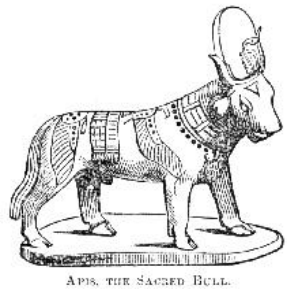
Cited across the library (1 reference)
- DictionaryWatson’s Dictionary: Calf
Thus they changed their glory into the similitude of an ox that eateth grass.
John Wesley on Psalm 106:20
V. 20. Their glory-God, who was indeed their glory. Into-Into the golden image of an ox or calf, which is so far from feeding his people, as the true God did the Israelites, that he must be fed by them.
Adam Clarke on Psalm 106:20
Verse 20. Thus they changed their glory] That is, their God, who was their glory; and they worshipped an ox in his stead. See the use St Paul makes of this, Romans 1:23; see also the note there. See Clarke “Ro 1:23”. The incorruptible God was thus served by all the heathen world.
Joseph Sutcliffe on Psalm 106:20
Ver. 20. Thus they changed their glory. An apostle’s explanation is, they changed the glory of God into a lie. Romans 1:23.
Daniel Whedon on Psalm 106:20
20. Their glory—The cloud of light, or fire, in which God appeared to them, as Exodus 16:7, 10; 24:16, 17; Deuteronomy 5:24. In all these appearances “they saw no similitude.” Deuteronomy 4:12, 15. In making one they fundamentally revolted from Jehovah, though they saw it not at first. Comp. Romans 1:23. That eateth grass—A description at once definitive of species and expressive of contempt.
Cited across the library (1 reference)
- DictionaryWatson’s Dictionary: Cherub
They forgat God their savior, which had done great things in Egypt;
Daniel Whedon on Psalm 106:21
21. They forgat God—This was the source of all their sin. See Psalm 78:11. The original passage is Deuteronomy 32:18.
Wondrous works in the land of Ham, and terrible things by the Red sea.
Adam Clarke on Psalm 106:22
Verse 22. Wondrous works in the land of Ham] The plagues inflicted on the Egyptians. Egypt is called the Land of Ham or Cham, because it was peopled by Misraim the son of Cham.
Daniel Whedon on Psalm 106:22
22. For the places here named see verse 9, and Psalm 105:23.
Therefore he said that he would destroy them, had not Moses his chosen stood before him in the breach, to turn away his wrath, lest he should destroy them.
John Wesley on Psalm 106:23
V. 23. Breach-God had made a wall about them; but they had made a breach in it by their sins, at which the Lord, who was now justly become their enemy, might enter to destroy them; which he had certainly done, if Moses by his prevailing intercession had not hindered him.
Adam Clarke on Psalm 106:23
Verse 23. Moses his chosen] Or elect; (Vulgate, electus ejus; Septuagint, ο εκλεκτος αυτου;) the person that he had appointed for this work. It would be very difficult to show that this word in any part of the Old Testament refers to the eternal state of any man, much less to the doctrine of unconditional election and reprobation.
Daniel Whedon on Psalm 106:23
23. He said… he would destroy them—The allusion is to Exodus 32:11-14. In the matter of the golden calf they had completely forfeited all the promises of the covenant. Had not Moses his chosen stood before him— “God puts the fate of the nation into the hand of Moses, that he may remember his mediatorial office, (Deuteronomy 5:5; Galatians 3:19,) and show himself worthy of his calling.” The proposal to destroy the people and make of Moses a great nation, “constituted a great test for Moses, whether he would be willing to give up his own people as the price of his own exaltation. And he stood the test.”—Keil and Delitzsch.
Cited across the library (1 reference)
Yea, they despised the pleasant land, they believed not his word:
John Wesley on Psalm 106:24
V. 24. Despised-Preferring Egypt, and their former bondage, before it, Numbers 14:3,4.
Joseph Benson on Psalm 106:24–27
Verses 24-27. They despised the pleasant land — Canaan, which was so, not only in truth, but even by the relation of those spies, who discouraged them from entering into it. They preferred Egypt and their former bondage before it, Numbers 14:3, 4, and did not think it deserving of a little hazard and difficulty in taking possession of it. They believed not his word — His promise of giving them the land, and subduing all their enemies before them, which they knew, by late and manifold experience, that God was both able and willing to do. And hearkened not unto the voice of the Lord — To God’s command, which was, that they should boldly and confidently enter into it. Therefore he lifted up his hand — He sware, as this phrase is commonly used. Of this dreadful and irrevocable sentence and oath of God, see Numbers 14:23. To overthrow their seed — He sware also, (though not at the same time,) that he would punish their sins, not only in their persons, but also in their posterity: see Exodus 20:5, and 32:34.
Daniel Whedon on Psalm 106:24
24. They despised the pleasant land—And so God despised and rejected them. So, in later times, they despised Christ and his offer of eternal life, and were again, and more fatally, despised and rejected. See Acts 13:46; 18:6; Matthew 21:43.
But murmured in their tents, and hearkened not unto the voice of the LORD.
John Wesley on Psalm 106:25
V. 25. The voice-To God’s command, that they should boldly enter into it.
Daniel Whedon on Psalm 106:25
25. Murmured in their tents—See Numbers 14:2, 27; Deuteronomy 1:27.
Therefore he lifted up his hand against them, to overthrow them in the wilderness:
John Wesley on Psalm 106:26
V. 26. Lifted up-He sware. Of this dreadful and irrevocable oath of God, see Numbers 14:11,12.
Daniel Whedon on Psalm 106:26
26. He lifted up his hand—In form of making oath, as in
Deuteronomy 32:40; Genesis 14:22. In the passage alluded to, (Numbers 14:30,) for “I sware,” the Hebrew is, I lifted up my hand.
To overthrow their seed also among the nations, and to scatter them in the lands.
John Wesley on Psalm 106:27
V. 27. Overthrow-He sware also (tho’ not at the same time) that he would punish their sins, not only in their persons, but in their posterity.
Daniel Whedon on Psalm 106:27
27. To overthrow their seed—As this is spoken of the “seed,” or posterity, of the unbelieving Israelites of the desert, it may refer to any subsequent periods and generations, and is founded on such general warnings as Leviticus 26, and Deuteronomy 28. To scatter them in the lands—This was so far fulfilled during the times of the Judges as fully to answer to verse 47, without resorting to the exile in Babylon.
They joined themselves also unto Baalpeor, and ate the sacrifices of the dead.
John Wesley on Psalm 106:28
V. 28. Joined-They had communion with him, as God’s people have with God in acts of his worship.
Adam Clarke on Psalm 106:28
Verse 28. They joined themselves also unto Baalpeor] The Vulgate, Septuagint, and others, have Belphegor; the Syriac and Arabic, the idol Phegor, or Phaaur; the [ ain in the word being pronounced as gh. Ate the sacrifices or the dead] מתים methim, of dead men. Most of the heathen idols were men, who had been deified after their death; many of whom had been execrated during their life.
Joseph Benson on Psalm 106:28–30
Verses 28-30. They joined themselves also unto Baal-peor — To wit, in worship, whereby they had a union and communion with him, as God’s people have with God in acts of his worship. And ate the sacrifices of the dead — Which were offered to idols, which he calls dead, in opposition to the true and living God, and by way of contempt, and to denote the stupidity of idolaters, who worshipped lifeless things, as dead images, or men deified after death. Or, by the sacrifices of the dead, he may mean sacrifices offered to the infernal deities, so called, on behalf of their dead friends. They provoked him with their inventions — Various species of idolatry, and false worship, and other branches of wickedness, devised in contempt of God and his institutions, his commands and threatenings. And the plague brake in upon them — And swept away twenty-four thousand of those impudent sinners. Then stood up Phinehas — In his zeal for the Lord of hosts; and executed judgement — Namely, upon Zimri and Cozbi, sinners of the first rank; genteel sinners; he put the law in execution upon them; and this was a service so pleasing to God, that upon it the plague was stayed, verse 30. By this, and some other like acts of public justice on that occasion, Numbers 25:4, 5, the guilt ceased to be national, and the general controversy was let fall: when the proper officers did their duty, God left it to them, and did not any longer keep the work in his own hands by the plague. The best commentary on this Psalm is a reference to the history.
Joseph Sutcliffe on Psalm 106:28
Ver. 28. They ate the sacrifices of the dead. מתים metim, dead men; for Baal, Bel, or Belus was once a man, and reigned in Babylon. Minutius Octavius, in his apology, says, “You banish us to distant islands, and there some of your gods were born, and others buried.”
Daniel Whedon on Psalm 106:28
28. Baal-peor—Or, lord of Peor. “Peor” is the same of a mountain of Moab, (Numbers 23:28,) mentioned in full elsewhere only in Numbers 25:3, 5; Deuteronomy 4:3; Hosea 9:10. “Baal” was the chief male divinity of the Phoenicians and Canaanites, as Ashtoreth was the female. His worship was very pompous and popular, cruel and obscene. Probably the same as that of Bel of the Chaldaeans, (Isaiah 46:1:) sometimes called “Peor.” Numbers 31:16; Joshua 22:17. The allusion of the text is to Numbers 25:3. Sacrifices of the dead—So called because their idols were dead, inanimate, opposed to the living God: or, as Delitzsch, quoting from Jewish rabbins, “because the eating of meat consecrated to idols pollutes like a dead body.” For New Testament doctrine on this subject see 1 Corinthians 10:28-31. But Hammond thinks, that their Baal, plural Baalim, were only dead heroes whom they had deified and continued to worship, and hence sacrificed to the dead— which is quite probable. Hero worship was a popular form of idolatry.
Cited across the library (1 reference)
- DictionaryWatson’s Dictionary: Adonis
Thus they provoked him to anger with their inventions: and the plague brake in upon them.
Then stood up Phinehas, and executed judgment: and so the plague was stayed.
Cited across the library (2 references)
And that was counted unto him for righteousness unto all generations for evermore.
John Wesley on Psalm 106:31
V. 31. And-It was accepted and rewarded of God as an act of justice and piety.
Joseph Benson on Psalm 106:31
Verse 31. And that was counted to him for righteousness — And although that action of his might seem rash, severe, and irregular, as being done by a private person, and a priest, and allowing the delinquents no space for repentance, it was nevertheless accepted and rewarded by God as an act of justice and piety, agreeable to his mind, and proceeding from a sincere zeal for his honour, and for the good of his people; and God gave a public testimony of his approbation of it, to be recorded to all generations, and the priesthood to be continued to Phinehas and his seed in all succeeding ages. Of all which see Numbers 25.
Daniel Whedon on Psalm 106:31
31. Counted… for righteousness—Imputed as a righteous act. Compare James 2:24.
Cited across the library (1 reference)
They angered him also at the waters of strife, so that it went ill with Moses for their sakes:
Joseph Benson on Psalm 106:32–33
Verses 32, 33. They angered him also at the waters of strife — Of which see Numbers 20:3-5. It went ill with Moses for their sakes — Or, because of them, upon occasion of their unbelief and murmuring, whereby he was provoked to speak unadvisedly, as it here follows. For though he was the meekest of all the men on the earth, yet their clamours at that time were so peevish and provoking, that his spirit was exasperated and imbittered, and he spake in a manner that did not become him; for he said, in anger, Hear now, ye rebels; must we fetch water out of this rock for you? He did not show that affiance in God, and that disposition to glorify him before his people, which became him in the execution of his office. This was Moses’s infirmity, and it is written for our admonition, that we may learn, when we are in the midst of provocation, to keep our mouths as with a bridle, and to take heed to our spirits, that they admit not resentments too much; for, when the spirit is provoked, it is not easy even for those that have a great deal of wisdom and grace to avoid speaking unadvisedly.
Daniel Whedon on Psalm 106:32
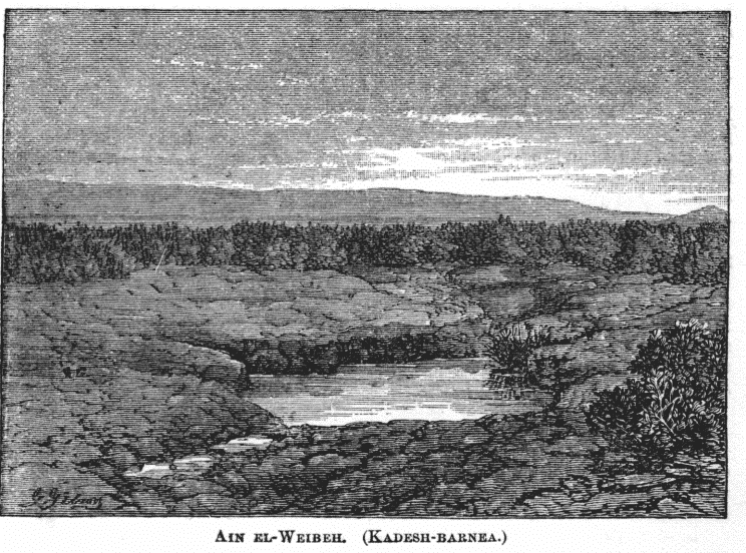
32. Waters of strife—Hebrew, the waters of Meribah. This scene was at Kadesh, or Kadesh-barnea, in the wilderness of Kadesh, or Zin, on the second arrival of Israel at that place. Numbers 20:1-13. Probably, also, alluded to Psalm 105:41. It was also called Meribah-Kadesh, or the strife of Kadesh, (Deuteronomy 32:51,) and en-Mishpat, Genesis 14:7. Both Kadesh, (a holy place,) and en-Mishpat, (fountain of judgment,) indicate, historically, a religious association, which occasioned the names, and which might have been the punishment inflicted on the revolting Israelites st the miracle of water from the rock. Numbers 13; 14; 20:1-13. On this hypothesis, the name given in Genesis 14:7 would be used proleptically, which is not an uncommon act. Another Meribah was at Rephidim, in the vicinity of Sinai. See notes on Psalm 81:7; 78:16. Dr. Robinson supposes Ain el-Weibeh to be identical with Kadesh, situated about twenty-five miles south of the Dead Sea in the Arabah valley. Others disagree, but the arguments of Robinson have not been successfully refuted. El-Weibeh (or “hole with water”) is the chief watering place in the great valley.
Because they provoked his spirit, so that he spake unadvisedly with his lips.
Adam Clarke on Psalm 106:33
Editorial note: Source collation note — paragraph 2: “words in the hebrew, ויבטא בשׂפתיו vayebatte bisephathaiv, he stuttered”. source PDF page 845: “words in the Hebrew, בשׂפתיו ויבשׂא vayebatte”. Compared with CLA_PSA.PDF PDF p. 845. The source-font or layout comparison does not securely establish every letter, mark or local sequence in these passages. The flagged language readings or layout are retained; the original source pages should be consulted for these specific readings. Additional-source investigation: the available separately digitized printed volumes were searched, but the corresponding passage was not securely located. The flagged readings or layout remain uncertain; this search provides no basis for reconstructing or silently normalizing them. CLA_PSA.PDF, PDF page 845.
Verse 33. They provoked his spirit] המרו himru, from מרה marah, to rebel: they brought it into a rebellious state; he was soured and irritated, and was off his guard.
So that he spake unadvisedly with his lips.] For this sentence we have only these two words in the Hebrew, ויבטא בשׂפתיו vayebatte bisephathaiv, he stuttered or stammered with his lips, indicating that he was transported with anger. See the notes on Numbers 20:10-12.
Daniel Whedon on Psalm 106:33
33. They provoked his spirit—That is, they provoked Moses’s spirit, to whom the suffix pronoun must be understood to refer. Here was the first step in Moses’s sin. His meekness gave way to anger. Spake unadvisedly—The word rendered “spake,” means thoughtless, hasty, rash speaking, as in rashly or inconsiderately pronouncing an oath, (Leviticus 5:4,) and stands opposed to “the tongue of the wise,” Proverbs 12:18. For Moses’s speech, see Numbers 20:10. It was against the spirit and dignity of his office, and hence an unworthy representation of the mind and character of God. In the loss of his calm trust in God, (Numbers 20:12,) he lost, for the moment, his self-control, and failed both of reverent speech and accurate obedience, and the name of God was not sanctified before the people. Numbers 27:14; Deuteronomy 32:51. For this fault Moses was prohibited entering Canaan. Deuteronomy 3:24-26.
Cited across the library (1 reference)
- DictionaryWatson’s Dictionary: Moses
They did not destroy the nations, concerning whom the LORD commanded them:
Joseph Benson on Psalm 106:34–39
Verses 34-39. They did not destroy the nations, concerning whom — Concerning whose destruction, the Lord commanded them — For when the iniquity of the Canaanites was full, it was God’s will to extirpate their race, and Israel was commissioned to execute upon them the vengeance determined. But were mingled among the heathen — In their habitations and negotiations, as also in marriages. And they served their idols — Which idols were an occasion of their falling both into further and greater sins, as it follows, verses 37, 38, and into utter ruin. They sacrificed their sons and daughters — Of which heathenish practice, see the notes on Leviticus 18:21. Unto devils — By which expression he informs them that they did not worship God as they pretended, but devils in their idols; and that those spirits that were supposed by the heathen idolaters to inhabit their images, and which they worshipped in them, were not good spirits, as they imagined, but evil spirits or devils. And shed innocent blood — The blood of their children, who, though depraved before God, yet were innocent as to them, from any crime deserving such barbarous usage from them. Thus were they defiled with their own works — And rendered abominable in the sight of a holy God; and went a whoring with their own inventions — Committed spiritual whoredom, by worshipping those idols which were but human inventions, and that in such an unnatural and bloody manner as they had devised.
Daniel Whedon on Psalm 106:34
34. They did not destroy the nations—This was the seventh great sin of the nation, according to the enumeration of the psalm. The command was given as stated Exodus 23:32, 33, and reiterated in Joshua 23:12,
13. But early after their settlement in Canaan their faith failed, the wars abated, and many powerful hostile cities and tribes remained. See Judges 2:3. These were thorns and snares to Israel in all future time.
But were mingled among the heathen, and learned their works.
And they served their idols: which were a snare unto them.
Adam Clarke on Psalm 106:36
Verse 36. They served their idols] עצביהם atsabbeyhem, their labours or griefs-idols, so called because of the pains taken in forming them, the labor in worshipping them, and the grief occasioned by the Divine judgments against the people for their idolatry.
Daniel Whedon on Psalm 106:36
36. They served their idols—This was but a natural result of such friendships as those against which they had been forewarned.
Yea, they sacrificed their sons and their daughters unto devils,
John Wesley on Psalm 106:37
V. 37. Devils-They did not worship God as they pretended, but devils in their idols; for those spirits, which were supposed by the Heathen idolaters to inhabit in their images, were not good spirits, but evil spirits, or devils.
Adam Clarke on Psalm 106:37
Verse 37. They sacrificed their sons and their daughters unto devils.] See the places referred to in the margin. That causing their sons and their daughters to pass through the fire to Moloch did not always mean they burnt them to death in the flames, is very probable. But all the heathen had human sacrifices; of this their history is full. Unto devils, לשדים lashshedim, to demons. Devil is never in Scripture used in the plural; there is but ONE devil, though there are MANY demons.
Daniel Whedon on Psalm 106:37
Editorial note: The supplied edition prints “2 Corinthians 10:20” here (WHD_CO05.PDF, physical PDF page 511). The surrounding discussion of Gentile sacrifices offered to devils corresponds to 1 Corinthians 10:20 in the King James Version. The origin of the printed numbering is not established here; the historical wording is retained. WHD_CO05.PDF, PDF page 511.
37. They sacrificed unto devils—Literally, unto lords, for thus the heathen regarded their chief divinities, as Baal. But these powerful ones, like Moloch, were destroyers, as the kindred form denotes, Psalm 91:6. The Jews looked upon them as demons. So the Septuagint, δαιμονιοις, and hence devils, in our English Version. Deuteronomy 32:17. Compare 2 Kings 16:3; 2 Corinthians 10:20.
And shed innocent blood, even the blood of their sons and of their daughters, whom they sacrificed unto the idols of Canaan: and the land was polluted with blood.
Cited across the library (1 reference)
- DictionaryWatson’s Dictionary: Moloch
Thus were they defiled with their own works, and went a whoring with their own inventions.
Adam Clarke on Psalm 106:39
Verse 39. And went a whoring.] By fornication, whoredom, and idolatry, the Scripture often expresses idolatry and idolatrous acts. I have given the reason of this in other places. Besides being false to the true God, to whom they are represented as betrothed and married, (and their acts of idolatry were breaches of this solemn engagement,) the worship of idols was frequently accompanied with various acts of impurity.
The translation in the Anglo-Saxon is very remarkable: [A.S.] and they fornicated. In Anglo-Saxon, [A.S.] signifies to fire, to ignite; [A.S.] to commit adultery. So [A.S.] is a prostitute, a whore; and [A.S.] is to go a whoring, to fornicate; probably from [A.S.], or [A.S.] to fire, and [A.S.], to lie, or [A.S.], a glutton;—one who lies with fire, who is ignited by it, who is greedily intent upon the act by which he is inflamed. And do not the words themselves show that in former times whoredom was punished, as it is now, by a disease which produces the sensation of burning in the unhappy prostitutes, whether male or female? And to this meaning the following seems particularly to be applicable.
Daniel Whedon on Psalm 106:39
39. Thus were they defiled—See Judges 2:11-13.
Therefore was the wrath of the LORD kindled against his people, insomuch that he abhorred his own inheritance.
Adam Clarke on Psalm 106:40
Verse 40. Therefore was the wrath of the Lord kindled] God kindled a fire in his judgments for those who by their flagitious conduct had inflamed themselves with their idols, and the impure rites with which they were worshipped.
And he gave them into the hand of the heathen; and they that hated them ruled over them.
Daniel Whedon on Psalm 106:41
41. And he gave them—See Judges 2:14, 15.
Their enemies also oppressed them, and they were brought into subjection under their hand.
Many times did he deliver them; but they provoked him with their counsel, and were brought low for their iniquity.
John Wesley on Psalm 106:43
V. 43. Counsel-By forsaking God’s way, and following their own inventions.
Adam Clarke on Psalm 106:43
Verse 43. Many times did he deliver them] See the Book of Judges; it is a history of the rebellions and deliverances of the Israelites.
Joseph Benson on Psalm 106:43–46
Verses 43-46. Many times did he deliver them — This seems to refer to the times of the judges; when God, many times, raised up deliverers, and wrought deliverances for them; and yet they relapsed to idolatry. They provoked him with their counsel — By forsaking God’s counsel, and the way which he had appointed, and following after their own evil inclinations. Nevertheless, he regarded their affliction — Yet such was his tender compassion toward them, he did not absolutely refuse to help even these base revolters. When he heard their cry — When, in their distress, they made supplication unto him, and promised amendment. And he remembered his covenant — The covenant made with their forefathers, in consideration of which, notwithstanding their horrible violation of it, he frequently and graciously delivered them. And repented, &c. — Changed his course in dealing with them, as penitent persons usually do. He made them to be pitied of those that carried them captives — By changing their opinions of them, and so inclining their hearts toward them, that they did not endeavour to effect their total extirpation.
Daniel Whedon on Psalm 106:43
43. Many times did he deliver them—See Judges 2:16-19.
Nevertheless he regarded their affliction, when he heard their cry:
And he remembered for them his covenant, and repented according to the multitude of his mercies.
John Wesley on Psalm 106:45
V. 45. Repented-Changed his course and dealing with them.
Daniel Whedon on Psalm 106:45
45. And he remembered for them his covenant— “Behold the goodness and severity of God!” The closing descriptions of the divine tenderness are exceedingly touching, as his judgments are fearful. Repented—A term, as applied to God, wholly anthropopathic, and by this accommodation to our infirmity sets forth the divine pity. The word simply means that God changed his administration with regard to them—as if he had changed his feelings—from condign judgment to compassion, in order that by every method he might win them back to him.
He made them also to be pitied of all those that carried them captives.
Adam Clarke on Psalm 106:46
Verse 46. He made them also to be pitied] This was particularly true as to the Babylonish captivity; for Cyrus gave them their liberty; Darius favoured them, and granted them several privileges; and Artaxerxes sent back Nehemiah, and helped him to rebuild Jerusalem and the temple. See the Books of Ezra and Nehemiah; and see Calmet.
Daniel Whedon on Psalm 106:46
46. He made them… to be pitied—An exquisite touch in the poet’s description, and a doctrine, as to divine providence, infinitely worthy of God, and according to the prayer of Solomon in 1 Kings 8:50.
Save us, O LORD our God, and gather us from among the heathen, to give thanks unto thy holy name, and to triumph in thy praise.
Adam Clarke on Psalm 106:47
Verse 47. Save us. O Lord-and gather us] These words, says Calmet, are found in the hymn that was sung at the ceremony of bringing the ark to Jerusalem, 1 Chronicles 16:35, 36; but it is supposed they were added by Ezra or some other prophet: here they are in their natural place. The author of the Psalm begs the Lord to gather the Israelites who were dispersed through different countries; for at the dedication of the second temple, under Nehemiah, (where it is probable this Psalm, with the cvth and the cviith, was sung,) there were very few Jews who had as yet returned from their captivity.
Joseph Benson on Psalm 106:47–48
Verses 47, 48. Save us, O Lord our God — O thou, who hast so often pardoned and saved us, notwithstanding our former and manifold provocations, be thou pleased again to interpose and deliver us, how unworthy soever we may be, from all our present enemies. Gather us from the heathen — Restore into their own country such of us as are fallen into their hands. To give thanks unto thy holy name — That they may join with us in giving thanks for thy incomparable goodness; and to triumph in thy praise — In thy praiseworthy works, wrought for us: saying, Blessed be the Lord God of Israel — Let the great Lord of all the world, who has been so gracious to Israel as to choose them for his own peculiar people, be most heartily praised, from everlasting to everlasting — From one generation to another, as long as the world shall last, and unto all eternity. And let all the people say, Amen — In token of their cheerful concurrence in all these prayers, praises, and confessions. Praise ye the Lord — Hebrew, Hallelujah. By these two comprehensive words, Amen and Hallelujah, “it is very proper,” says Mr. Henry, “in religious assemblies, for the people to testify their joining with their ministers in the prayers and praises which, as their mouth, they offer up to God according to his will, saying Amen to the prayers, and Hallelujah to the praises.
Daniel Whedon on Psalm 106:47
47. Save us… and gather us—This was promised by Moses, when they should repent. Deuteronomy 30:3. This verse, as Delitzsch says, is the point of the psalm. The sins of the nation have been confessed, divine judgments and compassion have been faithfully recorded, and all culminate in this final purpose of the author—a devout prayer for the salvation and gathering together of Israel, that they may praise God. The form slightly varies from the historic entry, (1 Chronicles 16:35;) which indicates that our psalm may have been modified from it for a subsequent occasion.
Blessed be the LORD God of Israel from everlasting to everlasting: and let all the people say, Amen. Praise ye the LORD.
Adam Clarke on Psalm 106:48
Editorial note: Source collation note — paragraph 1: “from everlasting to everlasting] מן האולם ועד האולם min haolam vead haolam”. source PDF page 847: “From everlasting to everlasting האולם ועד האולם מן min haolam vead haolam”. Compared with CLA_PSA.PDF PDF p. 847. The source-font or layout comparison does not securely establish every letter, mark or local sequence in these passages. The flagged language readings or layout are retained; the original source pages should be consulted for these specific readings. Additional-source investigation: an automated comparison of surrounding English text located possible corresponding passages in OCR from separately digitized printed volumes. The linked scan pages are research locators; their images have not been collated for this note's flagged readings. OCR agreement does not verify Greek or Hebrew letters, diacritics, word order, or table layout. The flagged readings or layout remain uncertain. CLA_PSA.PDF, PDF page 847; Additional printed-scan page locator (OCR context only; flagged reading unverified).
Verse 48. Blessed be the Lord God of Israel] Here both gratitude and confidence are expressed; gratitude for what God had already wrought, and confidence that he would finish the great work of their restoration. From everlasting to everlasting] מן האולם ועד האולם min haolam vead haolam, “from the hidden term to the hidden term,” from the beginning of time to the end of time, from eternity and on to eternity. [Anglo-Saxon], Anglo-Saxon. Fra worlde and into worlde, old Psalter; which it paraphrases thus: Fra with outen beginning, & withouten endyng. And let all the people say, Amen.] Let the people join in the prayer and in the thanksgiving, that God may hear and answer. Anglo-Saxon: [A.S.]; “And, quoth all folk, be it, be it.” Hallelujah-Praise ye Jehovah! Let his name be eternally magnified! Amen.
This is the end of the fourth book of the Psalms.
Daniel Whedon on Psalm 106:48
48. This verse, also, was borrowed from the same source as the preceding, with modifications to suit it to less triumphant times. The let all the people say, Amen, here, stands for “and all the people said, Amen,” in the Chronicles.
Cited across the library (1 reference)
Closing reflections and analysis
Adam Clarke
ANALYSIS OF THE ONE HUNDRED AND SIXTH PSALM
The intention of the prophet in this Psalm is to express God’s long-suffering in bearing with rebellious sinners, and yet in pardoning them upon the confession of their sins, and turning to him; both which he exemplifies by a long narration of Israel’s rebellions, repentance, and turning to God, and God’s dealing with them, which gave him just occasion to praise God, and to pray for his Church and people. I. An exhortation to praise God, with the reasons in general, Psalm 106:1; and who are fit to perform this duty, Psalm 106:2, 3. II. A petition and prayer directed to God in his own person for the whole Church, and the end of it, Psalm 106:4, 5.
III. A confession of sin, particularly of the Israelites’, together with God’s patience with them, and their repentance, Psalm 106:6-46. IV. His prayer that God would collect his Church out of all nations, that they might meet and praise him, Psalm 106:47, 48. I. “Praise Ye the Lord, O give thanks unto the Lord.” To this the prophet invites, for two reasons:—
1. “Because he is good.” He is beforehand with us, and prevents men with many benefits.
2. “Because his mercy endures for ever.” It is everlasting, and far exceeds our sins and miseries; for after men have offended him, and deserve no mercy, yet he receives the penitent offenders. But who is sufficient for these things? Who is fit to praise him, and set forth his mercies? “Who can utter the mighty acts of the Lord?” That is, the infinite benefits exhibited to his people. Or, Who can show forth all his praise in preserving, pardoning, and propagating his Church?
They alone are happy men “who keep judgment, and do righteousness at all times.”
1. They are happy in prosperity and adversity, they dwell in the house of God, under his protection.
2. “They keep his judgments.” Follow in their lives the strict rules of the Divine law, by which they judge all their actions, and so keep faith and a good conscience.
3. “They do righteousness at all times.” They approve that which is right, true, and just; condemn, hate, and punish what is unjust: such are fit to praise God with their tongues, because they praise him in their lives. II. After the prophet had invited men to praise God, and showed who were fit to do it, he begins his petition, which he proposes in his own person for the whole Church.
1. “Remember me.” Me; but not me alone, rather thy whole Church. By what we suffer, thou hast seemed to forget thy covenant and promise; but now call it to mind again.
2. Which I expect, not for any desert of mine, but merely from thy good will: “Remember me with the favour,” &c.
3. “O visit me;” but not in wrath, for such a visitation there is; but in mercy and grace.
4. “With thy salvation.” Save me at this time from my sins, and from my present calamities.
And to this end I desire thy favour, thy salvation.
1. “That I may see the good of thy chosen.” Be a partaker of and in their happiness.
2. “That I may rejoice in the gladness of thy nation.” Partake of it.
3. “That I may glory with thine inheritance.” Glorify thee with them. But observe here the three eminent titles given to God’s Church:—
1. They are a “chosen” people; which is a glorious and gracious title, and intimates favour.
2. They are his “nation,” his peculiar people.
3. They are his “inheritance.”
III. In the following part of the Psalm, Psalm 106:7-46, he makes use of a new argument to move God to mercy. He represents not the present condition the people of God are in, not their captivity, miseries, and afflictions, but ingenuously confesses how they had offended God, and how justly they suffered.
1. “We have sinned with our fathers.” Trodden in their steps, and filled up the measure of their sins.
2. “We have committed iniquity.” Not only from infirmity, but choice.
3. “We have done wickedly.” The intent and purpose in it was evil. And by these three steps he exaggerates the sin; the act, the frequency, the intent; as every true confessionist to God ought never to extenuate, but to aggravate the offence against himself.
And because he had mentioned their fathers at large, now he instances their rebellions: “Our fathers understood not thy wonders in Egypt;” that is, they laid them not to heart.
1. “They remembered not the multitude of thy mercies,” &c. When they saw Pharaoh’s army on one side, and the sea on the other, they grew heartless, diffident, and murmured.
2. This was their sin at that time; but God was then merciful to them: “Nevertheless he saved them.”
For which he assigns two reasons:—
1. “For his name’s sake.” To advance his glory and honour.
2. “That he might make his mighty power to be known.” Pharaoh and the Egyptians might have taken notice of it by the plagues he had already brought upon them.
In the following verses, by a distribution, he shows the manner of their deliverance.
1. By God’s rebuke, and drying up of the sea: “He rebuked the Red Sea also,” &c.
2. By the unheard—of way: “He led them through the depths as through the wilderness;” there was no more water there to offend them than in the sands of Arabia.
3. By the consequence of it: “And he saved them by the hand of him,” &c.
4. “And the waters covered their enemies,” &c.
The effect was, for the present,
1. It extorted from them a confession that God was true in his promises: “Then believed they his words.”
2. It excited them to praise him: “They sang his praise,” Exodus 15:1-21. But these very men who were forced to confess his power and sing his praises for the overthrow of Pharaoh in the Red Sea, were scarcely departed from those banks, when they, for want of a little bread and water, grew as impatient and distrustful as they were before.
1. They made haste to forget: “They soon forgot;” which aggravates their sin.
2. They forgot his omnipotence, his providence.
3. “They waited not for his council.” With patience they expected not the end, why God in his wisdom suffered them now to wait, which was, to prove their faith, hope, and love.
4. And what they did at this time they did also at others: “For they lusted exceedingly in the wilderness.”
Now God yielded to these desires of the people: “He gave them bread, flesh, and water.”
1. And he gave them their request, Exodus 16:12.
2. “But he sent leanness into their souls.” Which certainly has reference to the quails in Numbers 11:20, 33, where the people ate, and died of plague.
Another rebellion the prophet now touches, which was, when they rose up against the king and the priest.
1. “They envied also Moses in the camp;” objecting that he had usurped a power over them, and taken it upon his own head.
2. “And Aaron, the saint of the Lord.” He whom God had chosen, anointed, and sanctified to the priest’s office.
The punishment follows, Numbers 16:32, 35, 41, 49.
1. “The earth opened, and swallowed up Dathan, and covered the congregation of Abiram.”
2. “And a fire was kindled in their company the flame burned up the wicked.” That is, the two hundred and fifty men that presumed to offer incense; and presently after the fourteen thousand seven hundred that murmured, and objected to Moses and Aaron that they had killed the people of the Lord.
Still the prophet goes on in his story of Israel’s stubbornness and rebellion; and comes to their grand sin, their idolatry in erecting the golden calf, Exodus 32:4.
1. “They made a calf in Horeb,” &c., contrary to God’s command.
2. “Thus they changed their glory.” That is, the true God, who was indeed their glory, “into the similitude of an ox,” a brute beast, “that eateth grass,” a base creature, which much aggravates their sin.
3. But the prophet aggravates their stupidity and folly: “They forgat God,” &c.
In the following verse are expressed God’s just anger and mercy,—
1. His anger against their sins: “Therefore he saith,” &c. Pronounced his will to destroy them.
2. His mercy, in that he spared them at the intercession of Moses: “Had not Moses his chosen stood before him in the breach.” The breach and division which this sin had made between God and his people, like that in the wall of a besieged town, in which some valiant captain stands, and opposes himself against the assault of the enemy; so did Moses. For his object was the same, it was “to turn away his wrath lest he should destroy;” and the end was answered-it was turned away.
Farther yet, he calls to mind a new rebellion, which fell out upon the report of the spies sent to search the land, Numbers 13:26, &c., Numbers 14:1-10.
1. “They despised the pleasant land,” and wished to return into Egypt, Numbers 14:1-5.
2. “They believed not his word;” for they said, “Hath the Lord brought us,” &c.
3. “But murmured in their tents, and hearkened not,” &c., Numbers 14:27. “Therefore he lifted up his hand against them,” &c. As their sin, so their punishment, is extant; Numbers 14:29: “Your carcasses shall fall in the wilderness; ye shall not come into the land.”
This punishment fell upon the murmurers themselves; but if their children should be guilty of the like rebellion, they should not escape, for they too should be overthrown; which is fully brought to pass.
The prophet joins to that of the golden calf another piece of idolatry in the wilderness, to which there was joined fornication also, by the counsel of Balaam and the policy of Balak. This caused them to eat and sacrifice to their god, Numbers 25:1-3, which the prophet next insists upon,—
1. “They joined themselves to Baal-peor,” because the idol was set up upon that mountain.
2. “And ate the offerings of the dead.” They left the sacrifice of the living God, and ate those meats which were offered to dead idols. Upon which there followed God’s wrath and their own punishment:—
1. God was angry: “For they provoked him to wrath.”
“And the plague brake in upon them” like mighty waters, or as an army into a city at a breach; for there died of it twenty-four thousand, Numbers 25:9.
In the former idolatry God’s anger was averted by the intercession of Moses; in this, by the execution of judgment by Phinehas; for-
1. “There stood up Phinehas; “ moved, no question, with a zeal for God’s honour.
2. “And he executed judgment upon Zimri and Cozbi;” for which (let men conceive as they please-I see nothing to the contrary) he had his commission from Moses, or rather God; Numbers 25:4, 5.
3. The event was, the plague was stayed; the execution of offenders pacifies the anger of God.
Which zeal of his was well rewarded: “This was accounted to him for righteousness,” &c. This act was an act of righteousness, and an ample reward he had for it; for God established the dignity of the high priesthood in Phinehas and his posterity, as long as the Jewish commonwealth continued.
The prophet comes to another remarkable sin of the Jews, Numbers 20:3, 13, where the people chid Moses for want of water:—
1. “They angered him also at the waters of strife,” when they contradicted Moses.
2. “So that it went ill with Moses for their sakes;” for, being disturbed with choler, “he spake unadvisedly with his lips,”—”Hear now, ye rebels,” &c.; and he smote the rock. By their murmuring they so provoked his spirit to bitterness, that he who at other times was cheerful, and ready to obey God’s commands, now acted with reluctance.
Hitherto the prophet has set down several rebellions of the Jews during their abode in the wilderness; and now he shows how they behaved themselves after they came into the land of Canaan. Better, a man would think, they should be after God had fulfilled his word to them; but an Ethiopian cannot change his skin, nor they their manners; disobedient, stubborn, and rebellious they remained.
1. God had expressly commanded that the nations of Canaan should be destroyed, Deuteronomy 7:1-3: “But they did not destroy the nations,” &c.
2. “But they mingled among the heathen:” in leagues and marriages, Judges 2:2; 3:5, 6.
3. “And learned their works:” many superstitious and evil customs. But, beyond all, they learned to be idolaters; forsook God for the devil.
1. “They served their idols, which was a snare unto them,” for that they became their slaves, Judges 2:14, 15, &c.
2. “Yea, they sacrificed their sons,” &c., to Moloch.
3. With inhuman sin, they “shed innocent blood;” the blood of innocent children, &c.
The consequences of which are double. First, A double pollution. Secondly, A heavy punishment.
1. A pollution of the land: “The land was defiled with blood.”
2. A pollution of their own souls: “Thus were they defiled with their own works.”
The judgment, or punishment, now follows; and a signification whence it proceeded; it came not by chance, but by God’s order and anger.
1. “Therefore was the wrath of the Lord kindled,” &c. For their idolatry, murder, whoredom; so that he was not only angry, but his anger was kindled to a flame.
2. Insomuch “that he abhorred his own inheritance.”
And the punishment he inflicted on them was very just,—
1. “He gave them into the hand,” that is, the power, “of the heathen.” God had given the heathen into their hands to destroy them; which, because they did not, but learned their works, therefore God gave them into the hands of the heathen.
2. He made them their lords; and hard masters they were, as plainly appears from the Book of Judges, and 1 Samuel.
And little they; for the prophet in the next verse adds,
1. “Their enemies oppressed them:” tyrants, oppressors they were. Read the Book of Judges, &c.
2. “They were brought into subjection,” &c., under the Philistines, Moabites, Ammonites, &c.
In which condition God did not forget them, for “many times did he deliver them;” not once only, but often, as by Gideon, Jephthah, Deborah, Samson, and others. But, O the ingratitude of a sinful nation! instead of serving God, “they provoked him with their counsel,” that is, by following the dictates of their own hearts.
And so were very justly brought into the same case they were before; for “they were brought low for their iniquity.”
And now the prophet adds, which indeed he infers through the whole Psalm, the wonderful and immutable good will of God to them. Though he forgave and delivered them upon their repentance, and they in a short time provoked him again; yet he received them to grace, even after their relapses. And the causes that moved him to this were external and internal. The cause that outwardly and occasionally moved him to it was their affliction and cry: “He regarded their affliction “ &c. But the cause that inwardly swayed him was his word passed to them, and his mercy.
1. His word and his promise were passed to “Abraham, to be their God;” and he would not break it. “And he remembered for them his covenant.”
2. His tender affection that he bare them; this caused him to repent, and grieve that they should be in misery. “He repented,” &c.
3. And the effect which all these causes had was beneficial to them even in their bondage and captivity; for even their very enemies’ hearts were often turned to do them good, as is evident in Jeremiah, David, Daniel, Ezra, Zerubbabel, Mordecai, and indeed the whole nation under the Babylonian, Philistian, Egyptian, and Persian kings, which the prophet sets down, Psalm 106:46: “He made them also to be pitied of all those that carried them captives.” According to the saying of the wise man: “When a man’s ways please God, he will make his very enemies to be at peace with him,” Proverbs 16:7.
4. And this sense makes the way plainer to what follows, the petition and the doxology; for if God showed himself merciful in the time of his anger, and made it apparent even to the very view of their enemies, encouragement they might have,—
1. To pray: “Save us, O Lord our God, and gather us from among the heathen,” &c.
2. Then to give thanks: 1. “Blessed be the Lord God of Israel from everlasting to everlasting. 2. And for it let the people do their duty; that is, the solemn and necessary forms: “Let all the people say, Amen. Hallelujah.”
Joseph Sutcliffe
REFLECTIONS.
The remarks in the preseding psalm are applicable here. The Israelites are taught wisdom from the errors of their fathers. They waited not for the Lord’s counsel. Most of our miseries arise from an impetuous indulgence of passion.
He punished their sin, by sending leanness upon them; he lifted up his hand against them, and sentenced them to die in the desert. Revolt is quickly followed with the rod.
We have the folly of sin: they changed the glory of God to the similitude of a calf that eateth grass. They ate the sacrifices of the dead. Prideaux thinks that idolatry began by worshipping the mediators of the covenant, as Adam, Noah, &c. But Le Clerc, in his critical remarks upon Prideaux, thinks it arose from worshipping the angels who appeared to those patriarchs or mediators; and that Tsabi, a son of Seth, introduced the worship of images. Epiphanius however says as the text, that they worshipped dead men. All these opinions seem to come near the truth. Happy are we in adoring the one Mediator, Jesus Christ, Maker and Lord of all.
We see also on a broad scale, that every new generation of the Hebrews discovered its sin by new outbreakings of crime, folly, and revolt. We should therefore train up our children in the faith and fear of the Lord, who relents and saves the contrite.
John Wesley
PSALM 106.
The foregoing psalm was an history of God’s goodness to Israel; this is an history of their rebellion: against him; probably both were wrote by David at the same time, as we find the first verse and the two last in that psalm, which he delivered to Asaph, 1 Chronicles 16:35, &c. Herein we have the preface, ver. 1-5. The narrative of all of the sins of Israel, aggravated by the great things God did for them; their provocations at the Red-sea, ver. 6-12. Lusting, ver. 13-15. Mutinying, ver. 16-18. Worshiping the golden calf, ver. 19-23. Murmuring, ver. 24-27. Worshiping Baal-peor, ver. 28-31. Quarreling with Moses, ver, 32, 33. Mixing with the nations of Canaan, ver. 34-39. God rebuked them, yet saved them from ruin, ver. 40-46. The conclusion, ver. 47,
48. It begins and ends with Hallelujah.
Adam Clarke
PSALM 106
God is praised for his manifold mercies, 1-3. The prophet prays for himself, 4,
5. A recapitulation of the history of the Hebrew people: of God’s mercies toward them, and their rebellions, 6-39. The judgments and afflictions which their transgressions brought upon them, 40-42. God’s mercy to them notwithstanding their transgressions, 43-46. He prays for their restoration, 47, 48.
NOTES ON PSALM 106
As a part of the preceding Psalm is found in 1 Chronicles 16:7-14, so the first and two last verses of this are found in the same place, (1 Chronicles 16:34-36,) and yet it is supposed by eminent commentators to be a prayer of the captives in Babylon, who acknowledge the mercies of God, confess their own sins, and those of their forefathers, and implore the Lord to gather them from among the heathen, and restore them to their own country. In none of the Versions except the Syriac has it any title, except HALLELUJAH, Praise ye the Lord, the word with which the original commences. The Syriac gives us a sort of table of its contents; or rather shows us the subjects to which it may be applied, and the uses we should make of it. After stating that it has no title, it says, “It calls upon men to observe the Divine precepts, and teaches us that the more the Jews transgressed, the more we should fear. That we should not talk together in the church, nor ever contend with our brethren on any account; and especially when we assist in the celebration of the Divine mysteries and in prayer: and that when we sin we should repent.” All this is very good: but it would be difficult to find these subjects in the Psalm, or any thing on which they could be rationally founded. But it shows us that the Scriptures were very easily accommodated to particular uses, not originally intended: and hence arose much of the practice of spiritualizing and allegorizing; which, to say the least of it, has been of no use to the Church of Christ.
Joseph Benson
PSALM 106.
A.M. 2962. — B.C. 1042.
The foregoing Psalm was a history of God’s goodness to Israel: this is a history of their provocations and rebellions against him. Poole, Mudge, and some other commentators, infer from the prayer in verse 47, that it was composed in the time of the Israelites’ captivity and dispersion. But certainly no conclusive argument can be drawn from thence to that effect, because we find the same verse, as also the 48th, and the first in the Psalm delivered by David to Asaph, at the bringing up of the ark to Zion, 1 Chronicles 16., a circumstance which renders it highly probable that it was composed by him. And that verse, and also some other verses of the Psalm, may refer to other dispersions of the Israelites, as, suppose, “to those who in the days of Saul, or before, were taken prisoners by the Philistines and other nations: whom David beseeches God to gather to their own land again, that they might worship him in that place which he had prepared for the ark of his presence.” This is Bishop Patrick’s opinion, and it appears very probable. In the Psalm we have the preface, 1-5. The narrative of the sins of Israel, aggravated by the great things God had done for them; their provocations at the Red sea, 6-12. Their lusting for flesh, 13-15. Mutinying, 16-18. Worshipping the golden calf, 19-23. Murmuring, 24-27. Worshipping Baal-peor, 28-31. Quarrelling with Moses, 32, 33. Mixing with the nations of Canaan, and, instead of suppressing their idolatrous worship, imitating it, 34-39. A relation of God’s frequent judgments, and as frequent mercies, 40-46. A prayer that God would gather and save them, and a thanksgiving, 47, 48. The Psalm begins and ends with Hallelujah. NOTES ON PSALM 106.
Joseph Sutcliffe
PSALM 106.
This also is a Psalm of David, and is cited in 1 Chronicles 16., although the first and the two last verses only are there given. The subject is similar to that of the preseding psalm; and it was probably one of those psalms which the Jews adapted and sung on their return from Babylon.
Daniel Whedon
PSALM 106.
The object of the present psalm is identical with the preceding—to rouse the people to the worship of God and the faithful observance of his holy covenant. But the methods of attaining this end are diverse. In Psalm 105 the judgments of God upon Israel’s enemies, and his faithful care of his people, are the chosen themes; in this, the disobedience of his people and God’s judgments upon their sins. The miracles of Egypt are here passed over, and the history of Israel through their desert life, and after their settlement in Canaan through the times of the Judges, is brought out.